
Agricultural Expansion
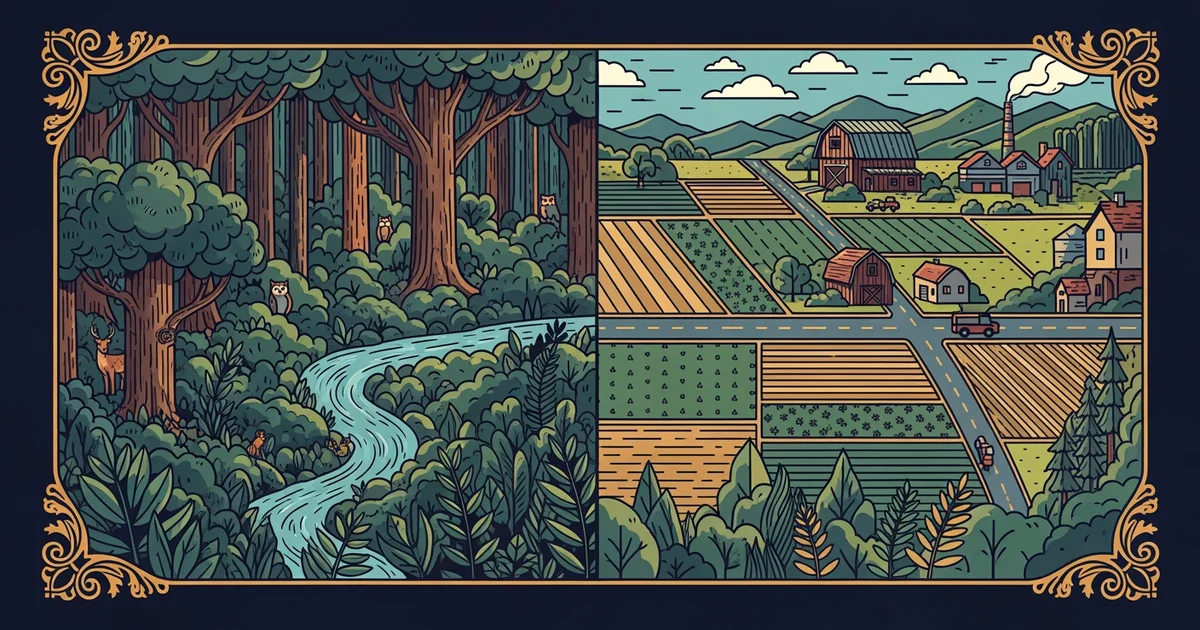
Imagine standing in the middle of a vast, golden wheat field that stretches toward the horizon. You might assume this landscape has always looked this way, but it is actually a human creation. Agricultural expansion represents the intentional conversion of wild forests, grasslands, and wetlands into productive farmland. This process changes the physical surface of our planet more than almost any other human activity. We clear native plants to make room for crops that feed growing populations across the globe. By altering the landscape, we dictate how water flows, how soil behaves, and how local climates function.
The Mechanics of Land Conversion
When humans decide to expand agricultural land, they begin by removing the existing vegetation cover entirely. This act of clearing is similar to clearing a cluttered desk to make space for a new project. Just as a clean desk allows you to organize your work, cleared land allows farmers to plant uniform rows of crops. This uniformity is the hallmark of modern agriculture, but it comes at a significant cost to the environment. Native ecosystems provide natural services like water filtration and carbon storage that disappear when fields are created. The land loses its complexity, becoming a simplified surface designed for a single goal: maximizing food production.
Key term: Anthropogenic — a term describing environmental change caused or influenced by human activity rather than natural processes.
As we push further into wild territories, the agricultural expansion process accelerates the loss of biodiversity. We replace diverse plant species with monocultures, which are large areas planted with only one type of crop. This shift creates a fragile system that relies heavily on outside inputs like water and nutrients. Without the natural cycle of decay and regrowth found in wild forests, the soil loses its internal strength. Farmers must then add synthetic fertilizers to replace the nutrients that would normally cycle through a healthy, diverse ecosystem. This reliance on external support is a defining feature of industrial farming landscapes.
Impact of Industrial Farming on Soil
Once the land is converted, the focus shifts to maintaining high yields through intensive management practices. These techniques often prioritize short-term growth over the long-term health of the earth beneath our feet. Modern machines compact the soil, making it difficult for roots to grow and for water to soak into the ground. When the soil is too hard, rain runs off the surface instead of replenishing deep aquifers. This runoff carries away topsoil, which is the most fertile layer needed for future harvests. We are essentially spending the earth's natural savings account to pay for current food production needs.
To understand the scale of this change, consider how different farming methods influence the physical quality of the landscape:
- Conventional tillage involves turning the soil over completely, which exposes organic matter to air and speeds up decomposition, leading to a net loss of carbon over time.
- Precision irrigation delivers water directly to plant roots, which reduces wasteful evaporation but can cause salt buildup in the soil if drainage systems are not managed correctly.
- Cover cropping protects the ground from erosion during off-seasons, helping to maintain soil structure and preventing the loss of vital nutrients that would otherwise wash away during heavy rain.
These methods show that while expansion is necessary, the way we manage the land determines the survival of the soil. If we continue to prioritize rapid expansion without considering soil health, we risk creating a surface that can no longer support life. Balancing our need for food with the physical limits of the earth remains our greatest challenge. We must learn to view the landscape not as a blank slate, but as a living system that requires careful stewardship to remain productive for future generations.
Agricultural expansion fundamentally reshapes the planet by replacing complex natural ecosystems with simplified, resource-intensive systems that require constant human management to remain productive.
The next Station introduces deforestation dynamics, which determines how the removal of tree cover affects global carbon cycles and regional weather patterns.