
Soil Degradation
Imagine a farmer who spends their entire life savings to buy a high-end tractor, only to find the soil beneath their feet has turned into dust that blows away in the wind. This scenario illustrates a silent crisis where the very foundation of our food system loses its ability to support life over time. When we mismanage the land, the earth loses its capacity to hold water and provide the nutrients that plants need to grow. This process of decline is known as soil degradation, and it represents a permanent loss of value for the natural world. Much like a bank account that is drained without any new deposits, soil loses its wealth when we extract too much without giving back.
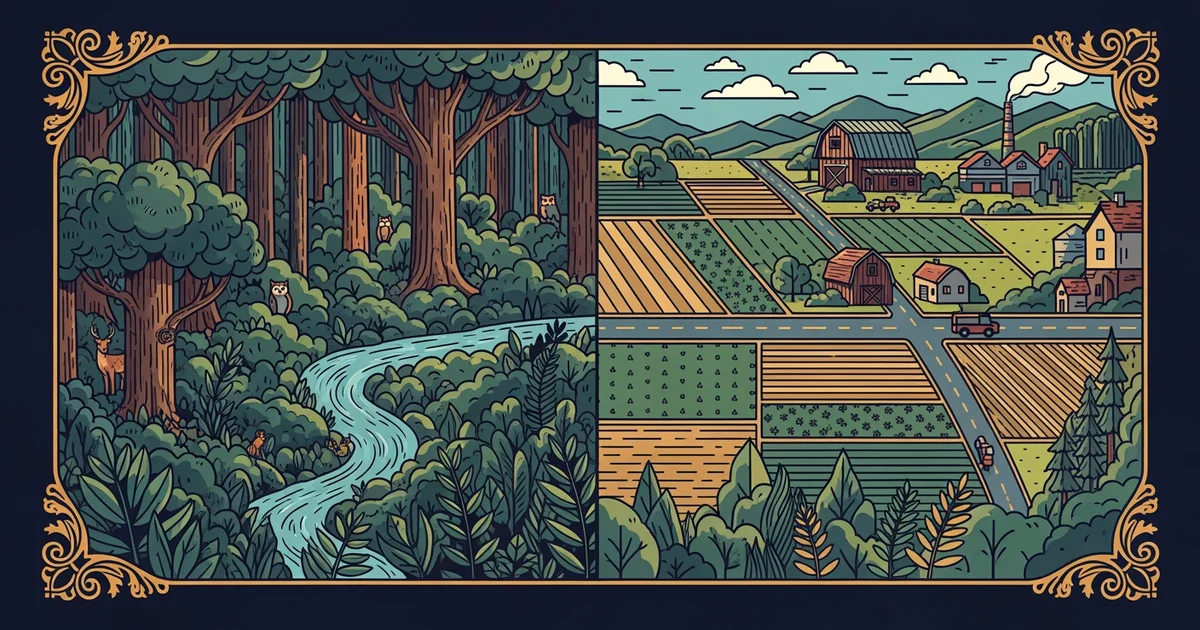
The Mechanics of Land Productivity Loss
When humans clear forests or over-till fields, they strip away the protective layer of vegetation that keeps the ground stable and healthy. Without this natural shield, heavy rain or strong winds can easily lift the top layer of dirt and carry it into nearby streams. This top layer, known as topsoil, contains the most organic matter and nutrients required for plant growth. Once this layer is gone, the land becomes far less productive and much harder to restore. The loss of this material is a physical change that alters the landscape, making it difficult for future generations to farm or build on the same ground.
Key term: Topsoil — the uppermost layer of earth that holds the most nutrients and organic matter needed for plant life.
Soil degradation often happens slowly, which makes it easy for people to ignore until the damage is quite severe. Many farmers might notice that their crops are smaller or that the ground seems harder, but they often attribute these issues to bad weather or poor seeds. In reality, the soil structure has likely collapsed, meaning the tiny spaces between dirt particles have been crushed. These spaces are vital because they allow air and water to reach plant roots. When the structure fails, water cannot soak into the ground, leading to more runoff and further erosion of the remaining dirt.
Human Activities and Landscape Change
Several specific human actions accelerate the loss of healthy land, turning productive areas into barren patches of earth. We can categorize these human-driven factors based on how they impact the physical integrity of the ground surface:
| Activity Type | Primary Impact | Resulting Damage |
|---|---|---|
| Intensive Tillage | Soil compaction | Loss of pore space |
| Deforestation | Erosion risk | Topsoil depletion |
| Overgrazing | Root exposure | Ground destabilization |
Each of these activities removes the biological protection that keeps the ground in place. When we remove too many plants at once, we leave the soil exposed to the harsh elements of the sky. This exposure causes the ground to bake under the sun, which kills the tiny organisms that help keep the dirt rich and fertile. These organisms act like a glue that holds dirt particles together, and their disappearance makes the land crumble even faster than it would on its own.
Beyond the physical loss of dirt, chemical changes also play a large role in how land productivity declines. When we add too many synthetic fertilizers or pesticides, we can change the natural chemistry of the ground. These chemicals might boost growth for a single season, but they often leave behind salts or toxins that make the land toxic to plants over time. This creates a cycle where we must add more chemicals to get the same yield, which only deepens the problem for the future. The land is not just a platform for our activities, but a living system that requires careful management to remain useful and healthy for the long term.
Soil degradation functions like a depleting financial asset where the loss of organic structure and topsoil reduces the land's capacity to yield future biological returns.
But what does it look like when we move from the farm to the deep earth, and how do mining operations fundamentally alter the ground beneath us?