
Deforestation Dynamics
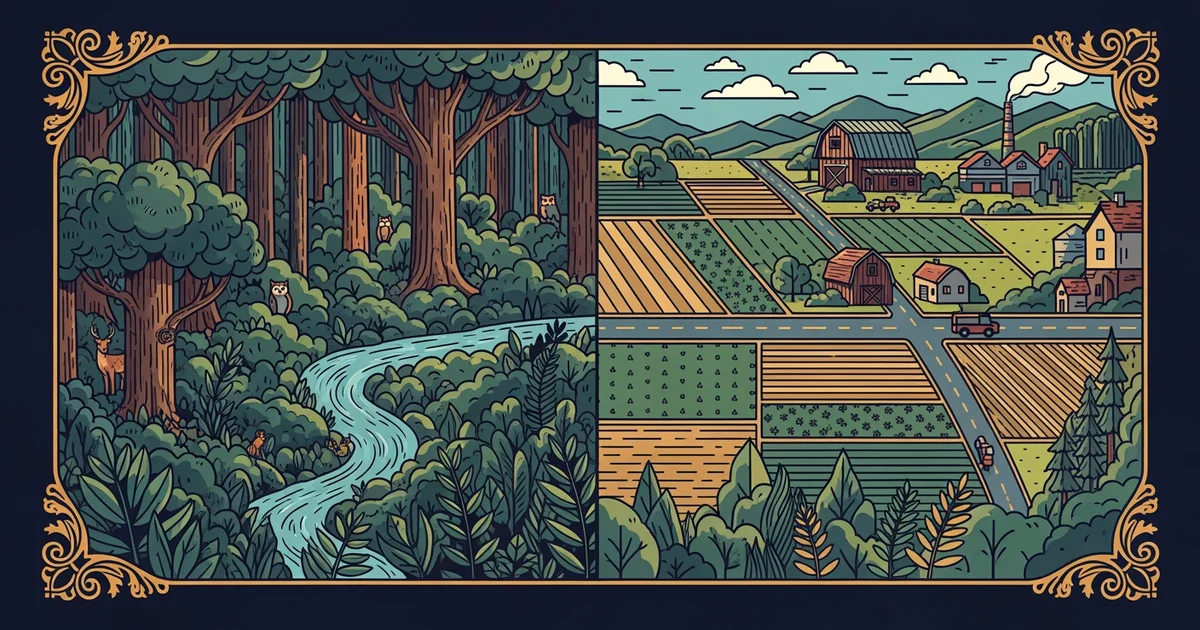
Imagine your local grocery store suddenly removing every single shelf and display case to build a parking lot. That space might hold more cars, but you lose the ability to find food or essential supplies inside the building. This is exactly how deforestation works when humans clear vast areas of forest for land use. We trade the long-term biological services of trees for the immediate gain of space or raw materials. This process reshapes the environment by removing the natural infrastructure that keeps our planet healthy and balanced.
The Economic Drivers of Forest Removal
When we look at why forests disappear, we often find that economic pressure acts as the primary engine. Just as a shop owner might expand a store to increase sales, nations and companies clear trees to expand agriculture or industrial production. This expansion provides land for cattle ranching, soybean crops, or timber harvesting. Each of these activities generates immediate profit, which makes the choice to cut trees feel like a smart financial move. However, this logic ignores the hidden costs of losing natural resources that we cannot easily replace once they are gone.
Key term: Deforestation — the purposeful clearing of forested land to convert it into non-forest areas for human use.
Forests act like a giant, natural bank account that stores carbon, water, and biodiversity for the entire planet. When we withdraw too much capital too quickly, we risk crashing the entire system. Most deforestation happens because the current market value of wood or farmland appears higher than the value of a standing, living forest. This creates a cycle where short-term gains outweigh long-term survival, leading to the rapid loss of critical habitats across the globe. We essentially trade our long-term environmental savings for a quick, one-time payment of resources.
Patterns and Consequences of Landscape Change
Beyond simple economics, the way we remove trees dictates how the surrounding land will behave for decades. When forests vanish, the soil loses its protective cover, which leads to increased erosion and a loss of nutrient-rich topsoil. This change forces the land to become less productive over time, creating a need for even more land clearing to maintain the same output. The following table highlights how different human activities impact the forest structure differently:
| Activity Type | Primary Goal | Impact on Soil | Recovery Potential |
|---|---|---|---|
| Cattle Ranching | Meat Production | High Compaction | Very Low |
| Timber Logging | Wood Products | Moderate Erosion | Moderate |
| Crop Farming | Food Supplies | Nutrient Depletion | Low to Medium |
These patterns show that deforestation is rarely a single event, but rather a series of cascading changes. Once the trees are gone, the local climate often becomes hotter and drier because the canopy no longer provides shade or releases moisture. This shift creates a feedback loop where the remaining forest becomes more vulnerable to fire and disease. We are not just removing wood, we are dismantling the climate control system of the local ecosystem.
- First, roads are built to reach deep into untouched forest areas.
- Second, trees are cleared to create access for heavy machinery and equipment.
- Third, the land is prepared for farming or livestock grazing operations.
- Finally, the soil is managed until it can no longer support growth.
This sequence demonstrates why deforestation is so difficult to stop once it begins. The infrastructure built to support the initial clearing makes further expansion easier and cheaper for those involved. We must recognize that every acre cleared changes the physical surface of our planet in ways that are often permanent. Understanding these drivers is the first step toward finding a balance between human needs and the health of our global forest network.
The removal of forest cover represents a trade-off where immediate economic expansion permanently compromises the natural systems that sustain our planetary stability.
The next Station introduces infrastructure networks, which determine how these cleared landscapes are connected and managed over time.