
Defining Anthropogenic Change
Imagine standing on a city street corner where the ground beneath you was once a wild forest. Every brick, road, and pipe has replaced the natural soil and trees that existed before human arrival. This transformation of the environment is not a random event but a calculated process of global redesign. We constantly alter the physical surface of the earth to meet our needs for shelter, transport, and energy.
The Scope of Human Impact
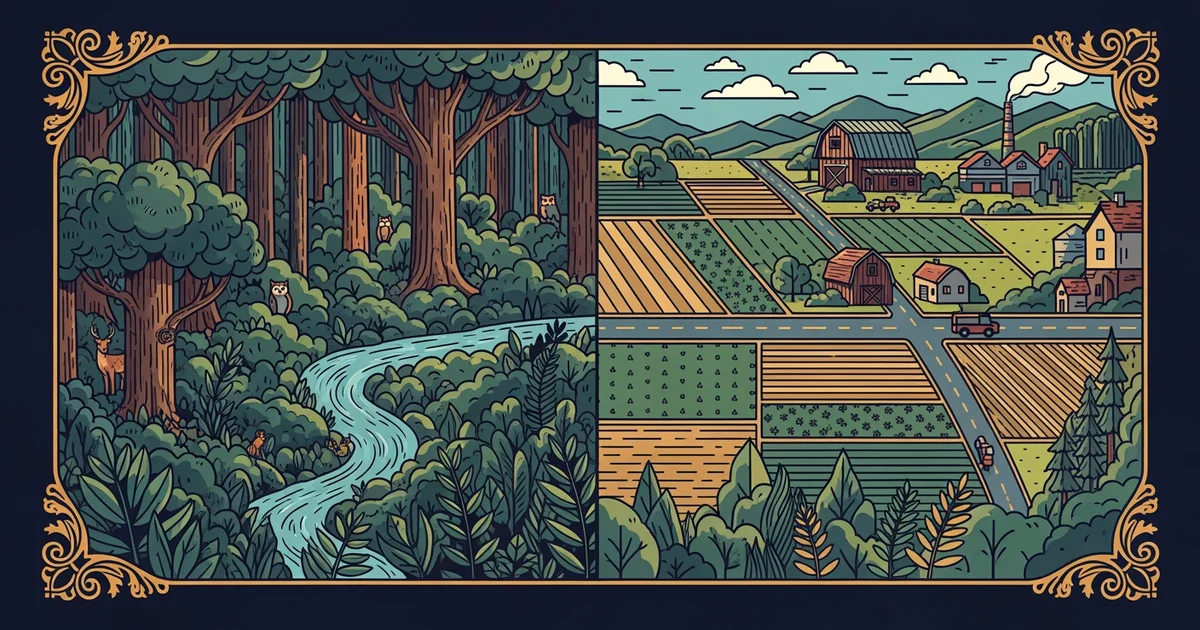
When we discuss how humans change the world, we are looking at anthropogenic influence on the landscape. This term describes any environmental modification that results from human activity rather than natural processes. Think of the earth like a massive, shared construction project where every generation adds a new layer to the foundation. We clear forests to build cities, drain wetlands for farms, and shift river courses to control water flow. These actions represent a fundamental shift in how the planet functions on a physical level. Without these constant human interventions, the surface of our world would look vastly different than it does today.
Key term: Anthropogenic — environmental changes or patterns caused directly or indirectly by human activity and social development.
Human influence on geography is often invisible until you look at the planet from a distance. We move more soil and rock each year than all the natural rivers combined across the globe. This massive movement of materials creates new landforms that did not exist in the geological record. We do this to create stable surfaces for our buildings or to extract resources from deep underground. The scale of this work is so large that it now changes how water moves across the surface. By building dams and paving roads, we redirect the natural flow of rain and streams into artificial channels.
Measuring the Physical Shift
To understand the depth of these changes, we must look at how different activities alter the landscape over time. Human land use changes the way energy and water move through the environment in many distinct ways. We can categorize these modifications based on their intensity and the permanence of the physical change they create:
- Urbanization turns porous soil into hard concrete, which prevents water from soaking into the ground and causes flooding.
- Agriculture replaces diverse plant life with single crops, which changes how the soil holds onto nutrients and moisture.
- Mining operations remove entire mountain tops or dig deep pits, which permanently alters the local topography and drainage.
These activities show that our footprint is not just a temporary mark on the earth. Each action leaves a lasting impact on the physical structure of the land itself. When we change the shape of the ground, we change how the entire ecosystem interacts with the sun and rain. This creates a cycle where the land must adapt to our presence in order to remain stable.
| Activity Type | Primary Physical Change | Impact on Water Flow |
|---|---|---|
| Urbanization | Hard surface creation | Increases runoff speed |
| Agriculture | Soil structure change | Alters moisture levels |
| Mining | Topography removal | Redirects local streams |
We must realize that these changes are cumulative and grow with every new development project. Just as a bank account grows with every deposit, the physical changes to our planet accumulate over time. Each road or building acts as a deposit in the ledger of human-driven landscape transformation. Understanding this process is the first step toward managing our future relationship with the natural world. By studying these patterns, we learn how to balance our needs with the health of the earth. We are the architects of the modern world, and every choice we make shapes the surface of our home.
Human activities reshape the planet by permanently altering the physical structure and natural processes of the earth's surface over time.
This path provides a complete framework for analyzing how human history and land use have collectively redesigned the global landscape.