
Climate Feedbacks
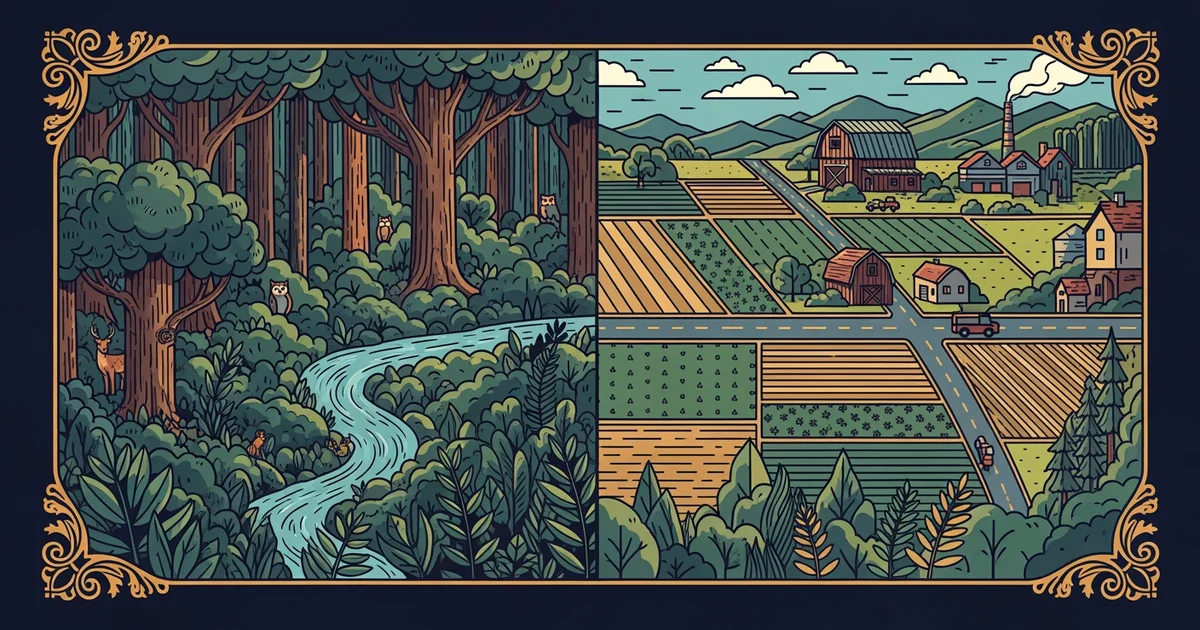
When farmers in the Amazon Basin clear large swaths of forest for cattle grazing, they remove the natural cooling system of the local environment. This act of changing the land surface creates a chain reaction that alters how heat and moisture move through the air above the soil. This is the climate feedback mechanism from Station 10 working in real conditions, where removing trees forces the local weather to shift from a humid, rainy state to a much drier, hotter pattern.
The Mechanics of Surface Alteration
Removing deep-rooted trees changes the way the ground interacts with the sun and the atmosphere. Forests act like giant sponges that soak up water and release it slowly back into the air through leaves. When humans remove these trees, the ground loses its ability to recycle moisture through the process of transpiration. Without this recycling, the air becomes significantly drier and warmer, which changes the local wind patterns and cloud formation. Think of this like removing the cooling fans from a computer; the machine continues to run, but the internal temperature rises because the heat has nowhere to go. This shift in temperature often prevents rain from forming, as the air lacks the moisture needed to create clouds. The land then becomes even drier, which creates a cycle where the forest finds it harder to recover or regrow.
Cycles of Regional Warming
These land changes trigger a series of events that amplify the initial warming caused by clearing the forest. When the ground is bare, it reflects more sunlight than a dark, dense forest canopy would. This change in reflectivity, known as albedo, shifts the energy balance of the entire region. The bare soil absorbs heat differently than the vegetation, which leads to higher surface temperatures during the day. Higher temperatures cause the soil to dry out even faster, which prevents new plants from taking root and stabilizing the ground. This creates a feedback loop where the land surface changes, the climate reacts, and those weather changes further degrade the land surface.
| Process | Direct Impact | Resulting Change |
|---|---|---|
| Deforestation | Loss of moisture | Less regional rain |
| Soil Exposure | Higher reflection | Increased heat gain |
| Vegetation Loss | Reduced cooling | Drier local winds |
Key term: Albedo — the measure of how much sunlight a surface reflects back into space instead of absorbing as heat.
This table shows how human choices on the ground dictate the regional weather patterns. Each row represents a step in the process where human action leads to a predictable climate shift. By clearing land, we change the physical properties of the earth, which forces the atmosphere to adjust its behavior. These adjustments are not temporary; they persist as long as the land remains in its altered state. The feedback loop ensures that the climate remains locked in this new, warmer, and drier condition for a long time.
Understanding these feedbacks helps us see why small changes in land use have massive impacts on global climate trends. When we clear land, we are not just moving trees; we are changing the heat distribution of the entire planet. This process is cumulative, meaning that each acre cleared adds to the total shift in regional weather. We must consider these long-term effects when planning how to use land for farming or development. Ignoring these feedbacks leads to a planet that is less stable and harder to manage for future generations. The connection between the soil we stand on and the air we breathe is stronger than most people realize.
Human actions that alter the landscape trigger self-reinforcing climate cycles that permanently shift local weather patterns toward hotter and drier conditions.
But this model breaks down when we try to predict how these local changes influence global weather systems across different continents.