
Climate Feedback Systems
When the Arctic ice shelf retreated to record lows in 2012, researchers observed a massive shift in how the planet absorbs solar radiation. This event demonstrated how local changes in surface reflectivity trigger a larger, self-reinforcing cycle of warming that alters global temperatures. This is an example of a positive feedback loop from Station 11, where the initial loss of reflective ice exposes darker ocean water. The darker water absorbs more heat, which leads to further melting and creates a dangerous cycle of rising temperatures.
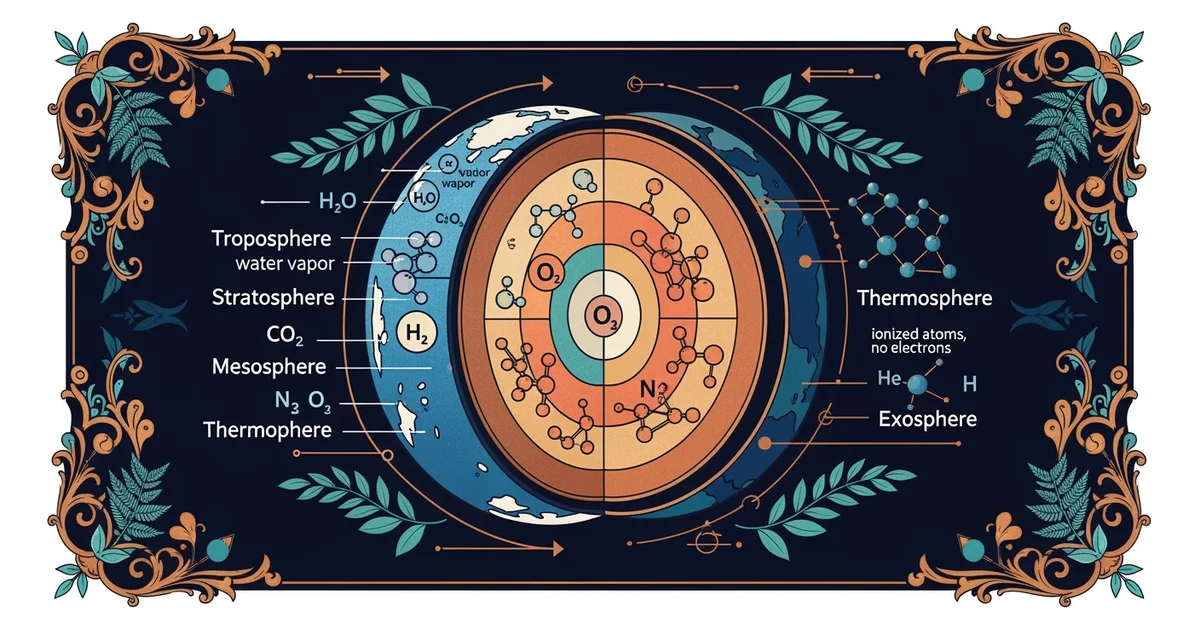
The Mechanism of Thermal Amplification
Atmospheric chemistry acts as the primary engine for these feedback systems by trapping outgoing infrared energy. When gases like accumulate, they prevent heat from escaping into the vacuum of space, effectively acting like an insulating blanket. This insulation warms the surface, which then changes the chemical state of other compounds in the atmosphere. Water vapor is perhaps the most critical player in this process, as warmer air holds significantly more moisture than cooler air does. Because water vapor is also a potent greenhouse gas, the presence of extra humidity traps even more heat, creating a compounding effect that accelerates the warming trend initiated by industrial emissions.
Key term: Positive feedback — a process where the effects of a small change amplify the original cause, leading to a larger total outcome.
Think of this process like an escalating credit card debt where interest charges create a larger balance each month. If you only pay the minimum amount, the interest adds to the principal, which generates even more interest in the next cycle. In the climate system, the initial warming from greenhouse gases acts like the principal debt, while the resulting increase in atmospheric water vapor acts like the high interest rate. Each degree of warming forces the atmosphere to hold more moisture, which then traps more heat, ensuring that the system continues to grow warmer without needing additional external input.
Chemical Interactions and Planetary Stability
Beyond water vapor, the chemistry of the oceans plays a vital role in regulating the total amount of carbon circulating in our atmosphere. The ocean acts as a massive carbon sink, absorbing through the surface to form carbonic acid. This process is summarized by the chemical reaction
ightleftharpoons \text{H}_2\text{CO}_3. As the oceans warm, their ability to dissolve these gases decreases, which limits their capacity to act as a buffer against rising emissions. The following list highlights the primary chemical factors that influence these feedback loops:
- Methane release from permafrost: As frozen soil thaws, organic matter decomposes to release methane, which is a greenhouse gas far more effective at trapping heat than carbon dioxide.
- Cloud cover changes: Shifts in atmospheric moisture create new cloud patterns that can either reflect incoming sunlight or trap heat, depending on their altitude and density.
- Ocean acidification: As water absorbs more carbon dioxide, the resulting change in pH levels disrupts the marine life that helps process and store carbon in the deep sea.
SMILES notation · Educational reference only
These chemical shifts do not happen in isolation, as every reaction influences the speed of the others. When methane escapes from thawing permafrost, it adds to the total greenhouse gas concentration, which raises the global temperature. This higher temperature then causes more ice to melt and more permafrost to thaw, creating a multi-layered system of amplification. Scientists track these changes using sensors that monitor the precise concentration of these molecules. By understanding these links, we can better predict how different chemical inputs will change the long-term stability of our environment.
Climate feedback systems demonstrate how small chemical changes in the atmosphere create self-sustaining cycles that amplify global warming trends over time.
But this model becomes difficult to apply when scientists try to distinguish between natural climate variability and human-driven chemical changes.