
Unified Relativity Model
Imagine you are standing on a fast train while watching a clock on the platform. The platform clock ticks at a normal pace for someone standing still on the ground. However, your own movement on the train forces the light inside your clock to travel a longer path. This strange effect means your time must stretch out to keep the speed of light constant for everyone. When we add the pull of gravity to this motion, the fabric of space itself begins to bend and warp around massive objects.
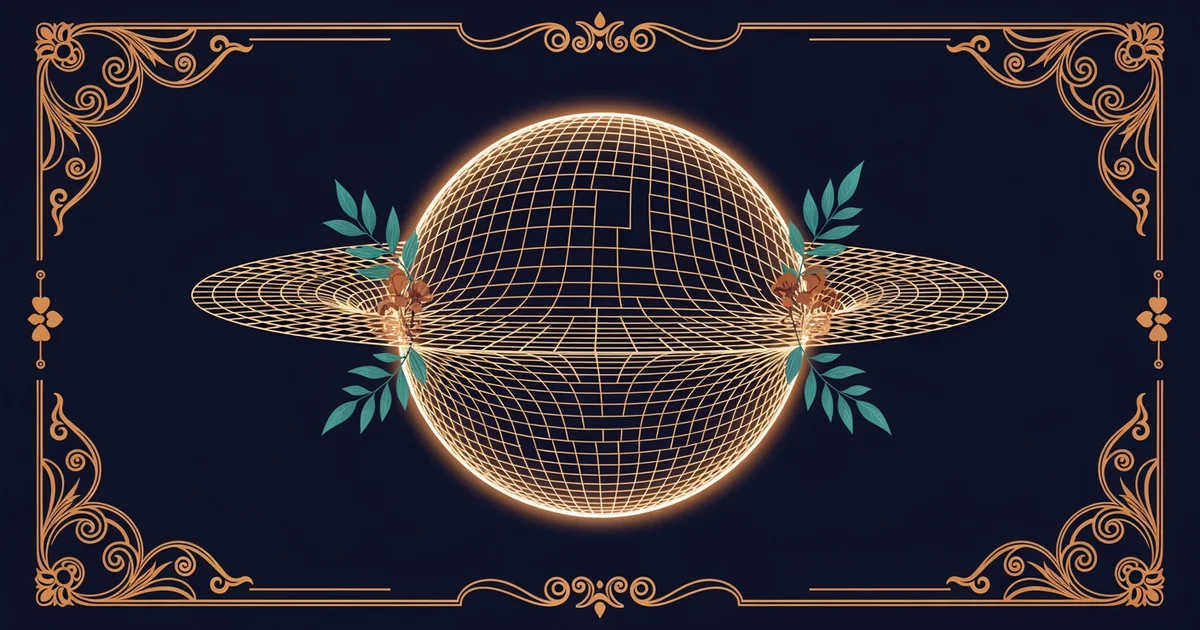
Combining Motion and Gravity Effects
Gravity acts like a heavy weight placed on a soft rubber sheet, pulling everything toward the center. As you move closer to a massive star, the space around you becomes more curved and dense. This curvature forces time to slow down because the path light takes becomes even longer than it would be in empty space. We call this combined behavior the Unified Relativity Model, which explains how both speed and gravity dictate our experience of time. If you move very fast near a planet, these two effects stack together to change how you perceive the passage of seconds.
Key term: Unified Relativity Model — a framework that combines the effects of speed and gravity to explain how time dilation functions across the entire universe.
Think of this like an expensive toll road where the price changes based on your vehicle speed and the weight of your cargo. If you drive a heavy truck, the road surface dips lower and makes your journey take much longer to complete. If you drive a fast sports car, your speed creates a different kind of delay that alters your arrival time. The universe acts as the toll booth operator, ensuring that the total cost of your journey remains consistent for every observer. You cannot avoid these cosmic rules, no matter how hard you try to outrun the gravity of a star.
Analyzing Time Dilation Variables
To understand how these variables interact, we must look at how mass and velocity contribute to the final result. While speed is easy to measure, gravity depends on the total mass of the object and your distance from its center. The table below shows how different conditions influence the rate at which time flows for an observer.
| Condition | Effect on Time | Primary Cause |
|---|---|---|
| High Speed | Time slows down | Velocity limit |
| High Gravity | Time slows down | Space curvature |
| Low Gravity | Time speeds up | Flat geometry |
When you combine these factors, the result is a complex dance of physics that dictates how we measure the age of the universe. We see this in the way satellites orbiting Earth must adjust their internal clocks to match our time on the ground. Because they move fast and sit in weaker gravity, their clocks tick slightly faster than ours every single day. If engineers did not use the General Relativity equations to correct these tiny errors, our global navigation systems would fail within a few hours. This practical application proves that time is not a fixed constant, but a flexible dimension that shifts based on your location and speed.
- The first factor is velocity, which forces time to dilate to preserve the speed of light for every observer in the system — without this, the laws of physics would break down in different frames of reference.
- The second factor is gravitational potential, which creates a deeper well in space that light and time must traverse — this effectively adds distance to every tick of a clock near a massive body.
- The third factor is the observer frame, which determines how you measure these changes relative to someone else in a different region of space — this ensures that everyone agrees on the final result despite their different paths.
These interactions create a reality where time is deeply personal to your specific position in the cosmos. We must consider the total gravitational mass of the galaxy and our own velocity to find the true pace of time. This synthesis allows us to answer why time passes slower near black holes than it does in deep space. The gravity is so intense that the space itself is stretched to a point where time almost stops for an outside viewer. As we look at the stars, we see a history of time that has been warped by the massive objects scattered throughout the vast, dark void.
Time dilation is the result of space curving under gravity and stretching under velocity, forcing clocks to tick at different rates depending on their specific cosmic environment.
The next step in our journey explores how this flexible nature of time changes our perspective on the history of the entire universe.