
Stellar Evolution Impacts
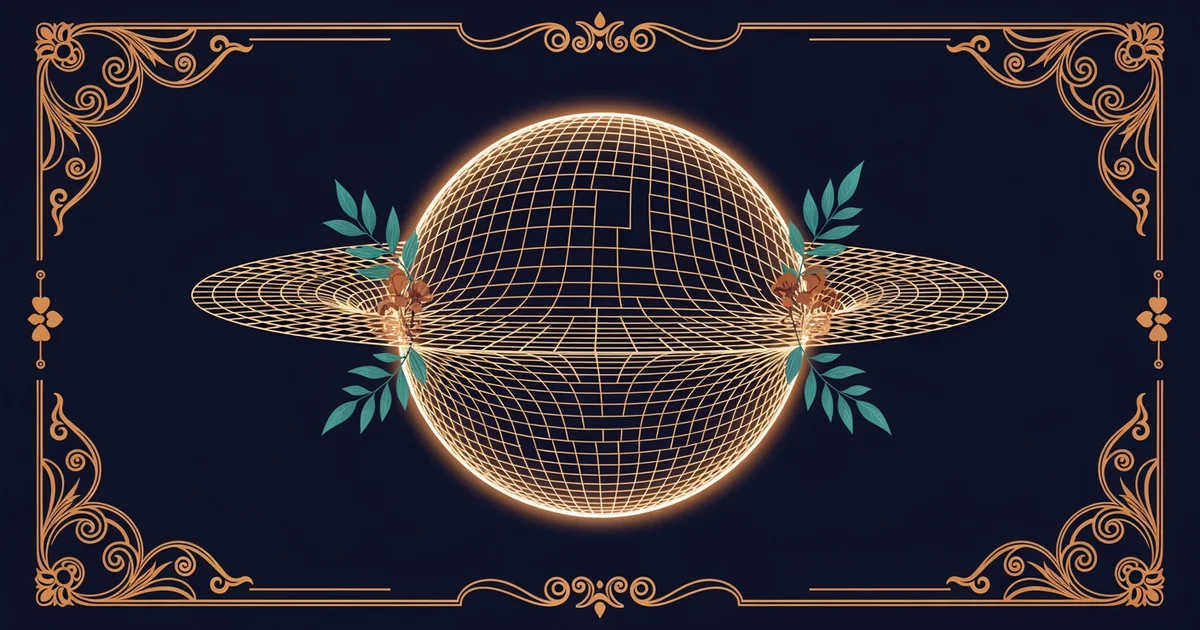
When a high-speed train pulls into a station, the passengers inside experience time differently than those waiting on the platform. This happens because the train moves through space, but massive objects like stars warp the very fabric of space and time around them. Much like a heavy lead ball placed on a trampoline, a star creates a deep curve in the geometry of the universe. This curvature is what we call gravity, and it dictates how fast time flows for anyone near that massive object. As a star ages, its internal density changes, which alters how much it pulls on the fabric of reality.
The Density Factor in Time Distortion
Gravity is not just about how much stuff is in an object, but how tightly that stuff is packed together. Imagine a busy city market where people are crowded into a tiny space, making it very hard for anyone to move through the crowd quickly. If the same number of people spread out over a large park, everyone moves with ease and speed. A star works in the same way, as its total mass creates a specific gravitational field that influences nearby clocks. When a star collapses into a denser state, the surface gravity increases significantly at its edge. This intense gravity forces time to stretch, a phenomenon known as time dilation, which becomes more extreme as the star gets smaller and denser. This is the same principle from Station 12, where we saw that proximity to a black hole horizon creates a massive shift in time flow compared to observers far away in empty space.
Key term: Gravitational time dilation — the slowing of time in regions of stronger gravitational fields compared to regions with weaker fields.
Stellar Evolution and Gravity Shifts
Stars do not stay the same size throughout their entire lives, as they undergo constant changes in their internal structure. A star begins as a cloud of gas that collapses under its own weight, eventually igniting through nuclear fusion. As it runs out of fuel, the star might expand into a giant or collapse into a dense remnant like a white dwarf. These changes in size directly impact the gravitational pull felt at the star's surface, which in turn shifts the rate of time for any observer nearby. We can compare how different stellar remnants affect time based on their final state:
| Stellar Object | Relative Density | Time Dilation Effect |
|---|---|---|
| Main Sequence Star | Low | Minimal slowing |
| White Dwarf | High | Moderate slowing |
| Neutron Star | Extreme | Significant slowing |
Each step in this table shows how packing mass into a smaller volume creates a stronger gravitational influence. A neutron star, which is incredibly dense, creates a much stronger time shift than a standard star of similar mass. This happens because you can get much closer to the center of mass when the object is small, leading to a much steeper curve in space-time.
Comparing Gravitational Influence
Understanding these shifts requires us to look at how different objects warp the environment around them. If you were floating near a massive star, you would find that your watch ticks slightly slower than a watch on a distant planet. If that star then collapsed into a neutron star, the time dilation would increase because the gravity at your location would become much stronger. This is not about the clock being broken, but about the nature of time itself being stretched by the mass. The closer you are to the gravitational source, the slower your personal timeline advances relative to the rest of the universe. This relationship explains why stellar evolution is not just a change in light or heat, but a fundamental change in how time behaves in the vicinity of the star.
The density of a star determines the intensity of space-time curvature, which directly controls the rate at which time passes for nearby observers.
But this model of static gravity breaks down when we consider how rotating masses drag space-time along with them.