
Gravitational Wave Detection
Imagine standing on a calm lake while a massive rock creates ripples that travel across the water. These ripples move outward in every direction until they gently touch the distant shore of the lake. Scientists now detect similar ripples moving through the fabric of space and time itself. These cosmic waves arrive from violent events located deep within the distant reaches of our universe. By studying these movements, we gain new ways to observe phenomena that remain hidden from traditional light-based telescopes.
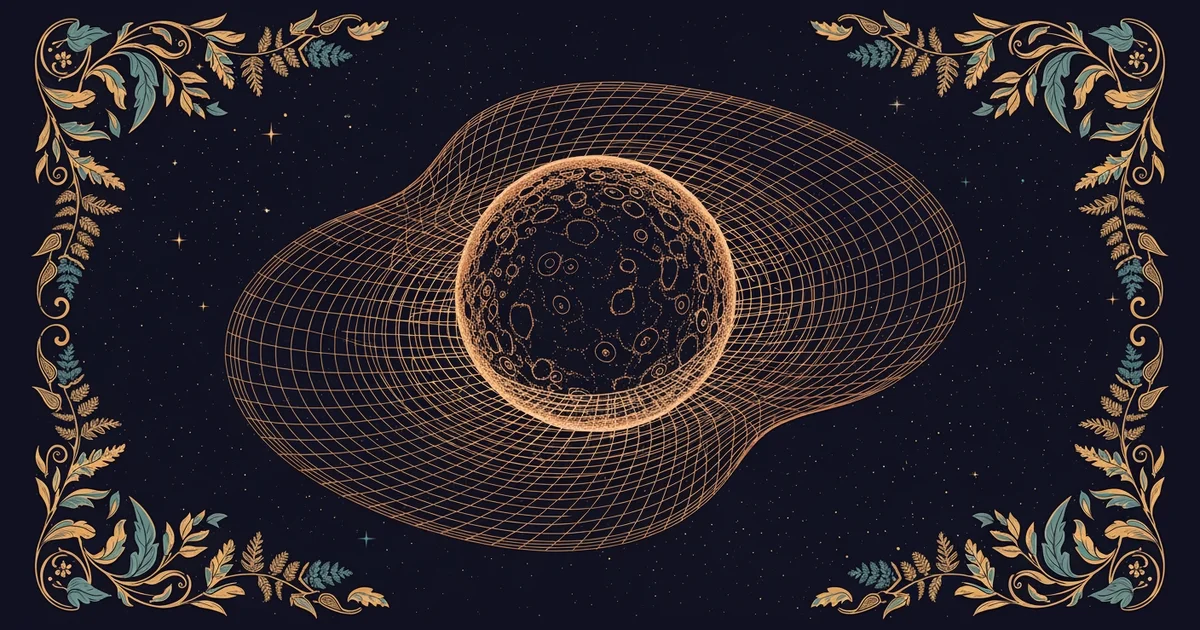
Detecting Invisible Spacetime Ripples
When massive objects like black holes collide, they release energy that warps the geometry of spacetime. This process generates gravitational waves, which are oscillations in the curvature of space that propagate at the speed of light. Think of these waves like the sound of a drum beating in a dark room; you cannot see the drum, but you hear the vibrations it creates. Because space is incredibly stiff, these ripples remain very small by the time they reach our planet. Detecting them requires measuring changes in distance that are smaller than the width of a single proton.
To capture these faint signals, researchers build massive laser interferometers that use light to measure tiny shifts in space. These devices split a laser beam down two long, perpendicular tunnels before reflecting the light back to a central point. When a gravitational wave passes through the detector, it stretches one arm while simultaneously squeezing the other arm. This interference pattern reveals the precise timing and strength of the passing wave. By comparing signals from multiple detectors, scientists can triangulate the exact location of the original cosmic collision.
Key term: Interferometer — a precision instrument that uses the interference of light waves to measure microscopic changes in physical distance.
This technology builds on our understanding of black hole singularities discussed in the previous station. While singularities represent points where density becomes infinite, gravitational waves provide the data needed to map their movements. These waves allow us to observe the actual merger of massive bodies that emit no light. Our ability to measure these events confirms that space is not a static stage but a dynamic, flexible medium. This discovery provides a new lens for viewing the history of the cosmos.
Scientific Applications of Wave Data
Modern observatories track several distinct types of cosmic events to refine our models of gravity. Each event leaves a unique signature in the data that reveals the nature of the objects involved. The following table summarizes how different events influence the signals we receive from space:
| Event Type | Signal Duration | Frequency Range | Scientific Value |
|---|---|---|---|
| Black Hole Merger | Very Short | High Frequency | Confirms General Relativity |
| Neutron Star Binary | Long Duration | Low Frequency | Maps matter density |
| Supernova Blast | Irregular | Broad Spectrum | Reveals stellar core states |
By analyzing these signals, we can determine the mass and spin of distant objects with high accuracy. This data helps us test whether our current laws of physics hold true under extreme conditions. If the signals deviate from predicted patterns, it might suggest that our understanding of gravity requires significant updates. Such deviations could lead to new theories that bridge the gap between quantum mechanics and general relativity. We are essentially listening to the universe to find the limits of our own knowledge.
This research directly addresses our foundation question regarding how space and time shape reality. We now know that space acts like a fabric that carries information across billions of light years. By observing these waves, we move beyond simple visual astronomy into a new era of multi-messenger science. This shift allows us to combine light, particles, and gravity to build a complete picture of the universe. Every detection brings us closer to understanding the fundamental structure of the vacuum itself.
Gravitational waves serve as a cosmic messenger that reveals the hidden dynamics of space and time through minute physical distortions.
The ripples we detect today prepare us to explore the expanding universe model in our next station.