
Time Dilation Explained
Imagine you are standing on a train platform while a high-speed express train rushes past you. If you could see the clock inside the train carriage, you would notice that it ticks slower than the watch on your own wrist. This strange phenomenon is not a mechanical error or a trick of your vision. It is a fundamental property of our universe that dictates how time flows for objects moving at different speeds. Scientists call this effect time dilation, and it proves that time is not a constant value for every observer in existence.
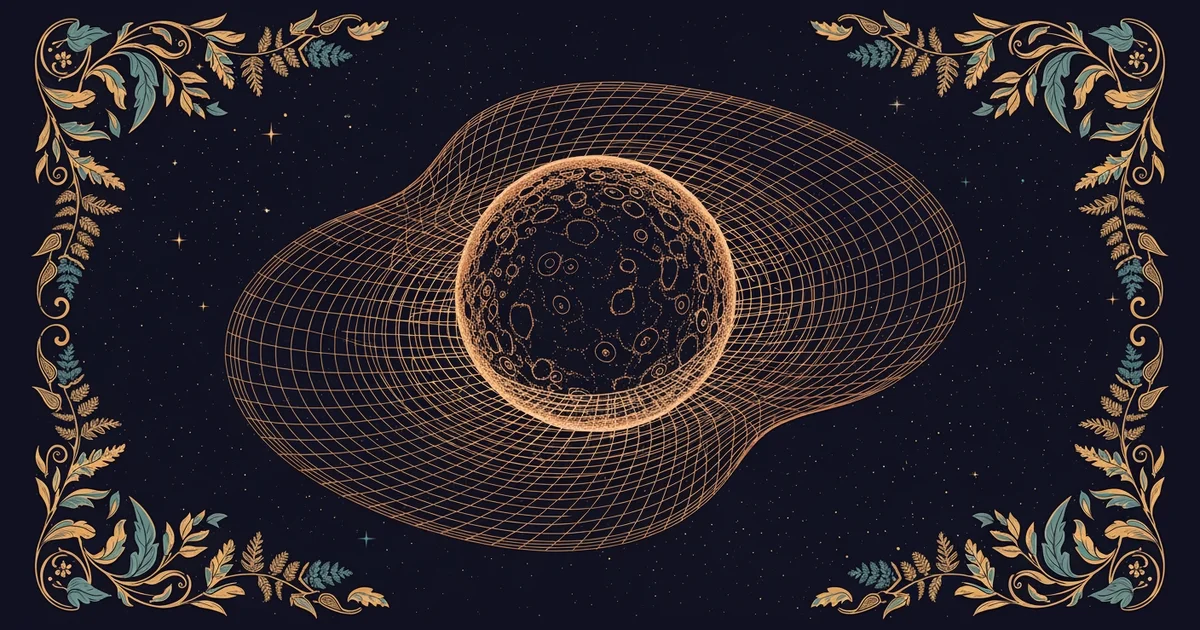
The Mechanics of Relative Motion
To understand why time shifts, you must accept that the speed of light is the absolute limit of the universe. Because light must travel at a constant velocity for every observer, space and time must adjust to keep that speed steady. When an object moves quickly through space, it effectively trades some of its progress through time to maintain that balance. This means that a person moving at high velocity experiences a shorter duration of time compared to someone who remains stationary. The faster you travel, the more pronounced this gap becomes, creating a measurable difference in aging or event timing.
Key term: Time dilation — the physical effect where time passes at different rates for observers moving at different relative velocities.
Think of this process like a currency exchange between two different countries. If you have a set amount of energy to spend on motion, you can use that energy to move through space or to move through time. When you increase your velocity through space, you necessarily reduce the rate at which you move through time. Just as you cannot spend the same dollar in two different shops, you cannot use your total motion budget to travel through space without slowing your progression through the dimension of time.
Calculating the Shift in Seconds
We can quantify these changes using specific math formulas that relate velocity to the passage of time. The formula for this effect is expressed as . In this equation, represents the velocity of the object, while is the speed of light. As the velocity approaches the speed of light , the denominator becomes very small, which makes the observed time interval grow much larger. This mathematical relationship ensures that no object with mass can ever reach the speed of light, as the time dilation effect would become infinite.
We can compare how different speeds impact the passage of time for a traveler compared to a stationary observer:
| Velocity as % of Light | Time Dilation Factor | Resulting Effect |
|---|---|---|
| 10% of light speed | 1.005 | Negligible shift |
| 50% of light speed | 1.155 | Noticeable delay |
| 90% of light speed | 2.294 | Massive slowing |
This table demonstrates that the effects of time dilation are only significant when moving at a large percentage of light speed. At everyday speeds like driving a car or flying in a jet, the difference is so small that humans cannot perceive it. However, high-precision atomic clocks can detect these tiny shifts even during routine air travel. This confirms that the rules of physics apply to every object, regardless of whether the speed is slow or fast.
Time dilation demonstrates that velocity directly alters the flow of time because the speed of light remains constant for everyone.
The next Station introduces length contraction, which determines how physical objects change their dimensions when moving at high speeds.