
Historical Physics Precedents
Imagine you are standing on a moving train while tossing a ball straight into the air. To you, the ball goes up and down, but to someone watching from the station, the ball follows a curved path forward. This simple experience shows that your view of motion depends entirely on your own speed and position. For centuries, scientists believed that space and time were fixed stages where events played out independently. They thought of the universe as a rigid clockwork machine that ticked away at the same steady rate for everyone everywhere. This classical view worked perfectly for building bridges or predicting the paths of cannonballs on our home planet. However, as our tools improved, we began to see cracks in this old, comfortable picture of reality.
The Shift from Fixed to Relative Mechanics
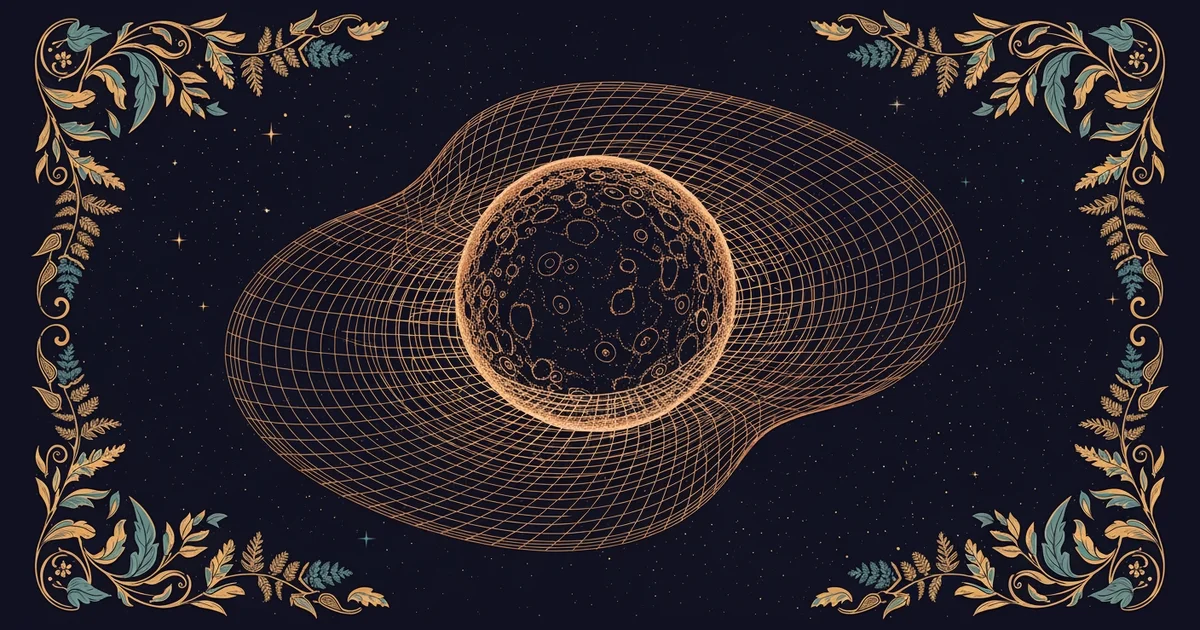
Classical physics relied on the idea that absolute time and space provided a stable background for all physical events. If you measured the speed of an object, you simply added the speed of the observer to the speed of the object itself. This logic feels intuitive because it matches our daily experience with cars on a highway or runners on a track. Yet, this model fails when we look at the cosmic scale of light and gravity. Modern science suggests that space is not a rigid box but a flexible fabric that stretches and bends under pressure. By moving away from fixed mechanics, we gain a deeper understanding of how the universe truly functions at its limits.
Key term: Newtonian mechanics — the set of physical laws describing motion and gravity that assumes time and space remain constant for all observers.
When we compare these two ways of thinking, we see that the shift requires a complete change in our mental framework. Newtonian mechanics works well for low speeds, but it breaks down when objects approach the speed of light. Relativistic models suggest that time actually slows down as you move faster through space. This is not just a measurement error, but a fundamental property of the universe that we must accept to see the bigger picture. Think of it like a currency exchange where the value of your time changes depending on where you are standing.
Comparing Classical and Relativistic Models
To understand the difference, we must look at how each model treats the fundamental building blocks of our physical world. The following table highlights the core differences between the older classical view and the modern relativistic approach to the universe:
| Feature | Classical Mechanics | Relativistic Models |
|---|---|---|
| Space | Rigid and fixed | Dynamic and flexible |
| Time | Constant for all | Relative to motion |
| Gravity | Instant force | Curved space fabric |
This comparison shows that our transition from classical to modern physics is more than just a minor update to old math. It is a fundamental shift in how we perceive the very nature of existence. While classical physics remains useful for engineering tasks on Earth, it cannot explain the complex behavior of stars or the bending of light near massive objects. We must use relativistic models to account for the way gravity warps the geometry of space itself. This realization forces us to stop viewing the universe as a static stage and start seeing it as a living, breathing environment.
Understanding these historical precedents helps us see why modern physics feels so strange compared to our everyday lives. We are used to a world where time is a steady beat, but the universe operates on a much more fluid rhythm. By accepting that our senses can deceive us, we open the door to discovering how energy and matter interact across the vast reaches of space. This journey from the clockwork universe of the past to the flexible reality of the present is the foundation for all modern scientific discovery. As we continue to study these concepts, we must ask ourselves how much of our current reality is actually a product of our limited perspective.
Modern physics replaces the idea of a fixed, rigid universe with a flexible, relative framework where space and time change based on speed and gravity.
The transition from these historical foundations leads us directly into the strange effects of time dilation.