
Length Contraction Effects
Imagine you are driving a car that is shrinking as you press the gas pedal. As you accelerate toward the speed of light, the world around you appears to change shape. This strange phenomenon is a core part of how space functions at extreme speeds. Objects do not just move through space; they actually change their physical dimensions relative to an outside observer. This effect is known as length contraction, and it happens whenever an object moves at a significant fraction of light speed. While it seems impossible in daily life, this is a fundamental rule of the universe.
The Geometry of Motion
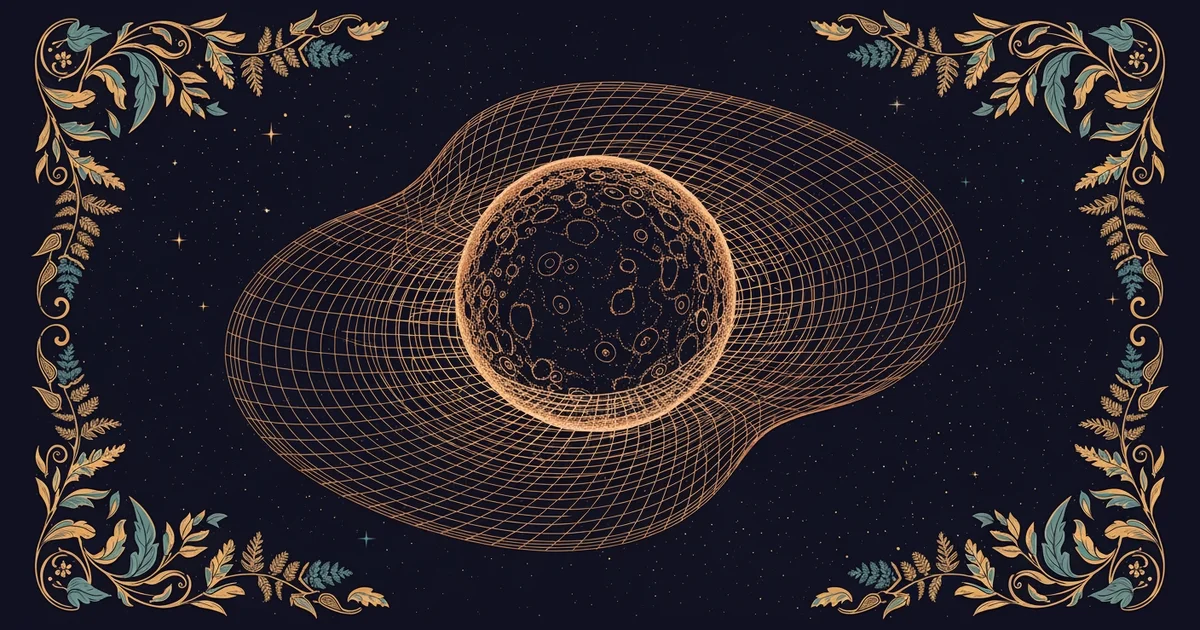
When an object moves through space, its length along the direction of motion seems to decrease. This happens because space and time are linked together in a single fabric. If you watch a rocket ship zoom past you at nearly the speed of light, you will see it look much shorter than it does when it is parked on the ground. The rocket itself does not change; its crew feels no pressure or squeezing. Instead, the space between the front and the back of the ship appears compressed from your viewpoint. This is not an optical illusion caused by light travel, but a real change in the spatial measurements.
Key term: Length contraction — the phenomenon where the measured length of an object is shorter when it is moving relative to an observer.
To understand this, think of a long train moving on a track. If the train could travel at nearly the speed of light, a person standing on the platform would see the train look like a squashed accordion. The passengers inside the train would see the station platform look shorter as they zoomed past it. Both observers are correct in their own frame of reference. This happens because the speed of light remains constant for everyone, regardless of how fast they are moving. To keep the speed of light steady, space itself must stretch or shrink to balance the equation.
Measuring the Fabric of Space
We can describe this relationship using a mathematical factor that accounts for the speed of the object. The formula for the observed length is given by , where is the length at rest. As the velocity approaches the speed of light , the value under the square root gets smaller. This forces the measured length to shrink toward zero. It is important to remember that this effect only occurs along the direction of motion, meaning the object does not get thinner or wider.
| Feature | At Low Speed | At Light Speed |
|---|---|---|
| Length | Appears normal | Appears shorter |
| Width | No change | No change |
| Physics | Newton laws | Relativity laws |
This table shows how the physical properties of a moving object shift based on velocity. At normal speeds, the contraction is so small that we cannot detect it with our eyes. We only notice these effects when dealing with subatomic particles or cosmic events. The following points explain why this matters for our understanding of reality:
- Space is not a fixed stage but a flexible medium that responds to motion.
- Objects possess a rest length that only exists when they are not moving relative to us.
- Measurements of distance are relative to the observer, which challenges our common sense about fixed sizes.
These principles show that the universe is far more dynamic than it appears. By accepting that space is not absolute, we can begin to see how energy and motion define the structure of the cosmos. This insight changes how we think about travel across the vast distances of space. If we could move fast enough, the distance to distant stars would effectively shrink, making the journey much shorter than it would seem to someone waiting at home.
Length contraction proves that the physical dimensions of an object are relative to the speed of the observer.
The next Station introduces mass-energy equivalence, which determines how mass changes as an object gains speed.