
The Expanding Universe Model
Imagine you are watching a loaf of raisin bread rise inside a very hot oven. As the dough expands, the individual raisins move farther apart from each other, yet they remain fixed within the dough itself. The expanding universe follows this same logic, where galaxies drift away from one another while the space between them stretches steadily over time. This discovery changed how we view the cosmos, moving us from a static, unchanging model to a dynamic, evolving reality. By applying the laws of physics, we can track this expansion backward to understand how the universe began as a tiny, dense point.
The Geometry of Cosmic Growth
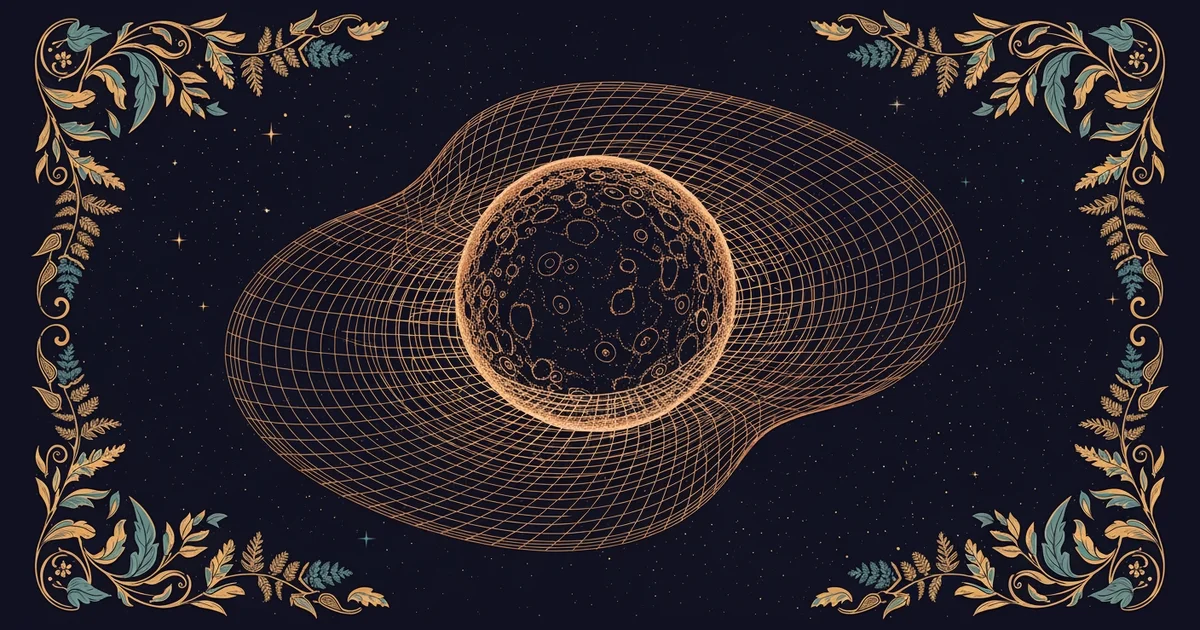
When we look at the universe through the lens of general relativity, space is not a rigid container for matter. Instead, space is a flexible fabric that can bend, warp, and expand according to the distribution of mass and energy. This concept relates directly to our previous study of gravitational waves, which are ripples in this very same fabric caused by massive events. While gravity pulls objects together on a local scale, the overall structure of the universe is dominated by a force that drives expansion. This expansion is not an explosion into existing space, but rather the creation of new space between galaxies.
Key term: Hubble constant — the unit of measurement used by scientists to describe the current rate at which the universe is expanding.
To visualize this, consider how the expansion of space affects light traveling across the cosmos. As light moves through stretching space, its wavelength is pulled apart, causing it to shift toward the red end of the spectrum. This phenomenon, known as redshift, provides the primary evidence that distant galaxies are moving away from us at high speeds. The following list outlines the primary factors that influence the rate of this cosmic growth:
- Dark energy acts as a repulsive force that accelerates the expansion of space by pushing galaxies away from one another over vast distances.
- Matter density provides a gravitational counter-force that attempts to slow down the expansion by pulling everything back toward a central point of origin.
- Spatial curvature determines the long-term fate of the universe based on the total amount of energy and matter contained within the system.
Synthesis of Space and Time
Returning to our foundation question, we can now see that the fabric of space and time defines our reality by setting the stage for all physical interactions. The universe is not a static backdrop but an active participant that shapes the path of light and the movement of matter. By combining the principles of special relativity with the expansion model, we understand that time itself is linked to the scale of the universe. As space expands, the relationship between distant observers changes, which forces us to rethink our place in the vast cosmic timeline.
| Observation Type | Physical Process | Resulting Evidence |
|---|---|---|
| Galactic Distance | Light stretching | Redshift measurements |
| Gravitational Waves | Fabric ripples | Distorted spacetime |
| Cosmic Growth | Metric expansion | Increasing galaxy gaps |
This table illustrates how different observations confirm the dynamic nature of our universe. We have moved from observing local gravitational effects to measuring the expansion of the entire cosmos. The tension between gravity, which pulls things together, and the expansion of space, which pushes things apart, defines the life cycle of every galaxy we see. Understanding this balance helps us answer how the universe remains coherent while growing larger every single second. The study of relativity ensures that we account for both the local influence of massive objects and the global expansion of the cosmic web.
The expansion of the universe represents a fundamental stretching of the fabric of spacetime that dictates the movement and evolution of all matter on a cosmic scale.
The universe continues to evolve as a dynamic system where the interplay of gravity and expansion shapes the ultimate fate of all existence.