
Flight Path Design
Imagine you are trying to balance a spinning coin on its edge while running across a busy room. Keeping a massive metal aircraft stable in the sky requires that same delicate balance of competing forces acting upon the frame. Designers must carefully manage the interaction between weight, lift, thrust, and drag to ensure the vehicle remains safe during flight. By aligning these forces correctly, engineers allow massive metal objects to overcome gravity and stay aloft for hours.
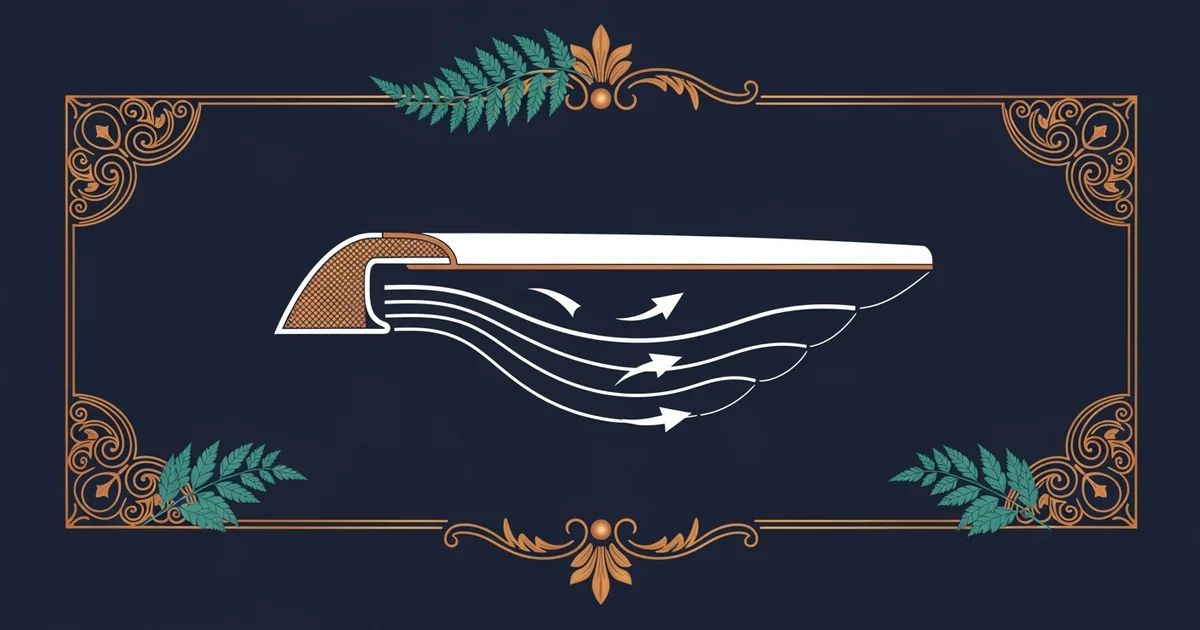
Balancing Aerodynamic Forces
To build a stable aircraft, engineers must first harmonize the four primary forces that act on every flying machine. Weight pulls the craft toward the ground, while lift acts in the opposite direction to keep it in the air. Thrust pushes the plane forward through the atmosphere, and drag resists that movement by creating friction against the air. Designers calculate the center of gravity and the center of pressure to ensure these forces do not cause the aircraft to tumble uncontrollably. When these points are misaligned, the plane may pitch or roll unexpectedly, making steady flight nearly impossible for the pilot to maintain.
Key term: Center of gravity — the specific point where the total weight of an aircraft is concentrated and balanced in all directions.
Building a stable flight path is like managing a complex household budget where every dollar must account for a specific expense. If you spend too much on thrust without accounting for drag, your fuel efficiency drops rapidly and the mission fails. Similarly, if you add too much weight without increasing lift, the aircraft will struggle to maintain altitude or speed. Designers use sophisticated modeling to ensure that every structural component adds value without disrupting the delicate balance required for sustained, level, and efficient travel.
Configuring the Airframe
Once the forces are balanced, designers choose an aircraft configuration that suits the specific mission requirements. This involves selecting wing shapes, tail placements, and engine locations that optimize performance for the intended speed and altitude. Engineers often categorize these configurations based on how they handle stability during flight transitions. The following list outlines the primary components that dictate how an aircraft maintains its intended path through the air:
- Vertical Stabilizers provide directional stability by acting like a rudder on a boat to prevent unwanted yawing motions.
- Horizontal Stabilizers control the pitch of the aircraft by balancing the lift generated by the main wings at the rear.
- Wing Sweep influences how air flows over the surface, which is critical for managing drag during high-speed flight transitions.
| Configuration Type | Primary Advantage | Typical Mission Goal |
|---|---|---|
| Fixed-Wing | High efficiency | Long-range transport |
| Rotary-Wing | Vertical takeoff | Urban mobility tasks |
| Delta-Wing | Supersonic speed | Military interceptors |
These configurations demonstrate how physical geometry dictates performance limits. A delta-wing design excels at high speeds but lacks the efficiency needed for long-distance cargo transport. By selecting the correct geometry, engineers ensure the vehicle can handle the stresses of its mission while maintaining structural integrity. Integrating these choices requires deep knowledge of how air density changes with altitude, which directly affects the lift equation . If the wing surface area or velocity is insufficient, the aircraft cannot generate the necessary lift to overcome its own weight.
Designers also consider how previous advancements in high-speed flight influence modern stability systems. By utilizing fly-by-wire technology, computers now make thousands of micro-adjustments per second to keep the plane on its path. This automation solves the tension between manual control and the need for extreme precision in turbulent conditions. The challenge remains: how do we design for even greater efficiency without sacrificing the stability that keeps passengers safe during long journeys? This question drives the ongoing search for lighter materials and smarter wing designs that adapt to changing wind patterns in real time.
Successful flight path design relies on the precise alignment of aerodynamic forces through optimized geometry and automated control systems to maintain stability.
The next phase of our journey explores how revolutionary materials and propulsion systems will redefine the future of flight.