
Climate Models and Forecasting
A sudden rainstorm can ruin a picnic, but predicting that storm requires massive computational power. Meteorologists rely on complex systems to turn raw data into the weather forecasts we see daily. These systems process billions of calculations to track how gases and heat move across our planet. By looking at current states, they try to guess what the atmosphere will do next. This is much like trying to predict the exact path of a single leaf in a windy forest. You see the gust, but the final resting spot remains hidden until the wind finally dies down.
The Mechanics of Numerical Weather Prediction
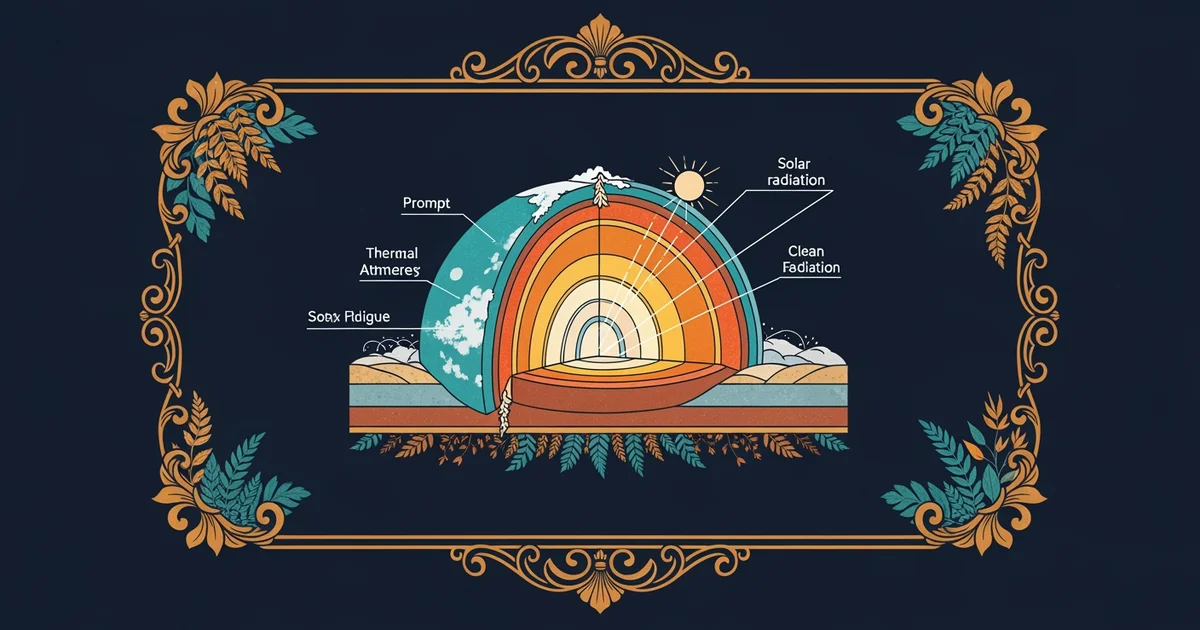
Numerical weather prediction serves as the backbone for modern forecasting by using mathematical equations to simulate the atmosphere. These models divide the globe into a three-dimensional grid, calculating physical changes within each box over time. Scientists input data from satellites, weather balloons, and ground stations to set the initial conditions for the simulation. Because the atmosphere is a fluid, these models must solve complex equations for mass, momentum, and energy conservation. If the initial data contains even a tiny error, the final prediction can shift dramatically over time. This sensitivity to starting conditions is a core challenge that keeps meteorologists working to improve their observation networks.
Key term: Numerical weather prediction — a method of forecasting that uses mathematical models of the atmosphere to predict future weather states based on current data.
Computers calculate these patterns by iterating through time steps, where each step represents a small slice of future weather. Imagine you are managing a budget where you must track every single cent spent throughout the entire year. If you lose track of just one penny early on, your final balance will be wrong by the end. Weather models function exactly like this, where tiny rounding errors in early calculations compound into larger discrepancies. To fix this, researchers run the same model many times with slight variations to see if the results stay consistent. This process, known as ensemble forecasting, helps identify the most likely weather outcome among many possible scenarios.
Challenges in Climate Modeling
Transitioning from short-term weather forecasting to long-term climate modeling introduces even more variables that researchers must account for carefully. While weather focuses on the state of the atmosphere over days, climate models analyze the average trends over decades. These models must incorporate interactions between the atmosphere, the oceans, and the land surface to be accurate. Earlier stations explored global circulation cells, which represent the large-scale movement of air across different latitudes on Earth. Climate models must integrate these circulation patterns with energy balance equations like to track how heat is distributed globally.
| Variable | Weather Model | Climate Model |
|---|---|---|
| Timeframe | Days to weeks | Years to centuries |
| Focus | Current state | Long-term trends |
| Complexity | High resolution | Broad interactions |
These models face significant hurdles when trying to simulate clouds or small-scale turbulence within the larger atmospheric structure. Since these features are smaller than the model grid, scientists use parameterization to estimate their total effects. This is similar to estimating the total cost of a grocery trip without counting every individual item's price. You know the general price range, but the exact total remains an estimate based on past shopping habits. By refining these estimates, researchers can better understand how invisible gases impact the complex weather systems governing our world.
Researchers still debate how to best represent feedback loops in these models, especially regarding ice melt and water vapor changes. The interaction between human activity and natural cycles creates a high level of uncertainty that requires constant study. We must ask ourselves if our current mathematical tools are sufficient to capture the non-linear nature of these systems. As we continue to refine these models, we gain a clearer picture of the forces shaping our future environment.
Accurate forecasting relies on balancing precise initial data with complex mathematical simulations to account for the chaotic nature of our atmosphere.
The next station will explore how these models help us understand the impacts of atmospheric change on our global environment.