
Gravity and Gas Pressure
Imagine you are trying to squeeze a giant, fluffy pillow into a tiny shipping box. As you push the pillow down, the air inside gets squished, creating resistance that pushes back against your hands. This simple act of compression mirrors how our planet manages its atmosphere through the constant tug of gravity. Gravity acts like a giant, invisible hand that pulls every molecule of air toward the surface of the Earth. Because the air has weight, the layers at the bottom must support the massive load of all the air sitting above them. This weight creates the force we measure as atmospheric pressure, which dictates everything from how we breathe to how weather patterns shift across the globe. Understanding this balance is essential for grasping why our sky behaves the way it does every single day.
The Weight of the Invisible Column
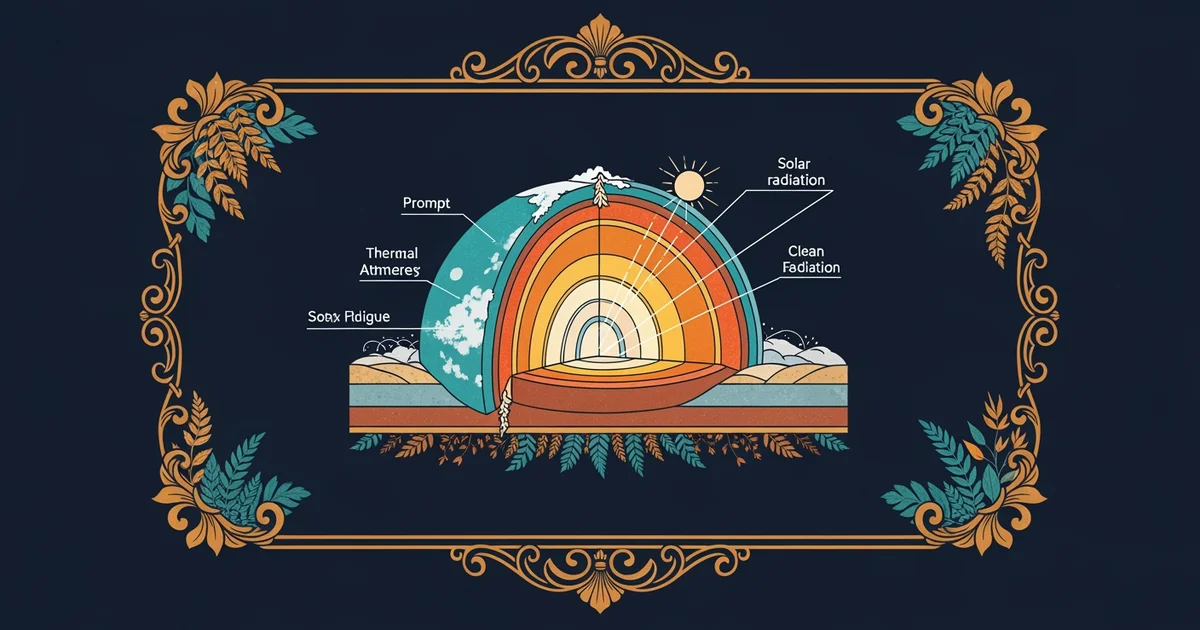
To visualize this force, imagine a tall, hollow tube extending from the ground all the way to the edge of space. Inside this tube, a column of air sits directly over your head, exerting a downward force because gravity pulls on every gas molecule. At sea level, this column is at its longest, meaning the weight of the air molecules is at its absolute maximum. Think of it like standing at the bottom of a deep swimming pool where the water above you feels heavy and dense. The air molecules near the surface are packed tightly together because they are supporting the weight of the entire atmosphere above them. This high concentration of molecules is what we call high density, and it directly results in the high pressure we feel at lower altitudes.
Key term: Atmospheric pressure — the force exerted on a surface by the weight of the air column above it.
Density and the Altitude Drop
As you begin to climb a high mountain, the length of that invisible air column above you starts to shrink rapidly. Because there is less air sitting above you, the total weight pressing down on your body decreases significantly. This change in weight causes the air to spread out, leading to a drop in density that makes the air feel much thinner. You can compare this to a crowd of people at a concert where the front row is packed tight, but the back rows have plenty of space to move around. The atmosphere behaves exactly like that crowd, with the most crowded, high-pressure areas located right at the surface of the planet. As you move higher, those air molecules have more room to drift apart, which explains why climbers often struggle to catch their breath at extreme elevations.
| Altitude | Air Density | Pressure Level | Breathing Difficulty |
|---|---|---|---|
| Sea Level | Very High | Maximum | Very Easy |
| Mid Mountain | Moderate | Medium | Noticeable Effort |
| High Peak | Very Low | Minimum | Extremely Hard |
This table illustrates how the properties of air change as you move away from the surface of the Earth. The relationship is consistent because gravity is strongest near the planet, pulling the vast majority of gas molecules into the lowest layers. When you reach higher altitudes, the reduced gravitational pull on the total volume of air means that fewer molecules are available to fill the space. This is not just a theory, but a physical reality that dictates the limits of human activity and the behavior of our weather systems.
- Gravity pulls air molecules toward the center of the Earth, creating the initial weight of the atmosphere.
- Compression occurs at the surface, where the weight of the upper air squeezes the lower air into a dense layer.
- Expansion happens as altitude increases, because there is less weight pushing down, allowing the gas to spread out.
These three factors work together to create the pressure gradient we experience. Without gravity, the air would simply float away into space, and we would have no atmospheric pressure to sustain our climate. By studying these shifts in density, we learn how the atmosphere organizes itself into the layers that protect our world.
The force of gravity compresses air molecules near the surface, creating higher pressure that decreases as the weight of the overhead air column diminishes at higher altitudes.
Next, we will explore how these pressure changes define the specific vertical layers of our atmosphere.