
Atmospheric Motion
Imagine standing on a beach as the cool ocean breeze hits your face during a hot summer day. This refreshing movement of air happens because the land heats up much faster than the water does. The uneven heating creates a pressure difference that forces air to move across the surface. This simple mechanism drives the massive global wind patterns that shape our daily weather experiences across the planet.
The Mechanics of Pressure Gradients
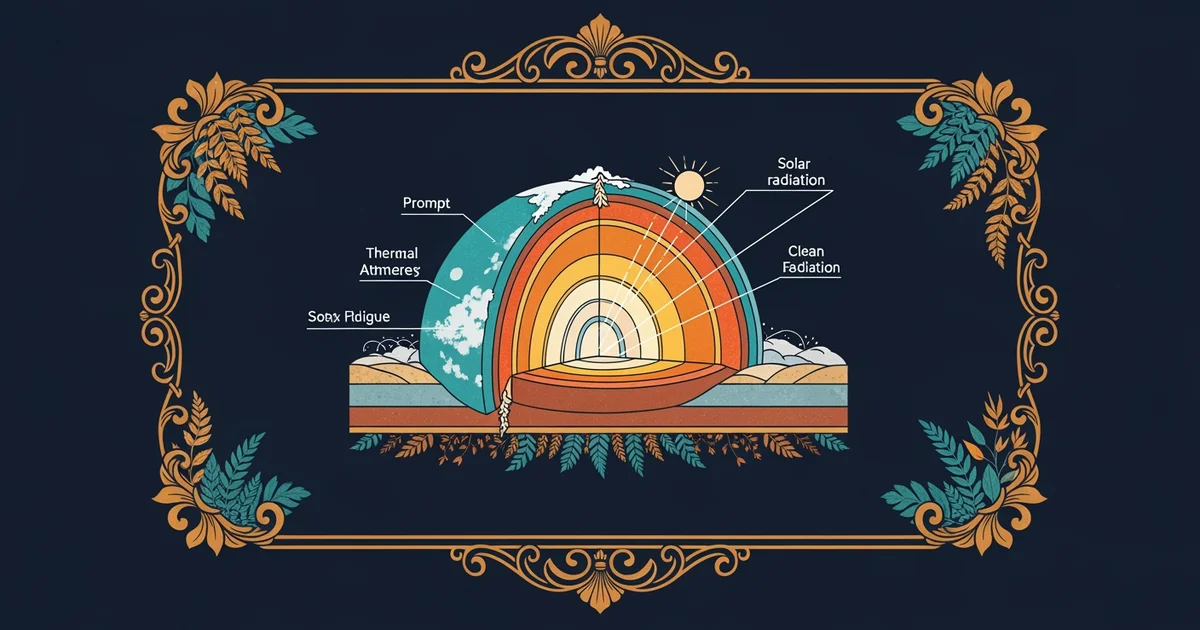
Atmospheric motion begins with the fundamental concept of atmospheric pressure, which measures the weight of air above a specific point. When the sun warms the surface of the Earth, that heat transfers into the air molecules resting just above the ground. These warm molecules gain kinetic energy and spread apart, which causes the air to become less dense and rise upward. As the air rises, it leaves behind a region of lower pressure near the surface that must be filled. Cooler, denser air from high-pressure areas rushes into these low-pressure zones to restore balance. This constant search for equilibrium acts like an economic market where goods flow from areas of high supply to areas of high demand. In this case, the air flows from high-pressure regions toward low-pressure regions to equalize the density of the atmosphere.
Key term: Pressure Gradient Force — the physical force that pushes air from areas of high atmospheric pressure toward areas of low atmospheric pressure.
This movement is not random but follows specific physical rules dictated by the intensity of the heating process. The speed of the resulting wind depends directly on the distance between high and low pressure regions. If the pressure difference is steep over a short distance, the wind will blow with much greater force. Meteorologists represent these differences using lines on a map that connect points of equal pressure. When these lines sit close together, the wind speeds increase because the air experiences a stronger push toward the low-pressure center. The atmosphere essentially functions like a giant heat engine that converts solar radiation into kinetic energy through these pressure differences.
Global Drivers of Surface Winds
Beyond local breezes, the entire planet experiences large-scale wind movements driven by the uneven distribution of solar energy. The equator receives direct sunlight year-round, while the poles receive much less energy due to the angle of the sun. This temperature contrast creates a permanent global circulation system where warm air rises at the equator and travels toward the poles. As this air cools and descends at higher latitudes, it generates massive belts of high and low pressure that encircle the Earth. These systems determine the prevailing wind directions that sailors and pilots have relied upon for many centuries.
| Feature | High Pressure Zone | Low Pressure Zone |
|---|---|---|
| Air Motion | Sinking air | Rising air |
| Weather | Clear and stable | Cloudy and stormy |
| Density | Denser air | Less dense air |
We can summarize the primary influences on surface wind patterns through these factors:
- Differential Heating occurs when land and water absorb solar radiation at different rates, which forces air to redistribute across the boundaries of these surfaces.
- Thermal Expansion causes air molecules to move further apart as they gain heat, which lowers the density of the air column and initiates vertical motion.
- Pressure Equilibrium drives the horizontal movement of air from dense high-pressure zones into the empty space left by rising low-pressure air masses.
Understanding these forces allows scientists to predict how air masses will interact when they meet. When a cold, dense air mass encounters a warm, moist air mass, the pressure gradient often triggers significant weather events. The physical interaction between these different densities is the primary reason we experience changing seasons and shifting climate patterns. By tracking these movements, we gain insight into the invisible forces that govern the stability of our local environment and the global climate system.
The movement of wind is a direct result of the atmosphere attempting to balance pressure differences caused by the uneven heating of the Earth's surface.
The next Station introduces the Coriolis Effect, which explains how the rotation of the Earth changes the path of these moving air masses.