
Solar Radiation Basics
When you stand under the hot summer sun, you feel the warmth instantly on your skin. This sensation is the direct result of energy traveling across space to reach our planet.
The Nature of Solar Energy Transmission
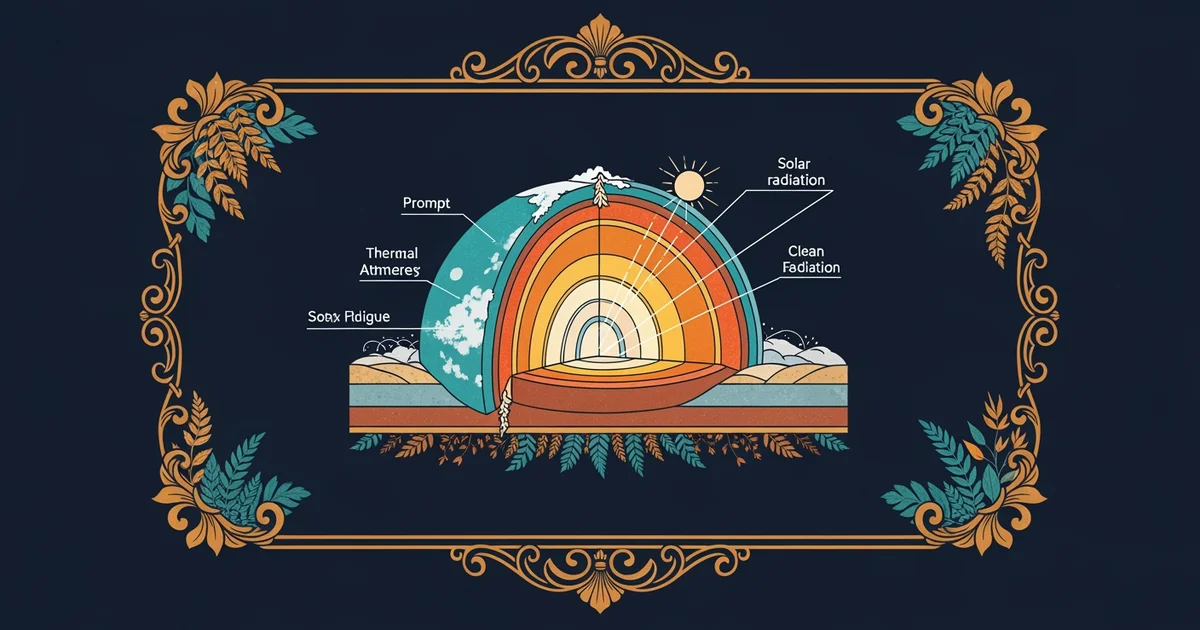
Solar radiation acts like a massive bank account that provides energy for every weather process on Earth. The sun emits energy in the form of electromagnetic radiation, which travels through the vacuum of space as waves. These waves do not need a medium like air or water to move forward. They carry different amounts of energy based on their specific wavelength. Shorter waves carry higher energy, while longer waves carry lower energy. When these waves encounter our atmosphere, they start a complex interaction that dictates the temperature of our world. Think of this process like a merchant selling goods at a market stall. The sun acts as the supplier who sends boxes of various sizes to the Earth. Some boxes are small and heavy with intense energy, while others are large and light. The atmosphere then acts as a customs agent that decides which boxes can pass through to the ground. This sorting process is vital for maintaining the delicate balance of life on our planet.
Key term: Electromagnetic radiation — a form of energy that travels through space in waves, including light, heat, and ultraviolet rays.
Atmospheric Absorption and Transformation
Once solar energy reaches the outer edges of our atmosphere, it encounters several layers of gases. These gases act as filters that absorb specific parts of the solar spectrum. The process of absorption occurs when atmospheric molecules capture solar energy and convert it into internal heat. This transformation is not uniform across all layers of the atmosphere. High-energy ultraviolet rays are largely stopped by the upper layers, which prevents harmful radiation from reaching the surface. Meanwhile, visible light passes through more easily to warm the ground below. The surface then radiates this absorbed energy back upward as heat. This creates a cycle where the ground acts as a secondary heater for the air above it. The interaction between incoming light and outgoing heat is what drives the movement of our global weather systems. Without this constant exchange, the Earth would remain a frozen sphere with no circulation of air or moisture.
| Radiation Type | Atmospheric Interaction | Resulting Effect |
|---|---|---|
| Ultraviolet | Mostly absorbed | Protects surface |
| Visible Light | Mostly transmitted | Warms the ground |
| Infrared | Partially trapped | Retains heat |
We can summarize how the atmosphere manages this solar energy through three primary mechanisms:
- Scattering occurs when gas molecules and particles redirect incoming light in many different directions, which helps create the blue color of our daytime sky.
- Reflection happens when clouds or light surfaces bounce solar energy back into space, which prevents that specific energy from warming the planet's surface.
- Absorption happens when the atmosphere or the ground takes in solar energy and converts it into heat, which raises the local temperature of that area.
These three processes ensure that only a portion of the total solar energy reaches the surface. The atmosphere acts as a protective shield that regulates the amount of energy entering the system. By managing the incoming solar budget, the atmosphere keeps the planet within a temperature range that supports life. This balance is fragile and depends on the composition of the gases present in the air. If the atmosphere changes, the amount of energy absorbed or reflected will also shift. This shift directly impacts the weather patterns we experience daily. Understanding this mechanism is the first step toward predicting how our climate might change over time.
Solar radiation provides the essential energy input that the atmosphere filters, absorbs, and redistributes to drive the complex weather systems governing our world.
The next Station introduces Thermal Energy Transfer, which determines how the absorbed heat moves through the atmosphere.