
Atmospheric Change Impacts
Rising sea levels and shifting weather patterns often feel like distant events until a local storm destroys a coastal bridge. These physical changes represent the direct output of energy balance shifts within our vast global atmosphere. When the planet absorbs more solar radiation than it radiates back into space, the system must adjust its internal state to find a new equilibrium. This process is much like a household budget where spending constantly exceeds income, eventually forcing a painful reduction in assets or a total financial overhaul. The atmosphere manages this energy surplus by moving heat from the equator toward the poles through complex wind currents and ocean circulation systems.
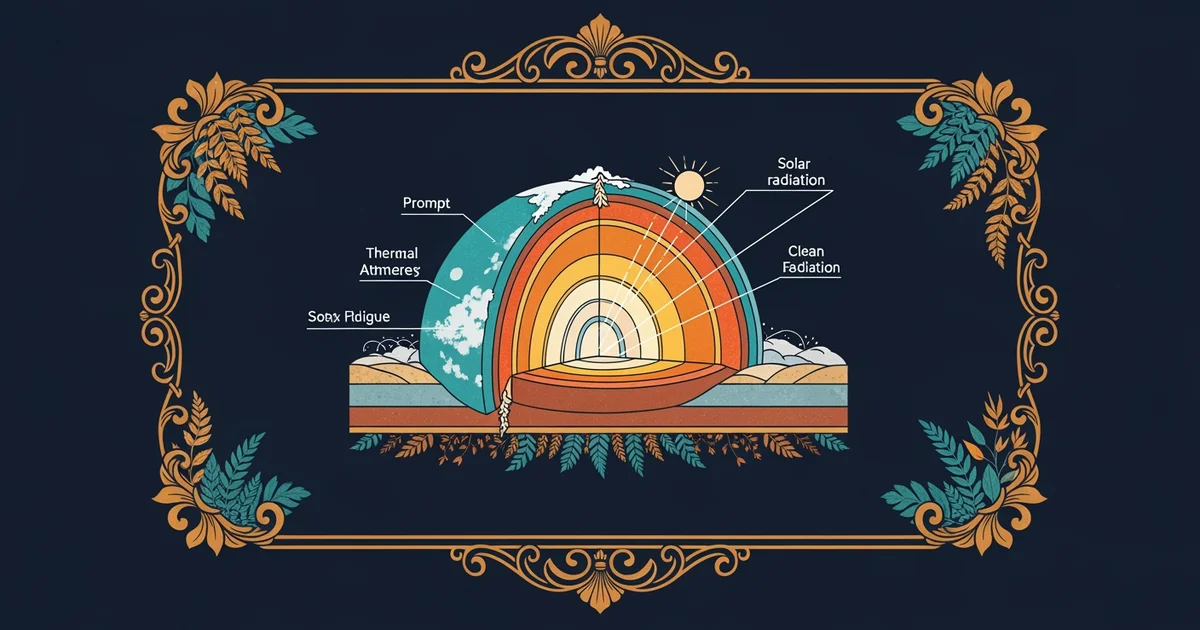
The Dynamics of Thermal Redistribution
Atmospheric physics dictates that any surplus energy must manifest as kinetic motion or increased thermal storage. As the global average temperature increases, the physical capacity of the air to hold water vapor also grows significantly. This creates a feedback loop where warmer air traps more infrared radiation, further accelerating the heating process across the entire globe. You can view this energy accumulation as a giant heat engine that gains power every time the temperature gradient between the surface and the upper atmosphere expands. If the engine runs too fast, the structural integrity of our weather systems begins to fail, leading to more extreme events.
Key term: Radiative forcing — the measurement of the capacity of a gas to affect the energy balance of the Earth.
When we look at the specific impacts of these energy shifts, we see clear trends in how the environment reacts to thermal stress. The energy is not distributed evenly, which causes localized disruptions in the standard circulation cells we discussed in earlier sections. These shifts create a situation where stable regions experience sudden, violent storms while other areas face prolonged periods of drought. The interaction between the thermodynamics of the air and the moisture content of the soil determines the severity of these local impacts. We can categorize these atmospheric changes by their physical manifestation and the scale of their influence on human life.
| Impact Type | Physical Cause | Primary Outcome | Scale of Effect |
|---|---|---|---|
| Storm Surge | Pressure drop | Coastal flooding | Local to Regional |
| Heat Waves | High pressure | Crop failure | Regional to Global |
| Drought | Air subsidence | Water scarcity | Regional to Continental |
Consequences of Energy Imbalance
These impacts demonstrate that the atmosphere acts as a complex, interconnected machine that seeks balance at any cost. When the energy balance is disrupted, the following phenomena occur as the system attempts to restore its previous state:
- Increased evaporation rates pull moisture from the land, which creates dry conditions that make wildfires much more likely to start and spread across large forest areas.
- Intensified hurricane activity occurs because warmer ocean temperatures provide more latent heat energy, allowing storms to grow stronger before they make landfall on populated coastal regions.
- Altered jet stream patterns cause weather systems to become stuck in one place for longer periods, which leads to record-breaking heat or rainfall in specific geographic zones.
Understanding these physical forces requires us to look at how the atmosphere interacts with the surface of the Earth. The energy balance is not just about the air above us, but also about how the ground and the oceans absorb or reflect incoming sunlight. When the albedo, or reflectivity, of the planet changes due to melting ice, more heat is absorbed by the dark ocean water. This cycle accelerates the warming process, making the system even more unstable than it was before the initial energy shift occurred. The atmosphere is essentially trying to vent excess heat, but our current conditions make that ventilation process increasingly violent and unpredictable for everyone living on the planet.
Global climate change is the physical manifestation of the atmosphere attempting to redistribute an unsustainable surplus of thermal energy across the planet.
Understanding atmospheric change allows you to predict how energy shifts will alter the weather patterns in your own region.