
Storm System Dynamics
During the 2012 Hurricane Sandy event, residents along the Atlantic coast witnessed the immense power of a large-scale atmospheric vortex. This massive storm system demonstrated how thermal energy converts into kinetic motion on a planetary scale. While people often view weather as random events, these storms follow strict physical rules that govern their growth and eventual decay. Understanding these dynamics helps us predict how energy moves through our global environment. This is the application of thermodynamic principles first introduced in Station 11 regarding cloud formation and energy transfer.
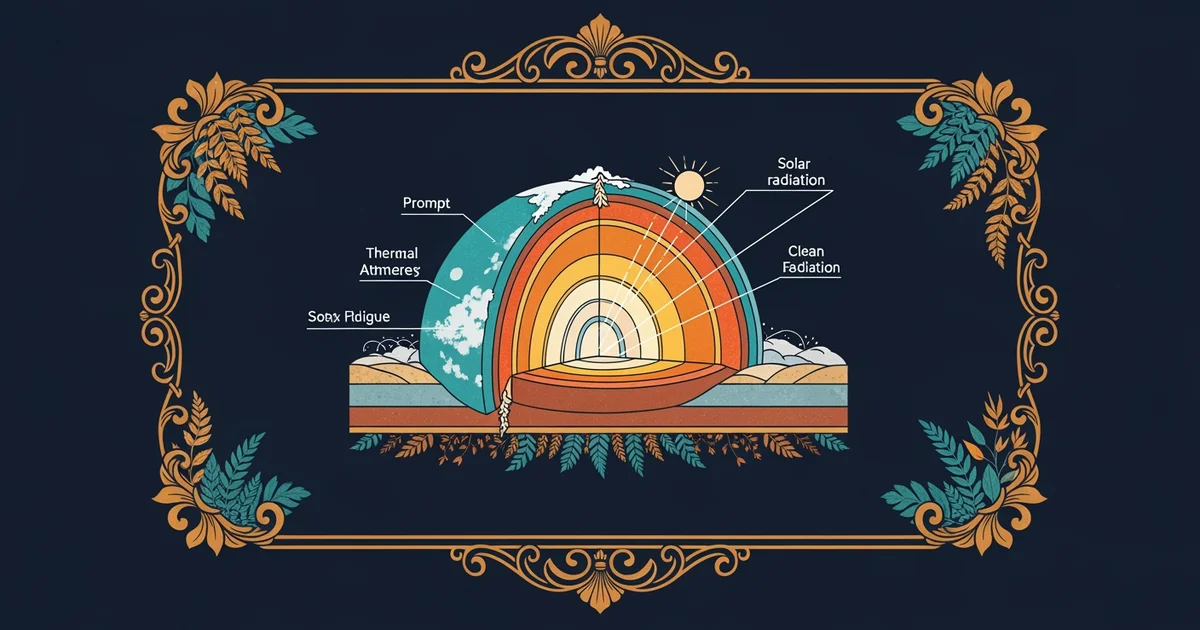
The Mechanics of Cyclonic Growth
Storm systems develop when large air masses interact within specific temperature gradients. As warm, moist air rises, it creates a region of low pressure near the surface of the Earth. Cooler air rushes in to fill this void, which sets the air into a rotating motion due to the Coriolis effect. This process acts like a massive heat engine that transfers energy from the ocean surface into the higher parts of the atmosphere. The system continues to grow as long as there is a steady supply of moisture and heat to fuel the rising air currents. Without this constant fuel source, the storm eventually loses its structural integrity.
Key term: Cyclogenesis — the process where a low-pressure area develops and intensifies into a major storm system.
Think of a storm system like a business managing its cash flow during a busy season. The warm ocean water represents the capital investment that allows the business to expand its reach. If the investment stops, the business must shrink its operations and eventually close its doors. Similarly, a storm system requires the constant input of latent heat to maintain its rotation and wind speed. When the storm moves over land or cold water, it loses its primary investment and begins to dissipate rapidly. This economic analogy illustrates how energy availability dictates the lifespan of complex physical systems.
Stages of the Storm Life Cycle
Every storm system travels through distinct phases of maturity that define its behavior and threat level. These stages reflect the internal energy balance of the system as it moves across the globe. Researchers classify these stages to better understand how a storm evolves from a simple disturbance into a powerful vortex. The following table outlines the key characteristics of these developmental phases throughout the typical lifespan of a storm:
| Stage | Air Pressure | Wind Intensity | Energy Source |
|---|---|---|---|
| Incipient | Falling | Light to Moderate | Solar Heating |
| Mature | Minimum | Maximum | Latent Heat |
| Dissipating | Rising | Decreasing | Friction Loss |
During the incipient stage, the storm is merely a small disturbance in the flow of the atmosphere. As it enters the mature stage, the pressure drops significantly and the wind speeds reach their peak velocity. Finally, the dissipating stage occurs when the system can no longer sustain its internal circulation. Friction with the surface of the Earth also plays a role in slowing down the winds during this final phase.
- Incipient development starts when pressure gradients create an initial inward flow of air toward a low-pressure center.
- Mature intensification occurs as latent heat release accelerates the rising air and deepens the central low-pressure core.
- Dissipating decline begins once the storm moves away from its primary moisture source or encounters significant terrain obstacles.
These three stages represent the natural progression of energy transformation within the atmosphere. Each phase depends on the previous one to maintain the physical structure of the rotating system. By observing these changes, scientists can estimate the remaining duration of the storm and its potential impact on surrounding regions. The transition from one stage to the next is often driven by subtle changes in the surrounding environmental conditions.
Storm systems function as complex heat engines that convert thermal energy into organized motion until their fuel source is exhausted.
But this model of cyclonic growth faces significant challenges when predicting how global climate change alters the frequency of extreme weather events.