
Instrument Design Principles
When a luthier carves a violin top to a specific thickness, they are balancing the physical weight against the structural tension of the strings. In 1954, when the Fender company released the Stratocaster, they chose an ash body because it provided a bright, punchy resonance that appealed to modern performers. This design choice represents the fundamental engineering trade-offs discussed in Station 12 regarding electronic sound synthesis, but applied to physical materials. Every instrument designer must decide how to manage energy, material density, and vibration pathways to achieve a desired tonal character.
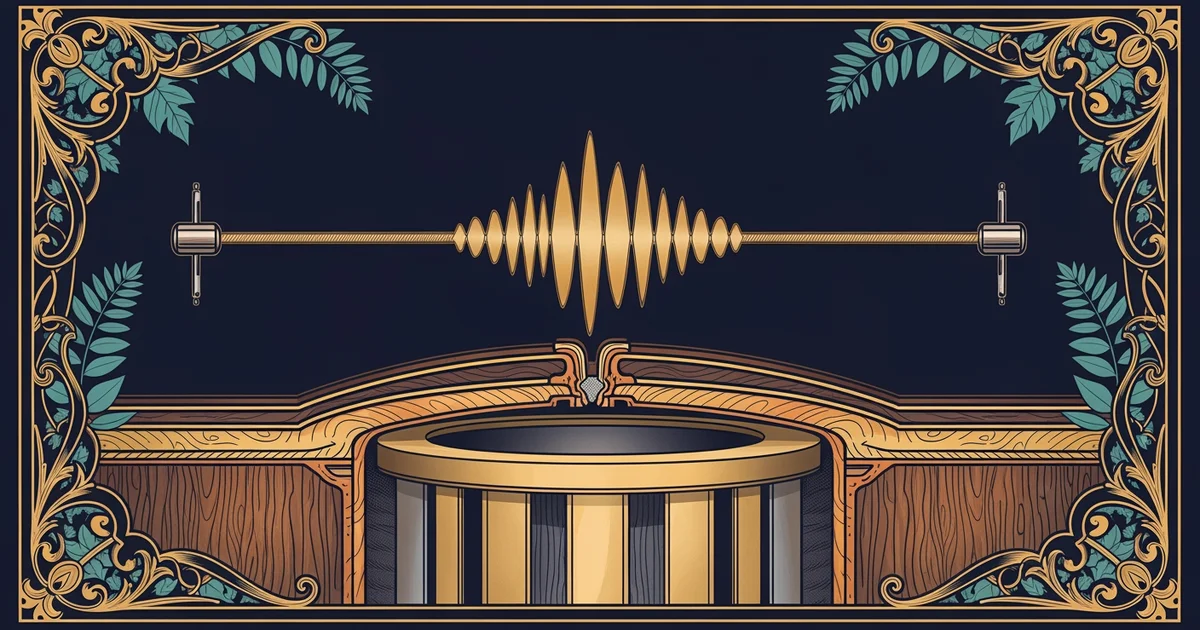
The Physics of Material Selection
Designers start by selecting materials that dictate how energy travels through an instrument body. A dense wood like maple reflects sound waves quickly, which produces a sharp and clear high-frequency response. In contrast, a porous wood like mahogany absorbs more energy, resulting in a warmer tone with a focus on lower frequencies. This process is similar to choosing a building material for a concert hall, where the goal is to control how sound bounces off the walls. Designers must select these materials to match the intended role of the instrument within an ensemble.
Key term: Timbre — the unique quality or color of a sound that distinguishes it from other sounds of the same pitch.
Beyond wood choice, the physical shape of the instrument determines the primary resonance points for the vibrating strings. A larger body cavity allows for more low-frequency amplification, while a smaller body focuses on mid-range clarity. Designers often use computer modeling to predict how these shapes will affect the overall output of the instrument. This ensures that the final product meets the specific needs of the musician, whether they require a booming bass or a delicate, cutting lead tone.
Structural Optimization for Performance
Once the materials and shapes are chosen, the designer must optimize the internal bracing or hardware to support the string tension. If an instrument is too rigid, the vibrations will die out quickly, leading to a short sustain time. If the instrument is too flexible, the energy is lost to the frame rather than being projected into the air. This balance is essential for achieving the right amount of responsiveness for the player. The following table illustrates how different design choices impact the performance characteristics of stringed instruments.
| Design Feature | Tonal Impact | Sustain Quality |
|---|---|---|
| Heavy Body | Bright Tone | Long Sustain |
| Hollow Body | Warm Tone | Short Sustain |
| Thick Bracing | Focused Tone | Moderate Sustain |
Designers must also consider how the bridge and nut materials influence the transfer of energy from the string. A metal bridge will generally provide a brighter sound with more sustain, while a bone or synthetic nut offers a more balanced and natural resonance. These small components act as the final gatekeepers for the energy that eventually reaches the listener. By carefully selecting these parts, a designer can fine-tune the instrument to match a specific genre or playing style.
To ensure consistency across their production, instrument makers often rely on standardized manufacturing techniques. They might use automated carving machines to ensure that every instrument has the exact same dimensions and internal volume. This removes the variability found in hand-crafted instruments, which can change due to the natural grain of the wood. Even with automation, the final assembly requires human expertise to calibrate the instrument for the best possible playability and tone.
Instrument design is a deliberate process of balancing material density and physical geometry to control how vibrations translate into a specific, desired tone.
But this model of physical design becomes significantly more complex when we must integrate digital signal processing into the acoustic structure for live performance.