
Overload to Isolate Tactics
Imagine you are trying to squeeze through a crowded hallway during a busy school passing period. If you and two friends walk side by side, you naturally push the crowd toward the walls to clear a path for yourself. Soccer teams use this same logic when they apply overload tactics to manipulate the defensive shape of their opponents. By packing too many players into one small area of the field, the attacking team forces the defenders to bunch up tightly. This movement leaves the opposite side of the field empty and vulnerable to a quick attack.
Creating Numerical Advantages in Small Spaces
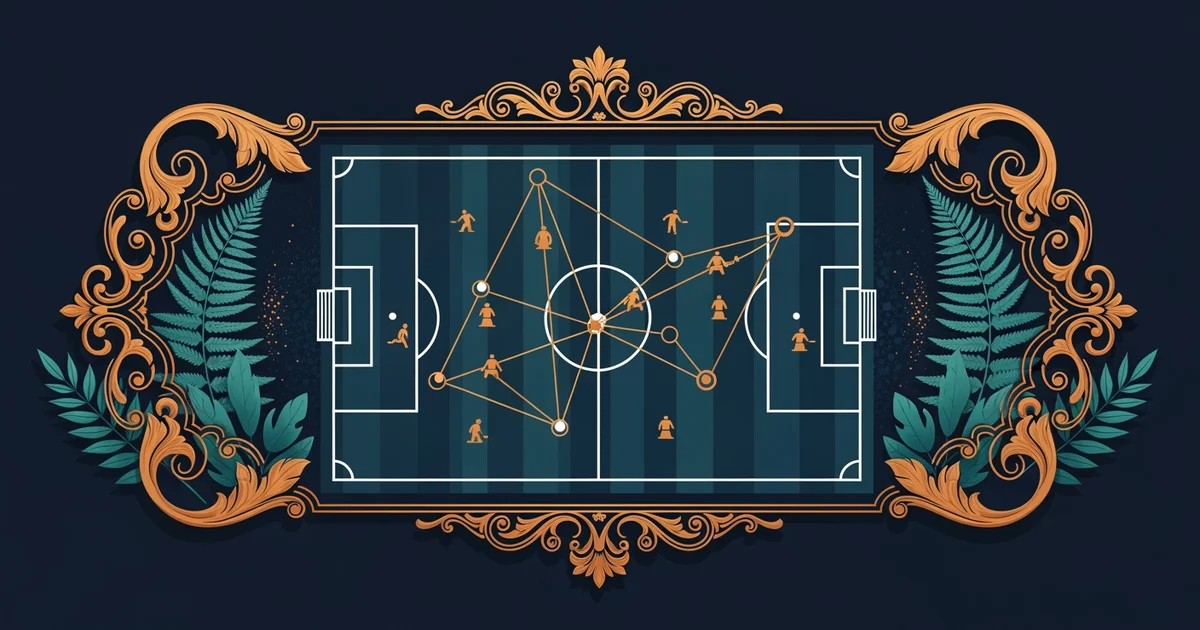
When a team creates an overload, they are essentially solving a complex math problem using physical player positions. They aim to create a situation where they have more players in a specific zone than the opposing team can cover. If the attacking team places three players against two defenders, the defense must shift their shape to prevent a simple pass through their ranks. This shift creates a mathematical imbalance that the attacking team can exploit through rapid ball movement. Just as a heavy weight on one side of a seesaw lifts the other end into the air, the pressure of an overload lifts the defensive pressure on the opposite wing. The goal is to draw the entire defensive unit toward the ball so that the far side of the pitch becomes isolated for a single attacker.
Key term: Isolate — the tactical act of creating a 1v1 situation on the wing by drawing the defensive block away from the flank.
To effectively pull defenders out of their preferred positions, the attacking team must move the ball with purpose and speed. If they pass the ball slowly, the defenders have enough time to adjust their shape without leaving gaps. However, when the ball moves quickly between the overloaded players, the defenders struggle to maintain their spacing and discipline. This panic leads to defensive errors, such as moving too far toward the ball or losing track of players on the far side. Once the defense is fully committed to the crowded side, a long diagonal pass can switch the play to an isolated teammate. This player then has the space and time to attack the goal without immediate interference from the opposing defense.
The Mechanics of Defensive Displacement
Moving the defensive unit requires more than just numbers, as it demands a coordinated effort from every player on the field. The attacking team must maintain their width even while they are overloading the center or one specific side. If every player drifts toward the ball, the defense can easily contain them within a small, compact box. Instead, the team uses a specific set of movements to ensure they occupy the right spaces at the correct time. These tactical steps allow the team to maintain control over the pitch while they wait for the perfect moment to strike:
- The attacking team shifts the ball to one side to draw the entire defensive line toward the sideline.
- Midfielders and forwards sprint into the overloaded zone to create a temporary numerical advantage against the local defenders.
- The player on the opposite wing stays wide to stretch the defensive shape and ensure they cannot cover the entire width of the field.
- A swift, long-range pass travels from the crowded zone to the isolated wing, forcing the defense to scramble back into position.
| Tactical Phase | Primary Goal | Defensive Reaction | Resulting Space |
|---|---|---|---|
| Overload | Force bunching | Shift toward ball | Far side open |
| Transition | Move ball fast | Sprint to recover | Passing lanes |
| Isolation | Create 1v1 | Man-mark winger | Attacking lane |
This table shows how the defensive reaction to an overload directly creates the space required for an isolation play. When the defense shifts to stop the overload, they lose their structural integrity and become vulnerable to a quick change in direction. The attacking team succeeds by forcing the defense to choose between two equally bad options. They must either leave the overload area vulnerable to a breakthrough or leave the far side exposed for a dangerous cross. By forcing this choice, the attacking team controls the flow of the game through pure logic and positioning. This systematic approach turns the field into a chess board where every move is calculated to create a winning advantage for the offense.
Strategic use of player numbers forces the defensive unit to abandon their structure, which opens space for isolated attackers to dominate their specific zones.
But how does a team maintain this defensive shape when the opposition is constantly trying to pull them out of position?