
Pressing Triggers and Logic
Imagine a store owner watching a shoplifter nervously glance at the door before grabbing an item. The owner knows that specific moment of hesitation is the perfect time to intervene and stop the theft. In soccer, teams operate with the same logic by waiting for the right moment to initiate a high-intensity defensive effort. This coordinated action is known as a pressing trigger, which serves as the signal for players to swarm the opponent.
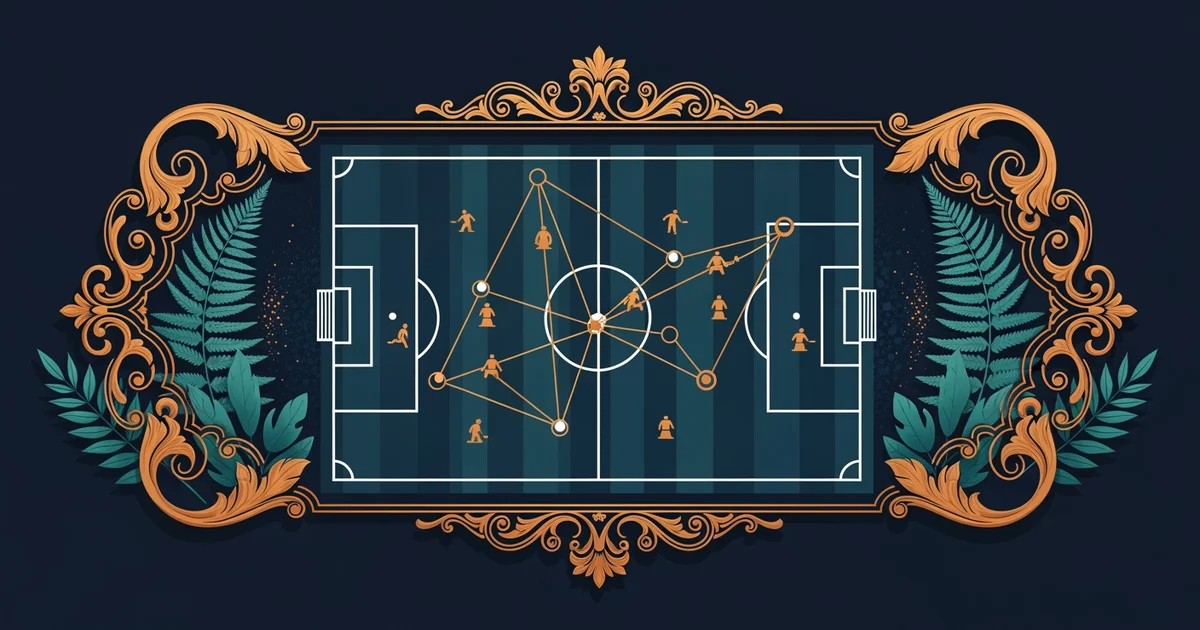
The Logic of Defensive Triggers
When a team decides to press, they must wait for a predictable event that lowers the opponent's probability of keeping the ball. If a team presses randomly, they leave massive gaps in their formation that opponents can easily exploit for an easy goal. A well-timed press relies on specific cues that indicate the player in possession is under pressure or in a vulnerable position. By observing these cues, a team can shift from a passive defensive shape into an aggressive hunting formation. This transition requires every player to recognize the same trigger simultaneously to ensure the defensive unit remains compact and effective.
Key term: Pressing trigger — a specific observable event, such as a poor touch or a sideline trap, that signals a team to begin collective defensive pressure.
Think of this process like an investment strategy where you wait for a market dip before buying assets. You do not purchase stocks at random times because you might lose money on a bad trade. Instead, you wait for a clear signal that the market is favorable for your specific goals. Soccer teams do the same by ignoring the ball while it is safe and only attacking when the opponent makes a mistake. This logical approach saves energy while keeping the defensive structure stable and difficult to break down.
Common Situations for Initiating Pressure
Defensive coaches often categorize triggers into distinct scenarios that occur frequently during a typical match. Each scenario presents a mathematical advantage for the defending team if they react with speed and precision. The most effective triggers usually involve limiting the space available to the player who currently has the ball. When a player receives the ball in a way that restricts their options, the defending team can capitalize on that lack of freedom. The following table outlines the most common triggers that teams look for throughout the duration of a match.
| Trigger Type | Description | Tactical Advantage |
|---|---|---|
| Poor Touch | A heavy first touch that moves the ball away from the player | Forces an immediate recovery run |
| Sideline Trap | Forcing the opponent toward the touchline to remove passing lanes | Reduces the available passing angles |
| Backwards Pass | An opponent choosing to pass the ball toward their own goal | Signals a lack of forward options |
| Weak Foot | Forcing the opponent to use their less skilled foot | Increases the likelihood of a turnover |
These triggers are not just simple observations but rather complex logical gates that govern team behavior. When a player spots a heavy touch, the logic gate opens and the team initiates the press. If the ball is controlled perfectly, the gate remains closed, and the team maintains their defensive shape. This systematic approach ensures that the team only commits to a press when the mathematical probability of winning the ball is at its highest point. By training these triggers, teams turn chaotic defensive moments into a structured and repeatable process that frustrates the opposition.
Effective pressing is not about running fast all the time, but about running at the right time. Players must communicate constantly to ensure they all see the same triggers during the heat of the game. If one player presses while others stay back, the team becomes disjointed and vulnerable to a counter-attack. Therefore, the logic of pressing is fundamentally a team-based decision that relies on shared visual cues. Mastering these triggers allows a team to control the flow of the match without needing to possess the ball for the entire game. This tactical discipline is what separates elite teams from those that simply run around the field without a clear plan or purpose.
Successful pressing relies on recognizing specific game events that signal a high probability of forcing an opponent to lose possession.
The next Station introduces midfield density, which determines how players maintain their formation while applying these pressing triggers.