
The Geometry of Soccer Formations
Imagine a crowded city street where every person must move in a perfect, synchronized grid to reach their destination without colliding. Soccer teams operate exactly like this, using specific shapes to cover space while maintaining a logical flow of movement across the pitch. When a team chooses a formation, they are essentially deciding how to divide the field into manageable geometric zones. These zones help players know where to stand and how to support their teammates during the intense competition of a match.
The Logic of Spatial Distribution
Every soccer formation relies on the principle of spatial distribution, which dictates how players spread out to maximize control of the field. If players bunch together, they leave large areas of the grass undefended, which allows the opposing team to move the ball with ease. By maintaining a balanced shape, a team ensures that every player has a clear responsibility for a specific area of the pitch. Think of it like a business budget where you allocate funds to different departments to ensure the company runs smoothly without wasting resources. If you spend too much in one area, another part of the business will eventually fail because it lacks the necessary support. A well-structured formation acts as a blueprint for success, ensuring that no single zone remains vulnerable to an opponent’s attack for too long.
Key term: Spatial distribution — the strategic placement of players across the pitch to control space and maintain defensive stability.
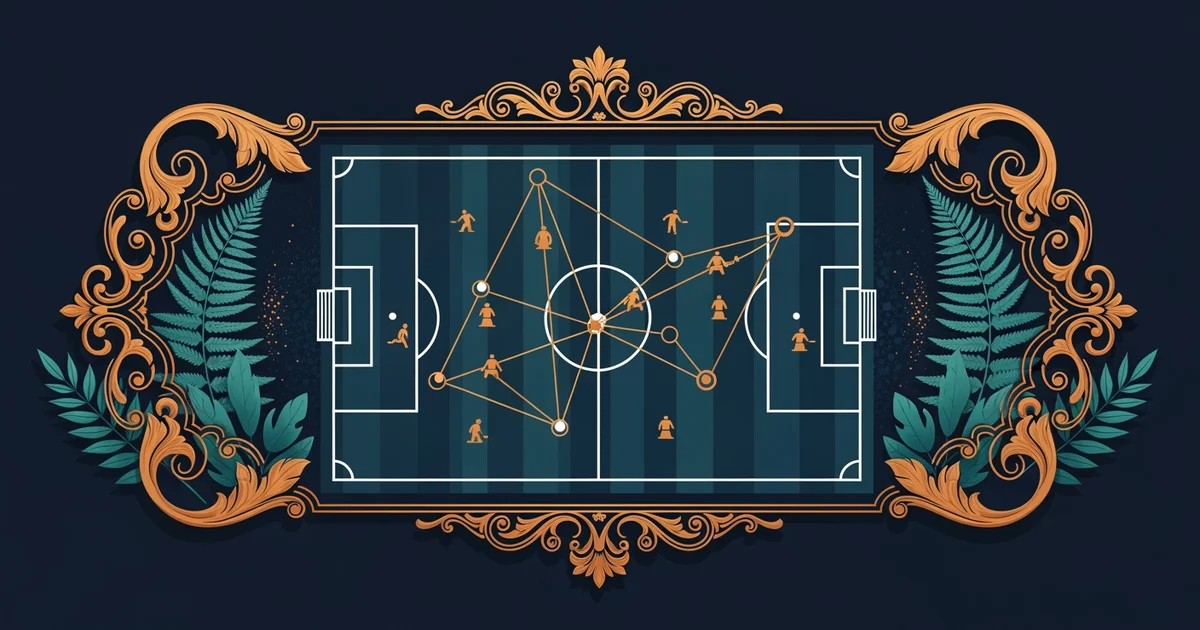
When teams organize themselves into these shapes, they create a network of triangles and diamonds that facilitate quick passing movements. These geometric patterns are vital because they provide multiple passing options for the person currently holding the ball. If a player is trapped by an opponent, they can look to their left or right to find a teammate who is perfectly positioned to receive a pass. This creates a logical flow of energy and movement that makes it difficult for the defense to track every single threat. By keeping these triangles tight, the team can move the ball around the field with precision and speed, slowly breaking down the opponent's defensive structure through consistent, logical pressure.
Geometric Zones and Tactical Balance
Beyond just passing, formations define the defensive structure that prevents the other team from scoring goals easily. A formation is not just about attacking; it is a mathematical calculation of how to close down space when the ball is lost. If a team plays with four defenders, they are establishing a line that covers the width of the field, making it hard for attackers to find gaps. This creates a series of zones that shift as the ball moves, allowing players to slide into new positions without losing their overall shape. The following table illustrates how different numbers of players influence the control of these zones:
| Formation Type | Primary Focus | Defensive Strength | Attacking Potential |
|---|---|---|---|
| Compact 4-4-2 | Balanced | High stability | Standard output |
| Aggressive 4-3-3 | Width | Moderate risk | High output |
| Defensive 5-3-2 | Depth | Very high | Low output |
Each of these configurations changes the probability of success depending on the opponent's own setup. For example, a team using a 4-3-3 formation might dominate the wide areas of the field, but they could be vulnerable to counter-attacks through the center. Coaches must calculate these risks before the game starts, selecting a shape that minimizes their own weaknesses while exploiting the gaps in the opponent's geometry. This constant balancing act is the core of soccer strategy, turning a simple game into a complex exercise in logic and spatial awareness. By mastering these shapes, players learn how to act as a single unit rather than eleven individuals.
Understanding soccer formations requires viewing the pitch as a series of geometric zones where player positioning directly impacts the probability of controlling the ball.
By analyzing how these shapes function, we can move forward to explore how teams use pressure to disrupt their opponent's organization.