
Principles of Defensive Pressing
Imagine a crowded city street where you must reach a specific destination while someone constantly blocks your path. You try to move left, but they shift to mirror your motion, forcing you to turn back toward the start. This scenario perfectly mirrors the logic of professional soccer, where defensive units use collective movement to restrict the space available to the attacking team. By applying pressure, the defense forces the opponent to make hurried choices, which often leads to mistakes or lost possession of the ball. Understanding this defensive structure is essential for anyone wanting to grasp how teams control the tempo of a match.
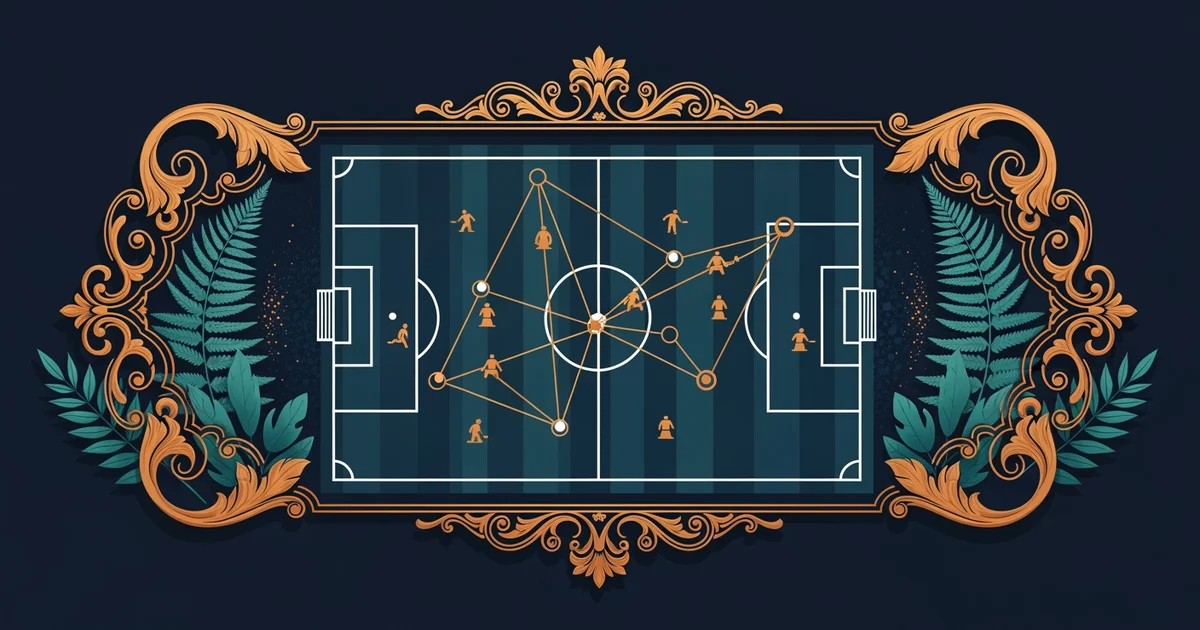
The Mechanics of Defensive Pressure
When a team loses possession of the ball, the primary objective is to regain control as quickly as possible. This process, often called defensive pressing, relies on the coordinated movement of players to close down passing lanes. If a player holding the ball has three potential teammates to pass to, the defense acts to remove those options. By positioning themselves between the ball carrier and their teammates, defenders create a geometric trap that limits the available passing angles. This strategic reduction of space is not random but follows a strict logic of spatial management.
Key term: Defensive pressing — a collective tactical approach where players move in unison to restrict an opponent's time, space, and passing options near the ball.
Effective pressing requires that every player understands their role within the defensive shape. If one defender moves forward to pressure the ball, the remaining players must shift to cover the gaps left behind by that movement. This creates a ripple effect across the pitch, ensuring that the team remains compact and difficult to penetrate. When the team moves as a single, cohesive unit, the probability of an opponent making an inaccurate pass increases significantly. This mathematical shift in passing success is the core goal of any well-drilled defensive system.
Spatial Control and Opponent Decision Making
Beyond individual positioning, teams use specific triggers to initiate their pressure against the opposition. These triggers often include a poor touch by the opponent, a pass directed toward the sideline, or a player receiving the ball while facing their own goal. By timing their movement to these specific events, the defense maximizes their chance of winning the ball back. The following list outlines the primary goals of maintaining high-intensity pressure throughout the duration of a match:
- Forcing the opponent into high-risk areas where the chance of losing possession is statistically higher than in central zones.
- Reducing the time available for the ball carrier to make a decision, which leads to rushed and inaccurate long-range passes.
- Creating a numerical advantage in the immediate area around the ball, which makes it nearly impossible for the opponent to maintain control.
| Strategy | Primary Goal | Expected Outcome |
|---|---|---|
| Man Marking | Deny space | Pass interception |
| Zonal Press | Block lanes | Forced turnover |
| High Block | Push back | Field position |
Implementing these strategies requires significant stamina and communication between teammates. When the defense successfully executes these maneuvers, they dictate the flow of the game rather than simply reacting to the opponent. This proactive stance changes the game from an open contest into a calculated struggle for territory. The logic is simple: the less time the opponent has to think, the more likely they are to fail in their execution. By mastering these defensive fundamentals, a team can effectively neutralize even the most talented attacking lineups through sheer coordination and spatial discipline.
Defensive pressing functions as a calculated restriction of space that forces the opponent into making high-probability errors.
Transitioning from these static defensive shapes, we will next examine how teams shift their focus when the ball changes hands during a match.