
Counter-Pressing Mechanics
Imagine a thief snatching a wallet in a crowd, only to be tackled by bystanders before they can even take a single step away. This immediate reaction represents the core of high-intensity pressure in a professional soccer match today. When a team loses possession of the ball, they do not retreat into a defensive shell to recover their shape. Instead, they swarm the opponent instantly to force a mistake or reclaim the ball while the opponent is still disorganized. This aggressive tactical choice requires perfect timing and collective movement across the entire pitch.
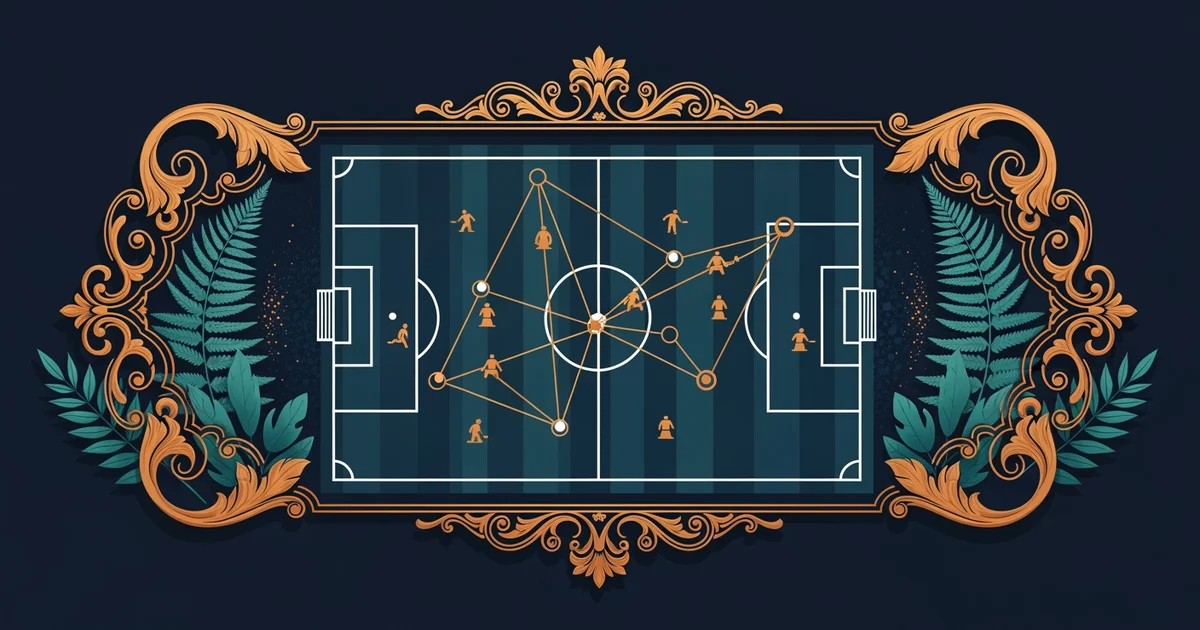
The Mechanics of Immediate Ball Recovery
When a player loses the ball, the nearest teammates must shift their focus from attacking to defensive support. This creates a counter-pressing trap that limits the passing options available to the player who just gained possession. Think of this like an economic market where the supply of space is suddenly cut off by high demand from the defending team. If the opponent has no open teammates to pass to, they often panic and lose the ball under the weight of the pressure. The goal is to shrink the available pitch area so drastically that the opponent feels trapped in a small, crowded space.
Key term: Counter-pressing — the tactical act of applying immediate, intense pressure on an opponent the moment possession of the ball is lost.
To execute this effectively, the team must maintain a high level of coordination across all three lines of play. The forward players initiate the chase, while the midfielders cut off central passing lanes to prevent an easy escape. The defenders push up to shorten the distance between the lines, which effectively squeezes the opponent into a tight block. If the players are too far apart, the opponent will easily dribble past the first wave of pressure. When the lines are tight, the mathematical probability of forcing a turnover increases because the opponent has less time to process their next move.
Establishing Tactical Discipline and Logic
Successful execution relies on specific movement patterns that prioritize the most dangerous passing routes first. Players must calculate the distance to the ball and the potential speed of the opponent when deciding whether to commit to the press. If the team commits too many players to one side of the pitch, they risk leaving the opposite flank wide open for a long pass. This creates a logical trade-off between the reward of winning the ball and the risk of being countered by a quick transition. Coaches often use the following principles to guide these split-second decisions during a match:
- The closest player must apply pressure immediately to force the opponent to look down at the ball.
- Nearby teammates should position themselves to intercept the most likely passing lanes for an easy recovery.
- The back line must maintain a high position to ensure the entire team remains a compact unit.
These principles ensure that the team functions as a single organism rather than eleven individuals running in different directions. By reducing the time the opponent has to make a decision, the team forces them to rely on instinct rather than a planned strategy. This shift in tempo is crucial for maintaining control over the game, even when the team does not have the ball at their feet. When this system functions correctly, the defensive transition becomes a powerful tool for creating new scoring opportunities from the chaos of a turnover.
| Tactical Component | Primary Responsibility | Expected Outcome |
|---|---|---|
| Front Line | Initiate pressure | Force bad passes |
| Midfield | Block passing lanes | Intercept balls |
| Back Line | Maintain high line | Shrink the space |
By following this logical framework, a team turns a moment of vulnerability into a defensive weapon. The transition from offense to defense is no longer a passive act of retreating to the goal. It becomes an active, aggressive hunt for the ball that keeps the opponent under constant psychological and physical stress. This requires immense physical fitness, as players must sprint repeatedly to close down space every time the ball changes hands. When the team masters this, they dictate the flow of the match through sheer energy and collective intelligence.
Regaining possession quickly relies on immediate, coordinated pressure that forces the opponent into making errors under restricted time and space.
But what does it look like in practice when a team tries to isolate a specific player during these intense moments of recovery?
Want this with sources you can check?
Premium Learning Paths for Mathematics & Logic are researched against open-access libraries — PubMed, arXiv, government databases, and more — with their distinctive claims cited to real sources and independently checked.
See what Premium includes