
The 4-3-3 System Analysis
Imagine a store owner trying to manage three separate departments with only seven staff members available. If the owner places three people at the front entrance, three in the middle aisles, and one near the back, they create a balanced coverage zone that guards against any sudden rush of customers. This is the exact logic behind the soccer formation known as the 4-3-3. When a team adopts this structure, they distribute their players across the field to ensure that no single area remains vulnerable to an opponent’s quick attack.
The Structural Logic of the 4-3-3
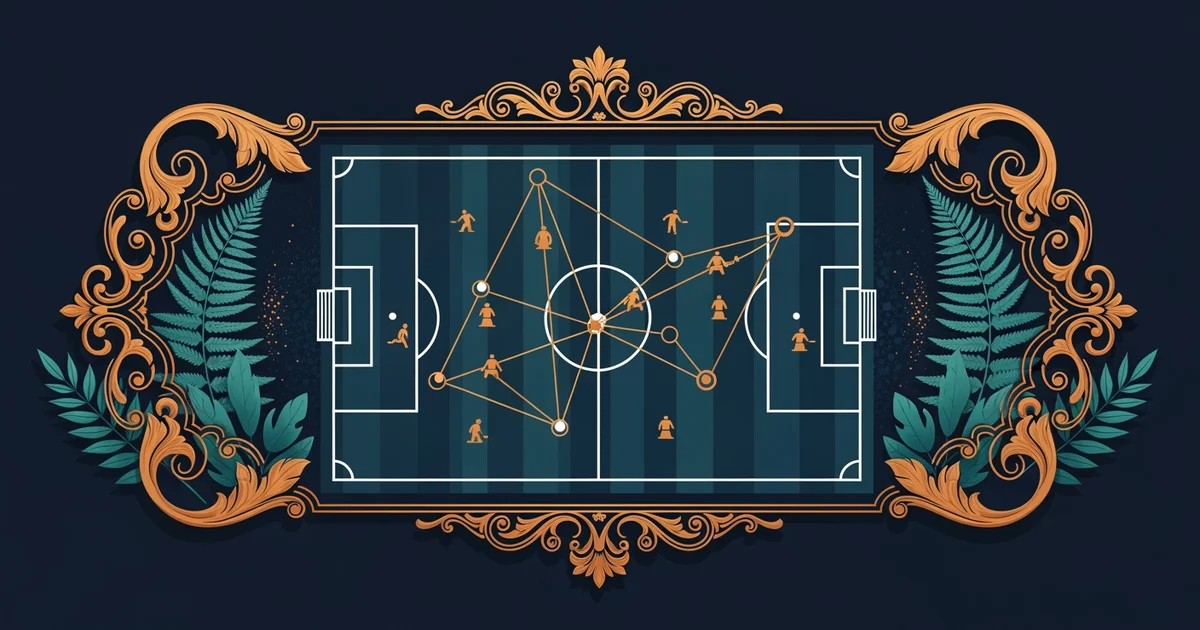
At its core, the 4-3-3 formation uses a specific geometric distribution to maximize pitch control. The back line consists of four defenders who provide a stable base to stop long passes. Three midfielders then operate in the central channel, acting as the engine room that links the defense to the forward line. Finally, three attackers push high up the field to pressure the opponent’s defensive line. This structure creates a series of triangles across the grass, allowing players to pass the ball easily while maintaining a cohesive shape. By spreading the players out, the team forces the opponent to cover more ground, which often leads to defensive errors.
Key term: 4-3-3 formation — a tactical arrangement in soccer featuring four defenders, three midfielders, and three forwards designed to control space.
When we compare this to a traditional defensive block, the differences in mathematical probability become quite clear. A defensive block usually stacks players close together to prevent shots on goal. While this protects the center, it leaves the wide areas open for the opponent to exploit. The 4-3-3 solves this by placing players in the wide channels, which forces the opposing defense to stretch their own formation thin. Think of this like a rubber band; the more you stretch the opponent's defensive line, the more likely it is to snap under the pressure of a well-timed pass.
Balancing Attack and Defensive Stability
The 4-3-3 relies on the mobility of the three midfielders to maintain this delicate balance. These players must constantly shift their positions to cover gaps left by the attacking forwards. If the midfielders are too slow to react, the team leaves their defense exposed to rapid counter-attacks. The mathematical efficiency of this system depends on the distance between players remaining small enough for short passes. If the gaps grow too large, the probability of losing possession increases significantly because the players can no longer support each other effectively.
To visualize how this formation functions against different defensive setups, consider these three primary tactical roles within the 4-3-3 structure:
- The defensive midfielder acts as a shield, dropping back to assist the four defenders when the team loses possession of the ball.
- The two advanced midfielders push forward to support the three attackers, creating numerical advantages that overwhelm the opposing defensive line during sustained possession.
- The three forwards occupy the full width of the pitch, stretching the opponent's defense to create gaps for the midfielders to exploit with through balls.
These roles ensure that the team keeps a numerical advantage in key areas of the field throughout the entire match. By rotating these responsibilities, the team maintains a high level of control over the game's flow. This system turns the pitch into a series of interconnected zones, where each player knows their specific duty based on the ball's location. When everyone moves in sync, the team creates a mathematical trap that makes it very difficult for the opponent to find a safe way to move forward.
The 4-3-3 formation optimizes field coverage by using a triangular distribution of players to force opponents into defensive gaps.
The next Station introduces pressing triggers, which determine how the 4-3-3 system transitions from a static shape into an active defensive weapon.