
Predicting Urban Sites
When developers planned the expansion of London in the early twenty-first century, they faced a massive challenge involving buried history. They needed to build new transit lines without destroying the dense layers of Roman and medieval structures hidden beneath the city streets. This scenario is a practical application of archaeological predictive modeling from Station 10, where we learned how to use environmental data to guess where people once lived. In urban zones, the ground is not just dirt but a complex, layered puzzle of human activity that spans thousands of years of continuous occupation.
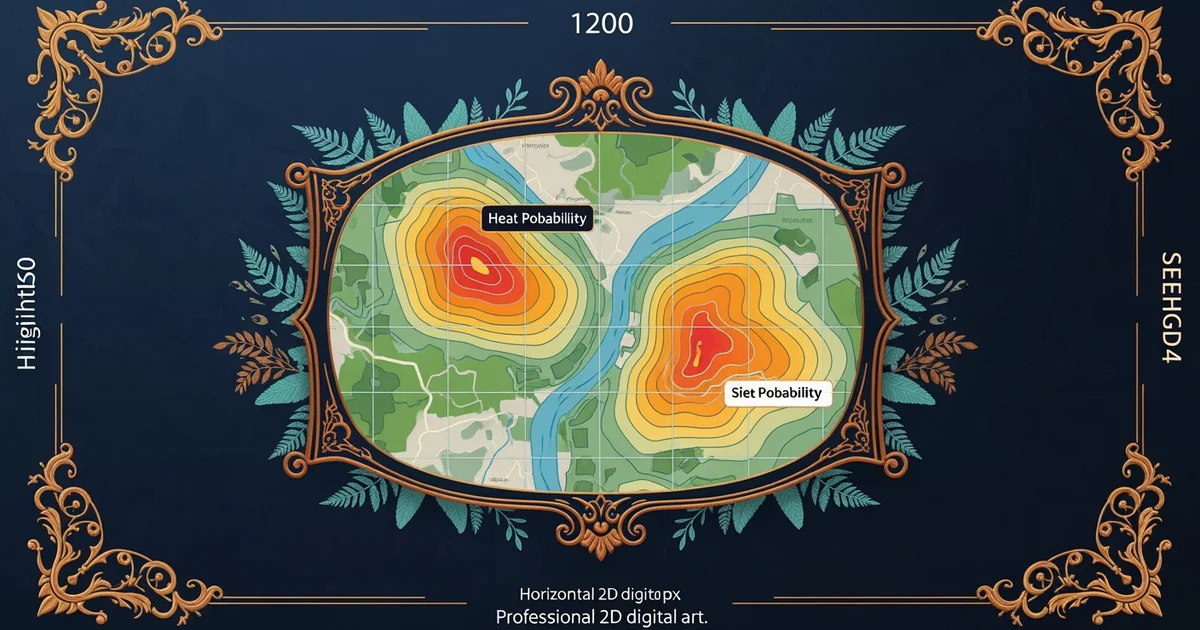
Mapping the Urban Landscape
Urban environments present unique hurdles because modern construction constantly reshapes the physical terrain of the city. Unlike rural sites where the land might remain untouched for centuries, urban areas undergo constant digging, paving, and building. To predict where ancient sites exist, researchers must treat the city like a multi-layered cake where each slice represents a different century of human life. They use historical maps to see where streets once stood, even if those paths have been buried under concrete for a hundred years. This process requires careful analysis of how past societies organized their homes, marketplaces, and waste disposal systems.
Key term: Predictive modeling — the use of statistical patterns and historical data to estimate the location of undiscovered archaeological sites within a defined geographic area.
This modeling process is much like trying to solve a jigsaw puzzle where half the pieces are missing and the other half are hidden under a rug. You must look at the remaining fragments and infer the shape of the full picture by identifying logical patterns. If you find a Roman wall in one basement, it is highly likely that a corresponding structure exists in the neighboring lot. The model acts as a guide, helping developers avoid sensitive zones while allowing progress to continue in areas where the soil has already been disturbed by modern work.
Variables in City Modeling
Predicting sites in a city requires looking at specific variables that dictate where people choose to settle. These factors remain consistent even as the surface of the city changes over time. Researchers categorize these factors to create a reliable map of potential site locations.
| Variable Category | Primary Focus | Impact on Site Location |
|---|---|---|>
| Topographic | Natural terrain features | High ground avoids seasonal flooding |
| Historical | Old street layouts | Proximity to trade routes and markets |
| Structural | Modern foundation depths | Determines if ancient layers remain intact |
These variables help researchers narrow down their search by filtering out areas where modern construction has already erased the archaeological record. For example, if a modern skyscraper foundation goes thirty meters deep, it likely destroyed any ancient ruins that were once there. By excluding these disturbed zones, the model focuses on the hidden pockets that remain undisturbed and filled with historical data. This approach saves time and money by preventing excavations in areas that are essentially empty of historical value.
Predictive models also consider the social hierarchy of ancient cities to guess where specific buildings were placed. Wealthy citizens often lived near the city center or near major water sources, while industrial workshops were pushed to the outskirts. By applying these social rules to the model, we can predict the type of site we might find before we even break the ground. This scientific approach turns the chaotic urban sprawl into a structured map of human history. It ensures that we protect the most important pieces of our shared past while we build the cities of the future.
Predictive modeling in urban areas relies on analyzing historical patterns and modern land disruption to locate hidden sites without unnecessary excavation.
But this model breaks down when urban development has completely erased the original soil layers and destroyed all physical evidence of the past.