
Validation Techniques
Imagine you have a map of a city where half the streets are missing from your records. To find the hidden ones, you might guess based on where people usually build houses near water. If your guesses consistently miss the actual locations, you know your map is flawed and needs fixing. This process of testing your predictions against real-world evidence is the heart of archaeological validation. Without this step, your models remain simple guesses rather than reliable tools for discovery.
Testing Predictive Accuracy
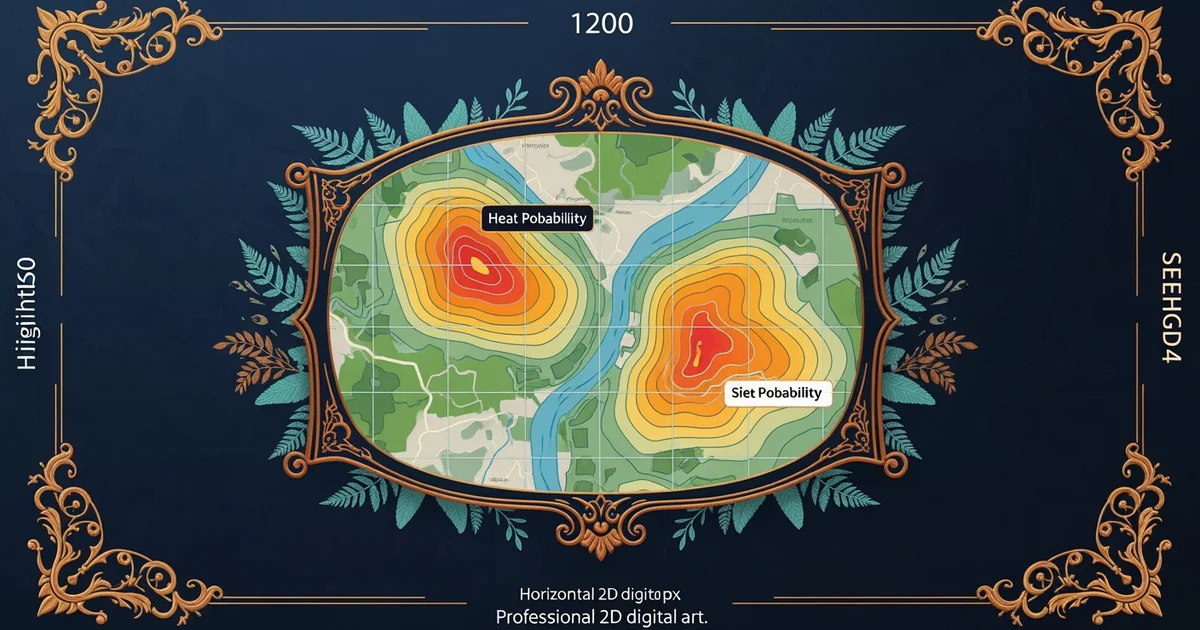
When researchers build a model, they must check if the results match known sites on the ground. This process begins by withholding a portion of the known site data during the initial training phase. After the model generates its predictions, archaeologists compare these results against the hidden data points. If the model successfully flags the locations that were set aside, it gains credibility as a useful tool. Think of this like a student taking a practice exam before the final test. If the student masters the practice questions, they are likely ready for the real challenge. The accuracy of the model depends on how well it identifies these known locations without over-fitting to the specific data it already learned. A model that only knows the training data will fail when it encounters a new, unexplored landscape.
Key term: Validation — the systematic process of verifying that a predictive model accurately identifies known site locations within a test dataset.
To measure this performance, experts use specific metrics that quantify how often the model is correct. These metrics reveal if a model is too broad or too narrow in its search. A model might predict that sites exist everywhere, which ensures it finds all actual sites but creates too many false alarms. Conversely, a model might be too strict, missing real sites while only identifying the most obvious ones. Finding the balance between these extremes is essential for high-quality work. The following metrics help researchers understand their model performance:
- Sensitivity measures the ability of the model to correctly identify all existing archaeological sites in a given area.
- Specificity tracks how well the model avoids incorrectly marking non-site areas as potential locations for ancient human activity.
- Precision calculates the ratio of true positive site predictions to the total number of locations the model flagged.
Refining Model Mechanics
Once the metrics are collected, the team must decide if the model is ready for field application. If the error rates remain too high, researchers must adjust the variables that influence the site prediction. Perhaps the model placed too much weight on proximity to water while ignoring soil quality or elevation. By tweaking these variables, the model becomes more nuanced and better at reflecting actual historical patterns. This iterative cycle of testing and adjustment ensures the model evolves alongside new discoveries. Just as a business adjusts its strategy after seeing poor sales data, archaeologists refine their models to better align with the reality of the landscape. This refinement process is not a sign of failure, but rather a necessary step in scientific growth. Careful adjustment transforms a raw, untested algorithm into a precise instrument for finding hidden history.
| Metric Type | Purpose | Goal |
|---|---|---|
| Sensitivity | Find all sites | Minimize missed locations |
| Specificity | Avoid errors | Minimize false positive flags |
| Precision | Verify accuracy | Ensure predicted sites are real |
By following these rigorous steps, archaeologists can transform vague guesses into high-confidence predictions that guide real-world field research. This systematic approach reduces the cost of digging in empty ground and increases the chances of uncovering significant cultural remains. When the model consistently hits the mark, it becomes a trusted partner in the effort to document human history across vast, complex regions.
Reliable predictive models require constant testing against known data to ensure they balance sensitivity and precision for accurate discovery.
After confirming that our model is accurate, we must explore how to apply these mechanics to predict urban sites in complex landscapes.