
Capstone Project Planning
Building a city requires more than just concrete and steel because every structure creates waste that needs a smart plan. You must now design a system that turns trash into treasure to solve the challenges of urban growth. Imagine your city is a giant kitchen where every leftover scrap must become a new meal instead of sitting in the bin. This project asks you to apply the engineering principles we explored to create a functional waste management strategy for a local municipality. By combining the infrastructure concepts from previous stations with your own creative solutions, you will build a roadmap for a cleaner and more efficient future.
Designing the Waste Infrastructure
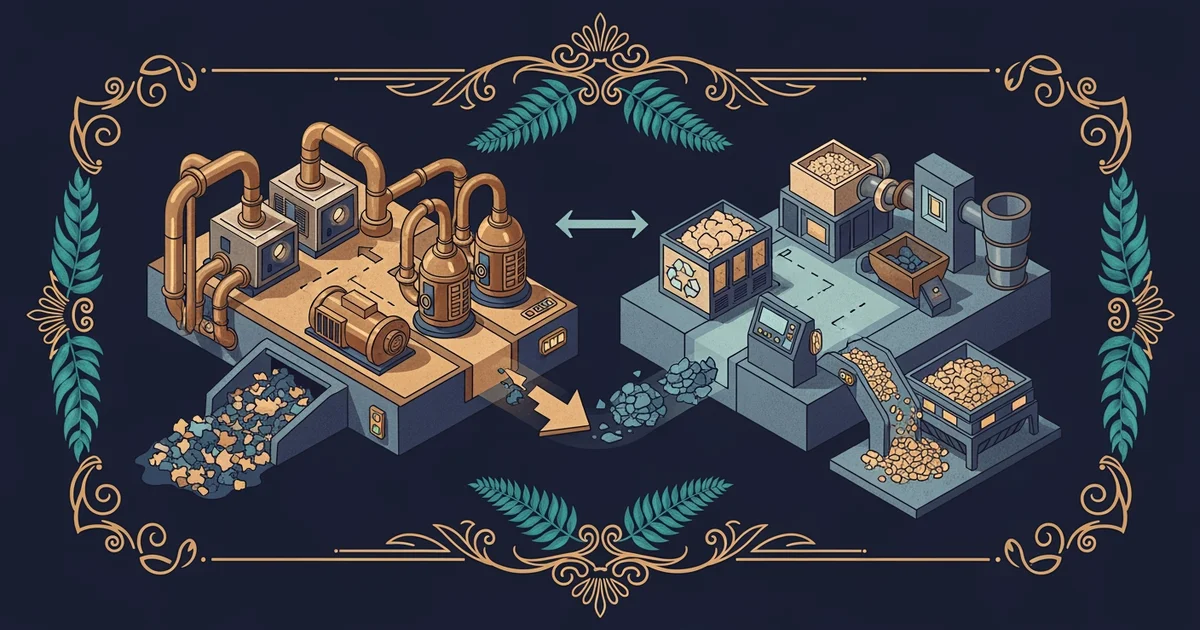
Your capstone project begins by analyzing the specific waste streams produced by your target community. You must identify if the area produces mostly organic matter, plastics, or construction debris to tailor your technology choices. For example, a suburban area might focus on composting systems, while an industrial zone requires advanced sorting robotics. Think of your plan as a complex machine where every gear represents a different facility, such as a recycling center or a waste-to-energy plant. If one gear does not fit properly, the entire system will stall and create a backlog of unmanaged material. You must ensure that each component connects logically to the next to maintain a smooth flow of resources.
Key term: Municipal Solid Waste — the everyday items discarded by the public that require systematic collection, sorting, and processing to prevent environmental damage.
To organize your strategy, you should evaluate the following core components of your waste management plan:
- Automated Sorting Facilities: These centers utilize advanced sensors and mechanical arms to separate materials by density and type, which significantly increases the purity of recycled outputs.
- Organic Processing Units: These systems convert food and yard waste into nutrient-rich soil additives or biogas, effectively closing the loop on biological material cycles.
- Community Collection Networks: These logistics systems use smart sensors to optimize bin pickup routes, which reduces fuel consumption and lowers the overall carbon footprint of the operation.
Integrating Sustainable Engineering Systems
Once you define the components, you must integrate them into a cohesive system that handles materials efficiently. Consider how your project balances the economic cost of technology against the long-term environmental benefits for the residents. You might choose to implement a circular economy model where the output of one process becomes the raw input for another. This approach mirrors natural ecosystems where nothing is truly wasted because every byproduct serves a purpose for a different organism. If you build this cycle correctly, your municipality will rely less on external resources and become more resilient against supply chain disruptions. Always look for ways to improve efficiency by reducing the energy required to transport or process the collected waste.
| Facility Type | Primary Input | Main Output | Efficiency Goal |
|---|---|---|---|
| Sorting Hub | Mixed Trash | Sorted Plastic | High Purity |
| Compost Plant | Organic Scrap | Fertile Soil | Low Emissions |
| Energy Plant | Non-Recyclable | Electricity | Max Conversion |
Your final project plan should demonstrate a deep understanding of how modern engineering transforms discarded materials into sustainable global resources. By synthesizing the lessons from our study of future infrastructure and robotic sorting, you have developed a professional approach to urban waste. This capstone project serves as a practical test of your ability to solve real-world problems using systematic engineering logic. You now possess the tools to evaluate complex systems and propose improvements that benefit both the economy and the environment. Successful waste management is a collaborative effort that relies on both smart technology and thoughtful human planning to succeed over time.
Developing a comprehensive waste management plan requires integrating automated sorting, organic processing, and efficient logistics into a circular system that treats waste as a valuable resource.
Effective engineering solutions for waste management rely on the ability to view discarded materials as potential inputs for new production cycles.