
History of Waste Systems
Imagine walking down a busy city street where every scrap of trash simply drops right where you stand. Without organized systems to collect and move our waste, our living spaces would quickly become crowded with dangerous piles of debris. This reality was once the standard for ancient civilizations before they developed early methods for managing their discarded materials. Learning how these societies handled their refuse helps us understand the complex engineering challenges we face today.
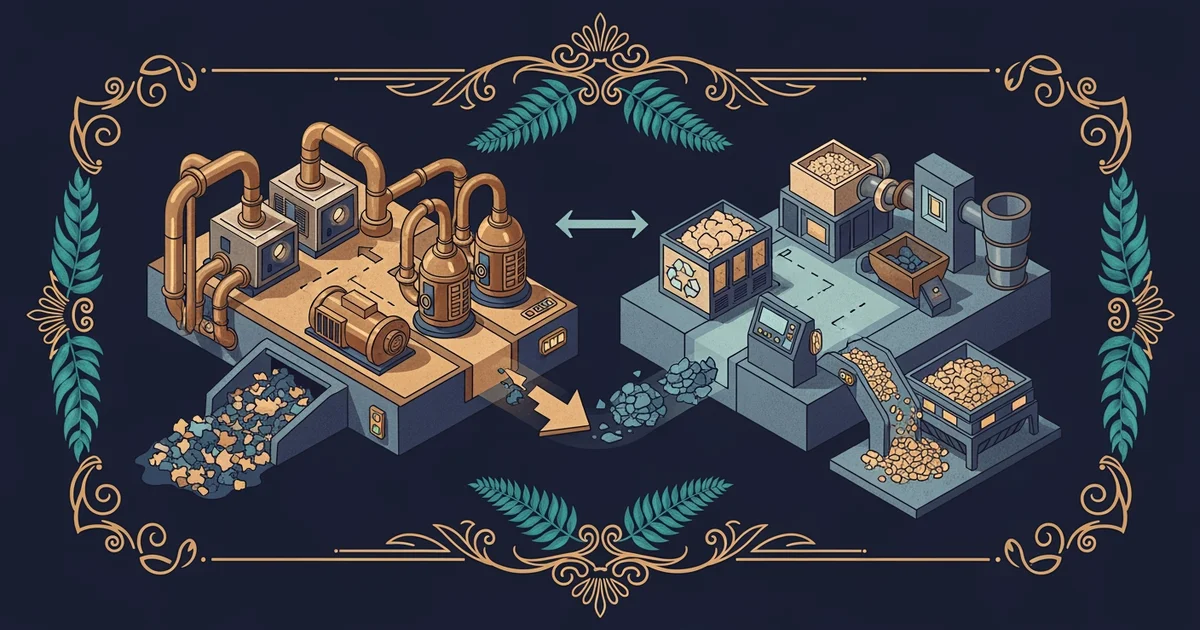
The Evolution of Early Disposal Methods
Ancient cities often relied on simple solutions to manage their growing amounts of waste. In early human settlements, people typically tossed their household scraps directly into the streets or nearby open pits. As populations grew larger, this method created serious health risks because waste attracted pests and spread diseases throughout the community. Engineers in ancient times eventually realized that they needed a better way to move trash away from homes. They started building basic drainage systems and designated dumping grounds located outside city walls. This change marked the first major shift toward protecting public health through organized waste removal practices.
Key term: Waste management — the systematic process of collecting, transporting, processing, and disposing of discarded materials to protect human health and the environment.
These early engineers had to think about how to move heavy waste efficiently without modern machines. They often used gravity to their advantage by building channels that carried liquid waste away from the center of town. These primitive sewers were a huge step forward for urban planning and hygiene. By separating living areas from waste accumulation zones, they created safer environments for everyone. This progression shows that even basic engineering solutions can significantly improve the quality of life for large groups of people.
Comparing Ancient Methods to Modern Landfills
When we compare ancient dumping grounds to our modern systems, the differences in engineering sophistication become very clear. Ancient sites were essentially open pits that allowed waste to rot in the sun and leak into the soil. Modern sanitary landfills, however, are carefully designed to prevent pollution from spreading into the surrounding land or water sources. We use advanced materials like thick plastic liners and complex drainage pipes to capture any harmful liquids. This contrast illustrates how far our engineering capabilities have evolved since the early days of human civilization.
| Feature | Ancient Disposal | Modern Landfill |
|---|---|---|
| Location | Open city pits | Engineered sites |
| Safety | High disease risk | Low health risk |
| Containment | None | Plastic liners |
| Goal | Move trash away | Prevent pollution |
We can organize these differences into three main categories of improvement that define modern systems:
- Containment technology uses synthetic liners and clay barriers to ensure that hazardous waste liquids do not seep into the groundwater supply beneath the site.
- Gas management systems collect methane produced by decomposing trash to prevent dangerous buildup and potentially generate useful energy for the local power grid.
- Daily cover protocols require workers to bury fresh waste under a layer of soil each day to reduce odors and keep pests away from the site.
By comparing these methods, we see that engineering is not just about moving objects from one place to another. It is about creating structures that manage the long-term impact of our discarded materials on the planet. Just as a bank vault keeps money secure from theft, a modern landfill keeps waste secure from the environment. This shift from simple dumping to complex containment allows us to support much larger populations than ever before. We must continue to innovate to make these systems even more efficient for the future.
Modern waste engineering transforms simple disposal into a controlled process that actively protects the environment from contamination.
Next, we will explore how the financial costs and economic value of our trash influence the way we manage global resources.