
Material Recovery Facilities
Imagine standing before a mountain of mixed items, where plastic bottles, metal cans, and paper scraps create a chaotic landscape of potential value. Sorting through this mess by hand is slow, expensive, and dangerous, which is why engineers design advanced systems to bring order to the chaos. These machines act like a high-speed filter for our daily habits, turning a pile of discarded confusion into clean, usable raw materials. By using physics to identify differences in weight, shape, and composition, these facilities ensure that what we throw away does not simply vanish into a hole in the ground.
Mechanical Sorting Strategies
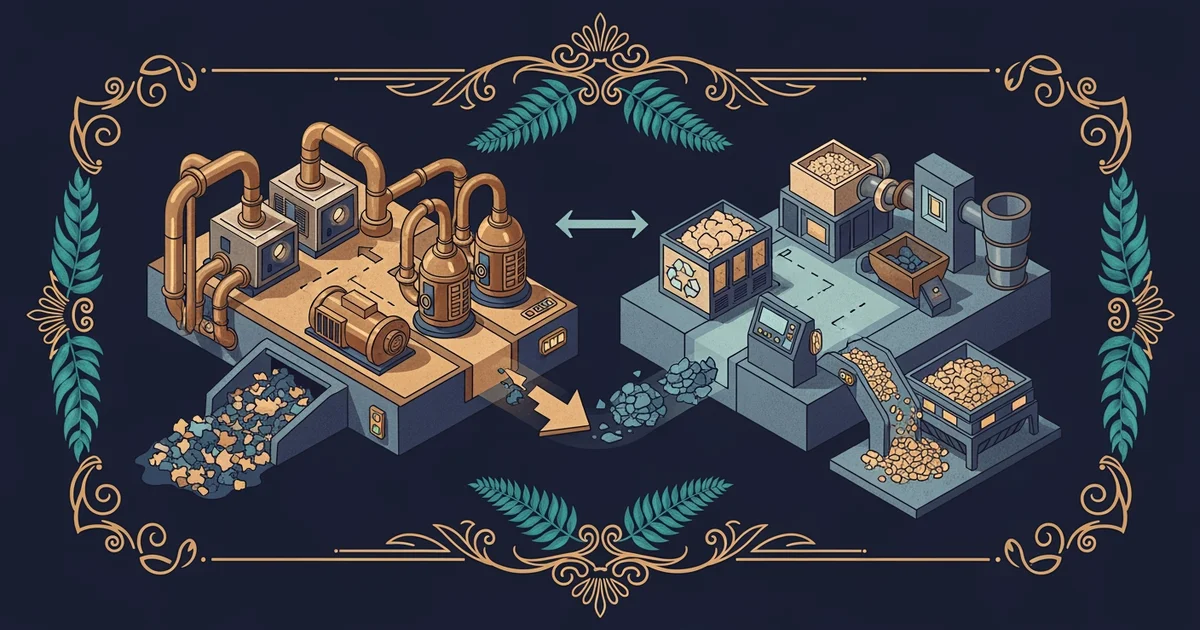
Modern facilities rely on a series of specialized machines to separate materials based on their physical properties. The process begins with a conveyor system that spreads the waste into a thin layer to allow for easier identification. Engineers use large, rotating screens to remove small debris and dust, while heavy-duty magnets pull steel items from the stream. Think of these sorting machines like a professional chef sifting through a bowl of mixed grains to remove unwanted pebbles; the chef uses tools and techniques to ensure only the desired ingredients remain for the final dish. By automating these steps, the facility processes tons of material every hour without needing human hands to touch the waste.
Key term: Material Recovery Facility — an industrial plant that uses mechanical, automated, and manual processes to separate and prepare recyclable materials for industrial markets.
To separate materials that behave differently, engineers integrate specific technologies designed to exploit material physics. Air classifiers, for example, use powerful fans to blow light materials like paper into one bin while allowing heavier glass to fall into another. This separation relies on the density and surface area of each item, ensuring that the airflow catches only the lighter objects. Without these precise mechanical forces, the facility would struggle to maintain the purity required by manufacturers who buy the recycled goods. These systems must run constantly, as even a small mistake in the sorting process can ruin an entire batch of recycled material.
Advanced Separation Technologies
After the initial mechanical sorting, the remaining items undergo more refined processes to ensure maximum recovery of valuable resources. Engineers utilize Eddy Current Separators to push non-magnetic metals like aluminum away from the belt using magnetic fields. This technology creates a repulsive force that launches aluminum cans into a collection bin, leaving everything else behind. Following this, Optical Sorters use infrared sensors to detect the chemical signature of different plastics, firing precise bursts of air to knock specific items into the correct chutes. These high-speed cameras and sensors perform thousands of calculations every second to identify materials that look similar to the naked eye but possess different chemical structures.
| Technology | Primary Material | Physical Principle |
|---|---|---|
| Magnetic Belt | Steel / Iron | Magnetic attraction |
| Air Classifier | Paper / Film | Density and drag |
| Eddy Current | Aluminum | Magnetic repulsion |
These automated systems allow for a level of precision that manual labor could never achieve in a fast-paced environment. By combining magnetic forces, airflow, and optical recognition, the facility transforms a disorganized heap into valuable streams of plastic, metal, and paper. This engineering approach turns the concept of waste into a managed cycle of production, where every item is treated as a resource waiting to be reclaimed. As the materials move through the facility, they are compacted into heavy bales, which are then shipped to factories to be melted or pulped into new products for consumers.
Engineers utilize precise mechanical forces like magnetism and airflow to transform mixed waste into pure, valuable resources for global manufacturing.
The next Station introduces Sanitary Landfill Design, which determines how the final residue of our consumption is stored safely for the future.