
The Economics of Trash
Imagine you are holding a plastic bottle and deciding whether to toss it into the blue bin or the trash can. That simple choice carries a hidden price tag that affects your local city budget and global resource levels. Waste management is not just about keeping streets clean, as it functions as a complex economic machine that turns old items into new wealth. Engineers design systems to capture this hidden value, ensuring that materials stay within the economy rather than disappearing into a hole in the ground forever.
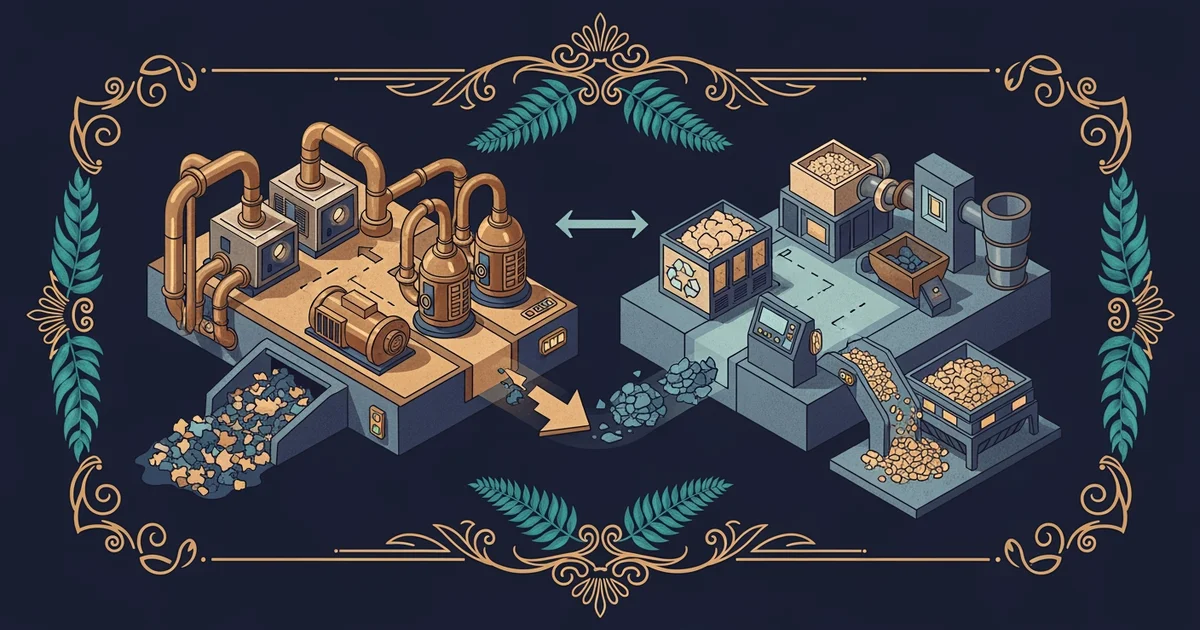
The Financial Mechanics of Disposal
When cities send garbage to a landfill, they pay a tipping fee for every single ton disposed. This cost represents a lost opportunity, because the items inside that garbage often contain valuable raw materials like aluminum, paper, and plastic. Landfills are expensive to build, maintain, and monitor for decades after they close to prevent environmental leaks. If you think of a landfill as a bank vault where you bury gold bars instead of spending them, you can see how throwing away recyclables is a poor financial strategy for any community.
Key term: Tipping fee — the specific price a waste management facility charges for each ton of trash deposited at their site.
Beyond the landfill costs, the economy of trash depends on how easily we can sort and sell recovered materials. If the cost to collect and process a bottle is higher than the price of buying new plastic, the system struggles to stay profitable. Engineering solutions aim to lower these processing costs through automation, making recycling a cheaper choice than creating new products from scratch. By lowering the energy needed to refine materials, we create a market where trash becomes a reliable resource for manufacturers.
Comparing Recovery and Landfill Costs
Efficiency in waste management relies on comparing the total life cycle costs of different disposal methods for various materials. We can view this through a simple economic lens where we weigh the expense of recovery against the long-term cost of burial. When we analyze these options, we look at the collection, transportation, and processing required to turn waste into a useful commodity.
| Material Type | Recovery Potential | Processing Cost | Market Value |
|---|---|---|---|
| Aluminum | Extremely High | Very Low | High |
| Cardboard | Moderate | Low | Medium |
| Mixed Plastic | Low | High | Very Low |
Recovering aluminum is a classic example of economic efficiency because it requires significantly less energy to melt down than to mine new ore. When we recycle, we save the massive financial investment needed to extract raw materials from the earth. This process keeps money circulating within the local economy rather than sending it away to pay for expensive new resources. Engineers use these data points to design better sorting systems that maximize the recovery of high-value items.
Effective waste systems must balance the high initial cost of building advanced sorting facilities with the long-term savings gained from material recovery. If a city invests in better technology, they can process waste faster and sell higher quality materials to factories. This creates a cycle where the revenue from sold recyclables helps pay for the facility, reducing the tax burden on citizens. Ultimately, the goal is to make the cost of recovery lower than the cost of landfilling, which turns a waste problem into a sustainable business model for the entire city.
Modern engineering transforms waste into a profitable resource by reducing the costs of recovery until they are lower than the long-term expenses of burial.
The next step involves exploring how specialized facilities use advanced robotics to sort these materials for maximum economic gain.