
Composting and Organics
Imagine your kitchen trash can as a tiny, high-stakes factory floor that never sleeps. While you sleep, trillions of microscopic workers break down your food scraps into rich, dark soil. This biological process turns yesterday's dinner into the fuel that feeds the next generation of crops. Engineering this natural cycle at an industrial level requires balancing oxygen, heat, and moisture to keep the workers happy. When we manage these conditions correctly, we turn a mountain of waste into a valuable resource for farms.
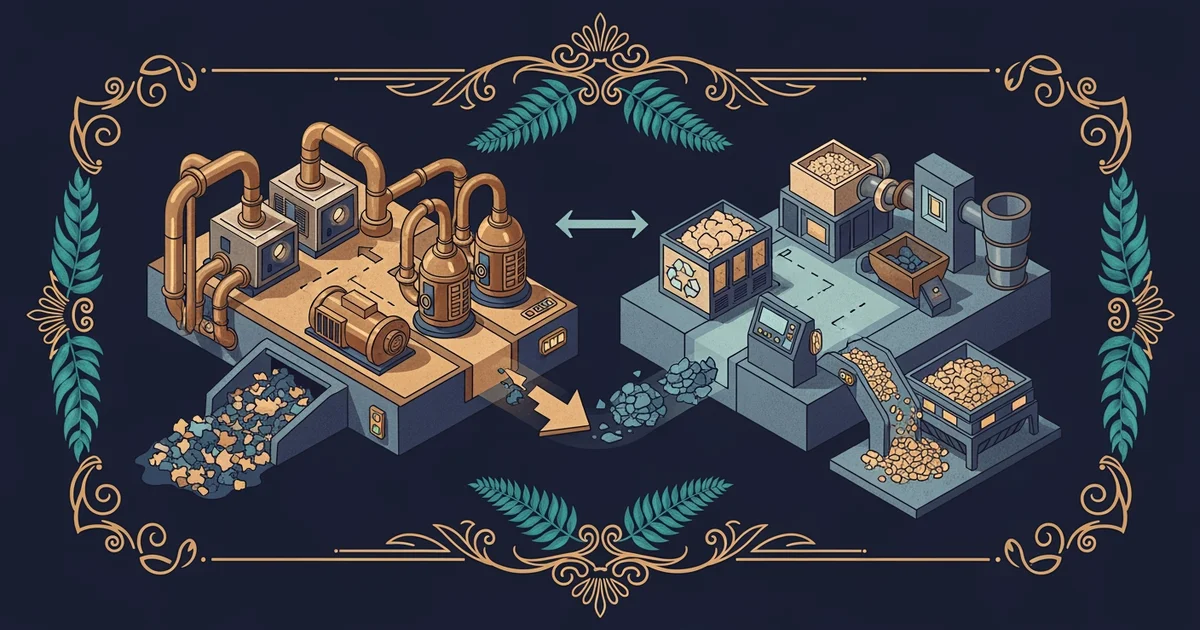
The Engineering of Decomposition
Industrial composting relies on the principles of aerobic digestion, which is the process of breaking down organic matter using oxygen. Think of this process like managing a busy kitchen staff during a rush. If the chefs have enough oxygen and the right temperature, they prepare meals quickly and efficiently. If the room gets too crowded or the air runs out, the kitchen slows down and eventually stops. Engineers design large-scale composting systems to ensure these tiny microbes receive enough air to keep working at peak capacity.
To maintain this speed, engineers monitor the carbon-to-nitrogen ratio of the incoming waste materials. Carbon acts as the energy source for the microbial workforce, while nitrogen provides the protein needed for growth. If a pile has too much carbon, the process stalls because the microbes lack the nutrients to multiply. If a pile has too much nitrogen, it generates foul odors and creates a messy, sludge-like environment. Achieving the right balance is the primary goal of any facility that handles organic waste streams.
Key term: Composting — the controlled biological decomposition of organic material into a stable, nutrient-rich soil amendment.
Optimizing Industrial Conditions
Once the mixture is balanced, the next phase involves controlling the physical environment to speed up decomposition. Industrial facilities use large fans or mechanical turners to introduce oxygen into the piles throughout the day. This movement prevents the center of the pile from becoming anaerobic, which would lead to the production of harmful methane gas. The following table outlines how different environmental factors influence the health of the composting process within a commercial facility.
| Factor | Ideal Range | Impact of Deviation |
|---|---|---|
| Oxygen | 5 to 15 percent | Low levels cause foul odors |
| Temperature | 55 to 65 Celsius | High heat kills harmful pathogens |
| Moisture | 40 to 60 percent | Dry piles stop microbial activity |
Maintaining these specific ranges requires constant data collection from sensors buried deep within the organic piles. If the temperature drops too low, the facility manager must adjust the pile size or increase the frequency of turning. If the moisture levels fluctuate, the team adds water or mixes in dry structural materials like wood chips. These materials also act as spacers that help air flow through the dense pile, ensuring that oxygen reaches every corner of the organic mass.
- Feedstock preparation involves shredding large items to increase the surface area for microbial attack.
- Active composting requires regular aeration to keep the internal microbial population healthy and highly productive.
- Curing allows the final product to stabilize before it is moved to farm fields for agricultural use.
Engineers must also consider the layout of the facility to prevent cross-contamination between fresh waste and finished compost. By organizing the site into distinct zones, they ensure that the final product remains safe and free of pathogens. This rigorous approach to waste management transforms discarded organic matter into a sustainable product that supports long-term soil health. Through careful monitoring and mechanical intervention, we turn a common environmental problem into a solution for global food production.
Composting transforms organic waste into valuable resources by using precise engineering to manage the natural biological decomposition of matter.
The next Station introduces mechanical sorting systems, which determine how we separate non-organic materials from our waste streams.