
Future Waste Infrastructure
Imagine a city where your trash bin communicates directly with a robotic collection fleet. You walk outside to find that the streets are clean because waste is managed through invisible underground pipes. This vision of the future moves beyond simple recycling by treating every discarded item as a valuable raw material. We must shift our perspective from seeing waste as a burden to viewing it as a hidden asset for our urban centers.
Integrating Smart Infrastructure
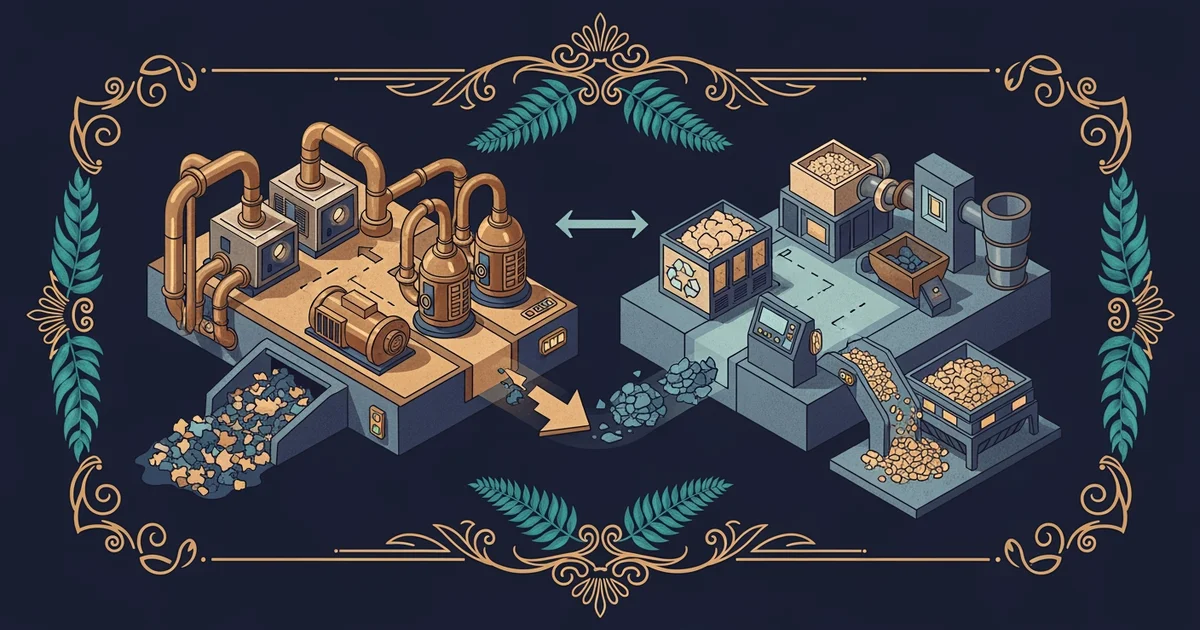
Modern cities require an advanced network to handle the increasing volume of materials we consume daily. Engineers now design automated vacuum collection systems that move waste through pressurized pipes at high speeds. These systems eliminate the need for noisy garbage trucks that block traffic and create heavy pollution. By using sensors to monitor bin levels, the system only activates when necessary to save energy and time. This approach acts like a digital nervous system for the city, reacting instantly to the needs of residents. When we link these pipes to sorting facilities, we can recover materials with much higher efficiency than manual methods ever allowed.
Key term: Automated vacuum collection — a system that uses pneumatic tubes to transport waste from collection points to a central processing facility.
These systems must connect with the concepts of urban mining to maximize the recovery of precious metals and plastics. By identifying the chemical composition of waste in real time, we can direct specific materials to specialized recovery lines. This integration creates a closed loop where the city functions like a living organism that recycles its own nutrients. If we fail to connect these systems, we lose the chance to turn discarded electronics into components for new devices. The goal is to build an environment where the concept of a landfill becomes obsolete through better engineering.
Future Resource Recovery Loops
Engineers are currently developing advanced sorting facilities that use artificial intelligence to categorize materials with extreme precision. These machines utilize high-speed cameras and robotic arms to separate plastics, metals, and organic matter in milliseconds. This speed allows for the processing of massive amounts of material without human error or fatigue. The following table outlines how these future systems compare to the traditional methods we currently use in most cities today.
| Feature | Traditional Collection | Future Smart System |
|---|---|---|
| Speed | Slow and manual | Rapid and robotic |
| Impact | High carbon emissions | Low carbon footprint |
| Data | None available | Real-time analytics |
By analyzing this data, city planners can identify consumption patterns and adjust local infrastructure to reduce overall waste production. We can see how the integration of sensors and robotics creates a feedback loop that improves over time. This cycle ensures that resources are never truly lost but instead redirected back into the manufacturing chain. As we refine these technologies, we must ask ourselves if our current urban designs can support such radical changes. The tension between existing infrastructure and these new innovations remains the greatest challenge for modern engineering teams.
How do we balance the cost of building these smart systems with the long-term benefits of a sustainable circular economy? This question sits at the heart of our engineering challenges as we plan for the next generation of metropolitan growth. By combining the lessons from urban mining with these new collection methods, we can finally close the loop on resource management. We are moving toward a world where discarded materials are simply resources waiting for their next purpose in the production cycle.
Future waste infrastructure transforms cities into circular systems by using automated collection and intelligent sorting to turn discarded items into reusable resources.
Next, we will apply these engineering principles to develop a comprehensive plan for your final capstone project.