
Circular Economy Design
When the electronics manufacturer Fairphone launched its modular smartphone, they turned the traditional industry model of planned obsolescence on its head. Most companies design phones that are glued shut, making repairs impossible and forcing users to buy a new device every two years. This is a direct application of the circular economy design principle, which seeks to keep products and materials in use for as long as possible. By prioritizing modularity, engineers ensure that components like batteries or screens can be swapped out easily. This shift minimizes waste and preserves the embedded energy of the materials used in the original manufacturing process.
Rethinking Industrial Design Frameworks
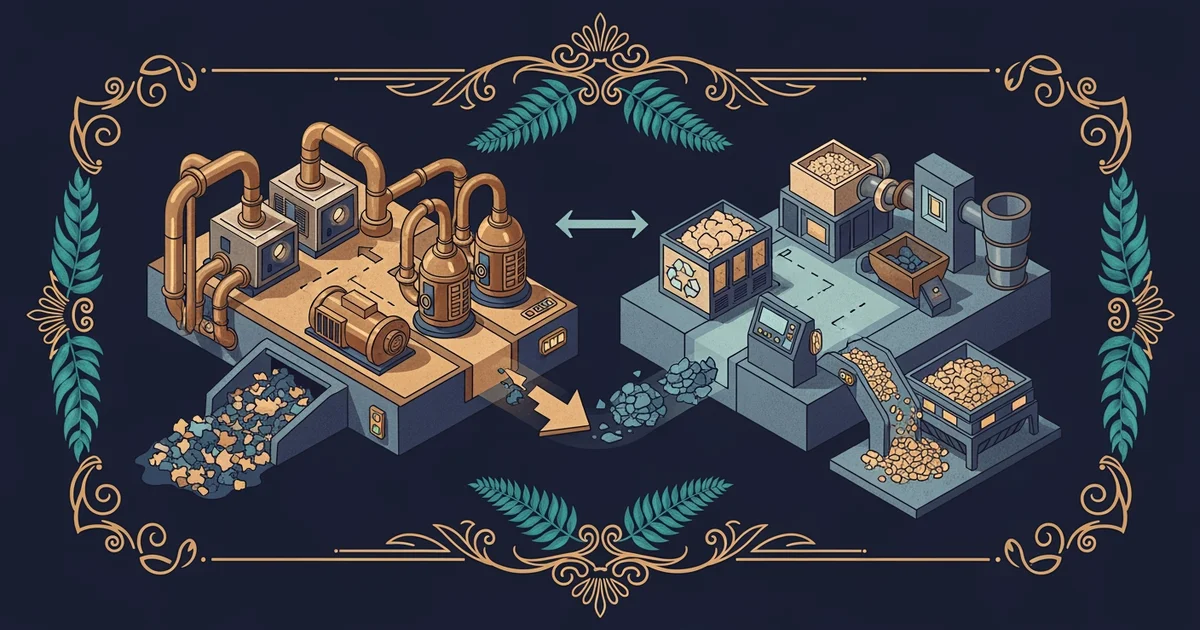
Moving beyond simple repair, engineers must consider the entire lifecycle of a product before the first prototype is built. A circular approach requires a shift from a linear take-make-dispose model to a restorative system. This means choosing materials that are non-toxic and easily separated at the end of a product's life. Think of a product as a temporary loan of resources rather than a permanent acquisition of goods. Just as a library book is returned to the shelf for the next reader, circular products are designed to return their components to the supply chain. This mindset prevents valuable metals and plastics from ending up in landfills where they lose all their economic utility.
Key term: Circular economy — an industrial system that is restorative or regenerative by intention and design.
To implement these changes, companies often utilize specific design strategies that simplify the eventual recovery of materials. These strategies focus on reducing the number of different materials used in a single assembly. When a product contains too many mixed materials, the cost of separating them often exceeds the value of the recovered items. Engineers solve this by using modular connectors instead of permanent adhesives, which allows for rapid disassembly. This approach mirrors the way a Lego set functions; because the pieces snap together without glue, they can be taken apart and reorganized into entirely new structures without damaging the original parts.
Practical Implementation and Material Recovery
Engineers apply these principles by evaluating how different parts of a product interact during the disassembly phase. They must balance the need for structural durability during use with the need for easy separation during recycling. The following table outlines how different design choices impact the long-term sustainability of a product:
| Design Feature | Impact on Durability | Impact on Recyclability |
|---|---|---|
| Mechanical Fasteners | High | High |
| Chemical Adhesives | High | Low |
| Modular Components | Medium | High |
| Monomaterial Frames | High | High |
By selecting mechanical fasteners over adhesives, designers ensure that robots or human workers can quickly dismantle the product at the end of its life cycle. This process is essential for recovering high-value materials like copper, gold, or rare earth magnets. If these materials remain locked inside a glued casing, they are effectively lost to the economy forever. Therefore, the goal is to create a design that is easy to assemble, durable during operation, and simple to take apart. This triad of requirements defines modern sustainable engineering in the manufacturing sector.
When we integrate these circular strategies, we move away from the destructive patterns seen in older industrial eras. We stop viewing waste as an inevitable byproduct and start seeing it as a design flaw. This shift requires collaboration between material scientists, mechanical engineers, and supply chain managers. By aligning these departments, companies can create products that retain their value even after the primary user is finished with them. This is how we transform discarded materials into sustainable resources for future generations. The transition requires a fundamental change in how we define success in manufacturing, moving from volume of sales to the efficiency of resource retention.
True circular economy design treats product components as temporary resource loans that must be recovered and reused to prevent material loss.
But this model breaks down when the cost of collecting and shipping used components exceeds the price of mining raw materials.