
Tectonic Plate Dynamics
Imagine you are watching a massive, slow-motion puzzle where the pieces constantly shift their positions beneath your feet. While you stand on solid ground, the Earth beneath you behaves like a thick, heated fluid that carries continents across the globe. This movement occurs because the interior of our planet is not a static rock but a dynamic engine of heat. You can think of this process like a conveyor belt in a busy factory that moves items from one station to another over very long periods. Because this belt never stops, the islands we see today are merely temporary waypoints on a much larger journey across the surface of the planet.
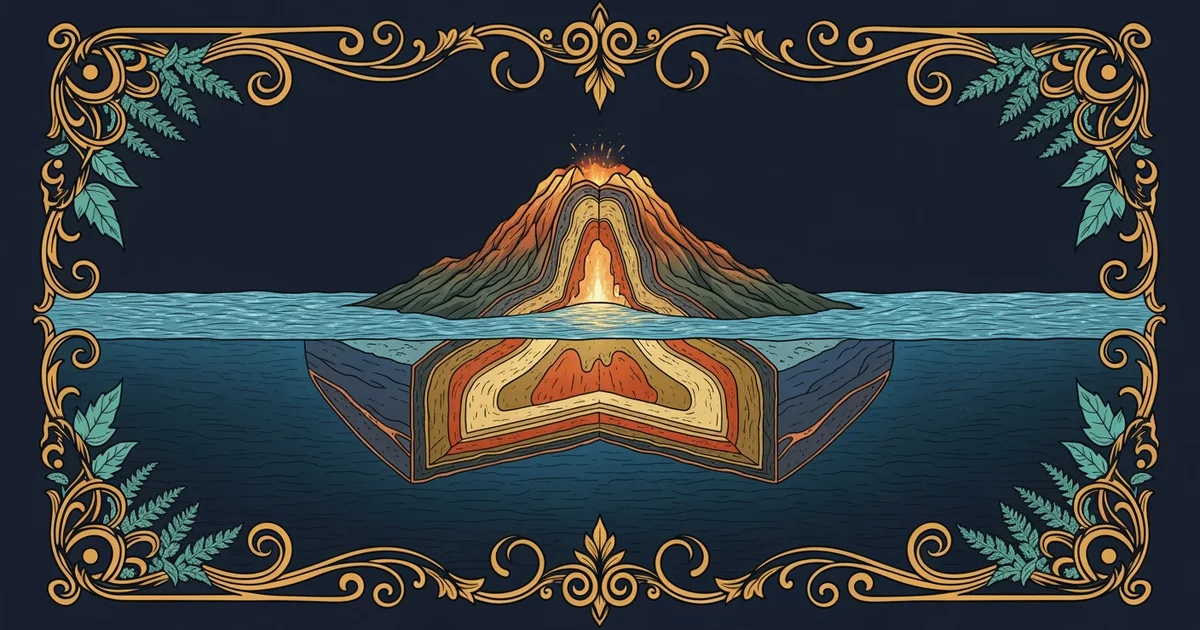
The Mechanics of Plate Motion
Deep beneath the crust, heat from the core creates large currents in the mantle that drive the movement of plates. When these plates collide or slide past each other, they generate the immense forces that shape the geography of our world. You should view these plates as giant rafts floating on a viscous, semi-solid layer that allows for constant, creeping motion. This motion is not random, but follows specific paths determined by the cooling of the planet and the release of internal heat. If you map these movements, you can predict how current landmasses will drift over millions of years.
Key term: Lithosphere — the rigid outer layer of the Earth that is broken into several large plates that move over the mantle.
This movement creates distinct boundaries where the most dramatic changes to island geography typically occur. When plates move apart, magma rises to fill the gap, often creating new volcanic islands in the process. Conversely, when plates collide, one plate often slides beneath the other, which can force land upward or create deep oceanic trenches. These interactions serve as the primary engine for island formation and destruction across the geological history of the planet. Understanding these boundaries allows us to see why some islands are stable while others disappear into the sea.
Predicting Future Island Positions
To understand how islands shift, we must look at the rate and direction of the plates beneath them. Scientists track these motions using precise measurements that show how fast a landmass moves relative to a fixed point. Because these plates move at about the same speed that your fingernails grow, the changes are invisible to the human eye. However, over millions of years, these small movements result in massive shifts in global geography. We can categorize the primary ways these plates interact to change the location of islands over time:
- Divergent boundaries occur where plates pull away from each other, allowing molten rock to rise and form new islands in the middle of the ocean floor.
- Convergent boundaries happen when two plates crash into one another, which often forces land to rise or pushes older islands down into the hot mantle.
- Transform boundaries exist where plates slide horizontally past each other, causing frequent shifts in the alignment of island chains and creating intense seismic activity.
| Boundary Type | Motion Direction | Primary Result | Impact on Islands |
|---|---|---|---|
| Divergent | Moving apart | New crust forms | Creates new land |
| Convergent | Crashing together | Crust is destroyed | Subducts old land |
| Transform | Sliding past | Crust is conserved | Shifts positions |
By applying these rules, we can model the future of any island. If an island sits on a plate moving toward a subduction zone, its future involves being pulled into the mantle. If it sits near a spreading center, it will likely gain more land area as new volcanic material emerges. This constant recycling of the crust ensures that the map of our world is always a work in progress. We are simply living during one specific snapshot of a much longer, ongoing process of planetary reorganization.
The movement of tectonic plates acts as a global conveyor system that constantly recycles the crust and dictates the lifespan of every island on Earth.
But what does it look like in practice when we apply these tectonic models to specific island chains?