
Atoll Formation Cycles
Imagine a massive volcano standing tall in the middle of a deep, blue ocean. Over many ages, this giant mountain slowly sinks back into the crust of the earth. As the peak descends, the coral reef surrounding it must grow upward to stay near the warm sunlight. This constant dance between a sinking landmass and the persistent growth of coral creates a unique geological cycle. Understanding how these islands transform helps us see the hidden history of the ocean floor.
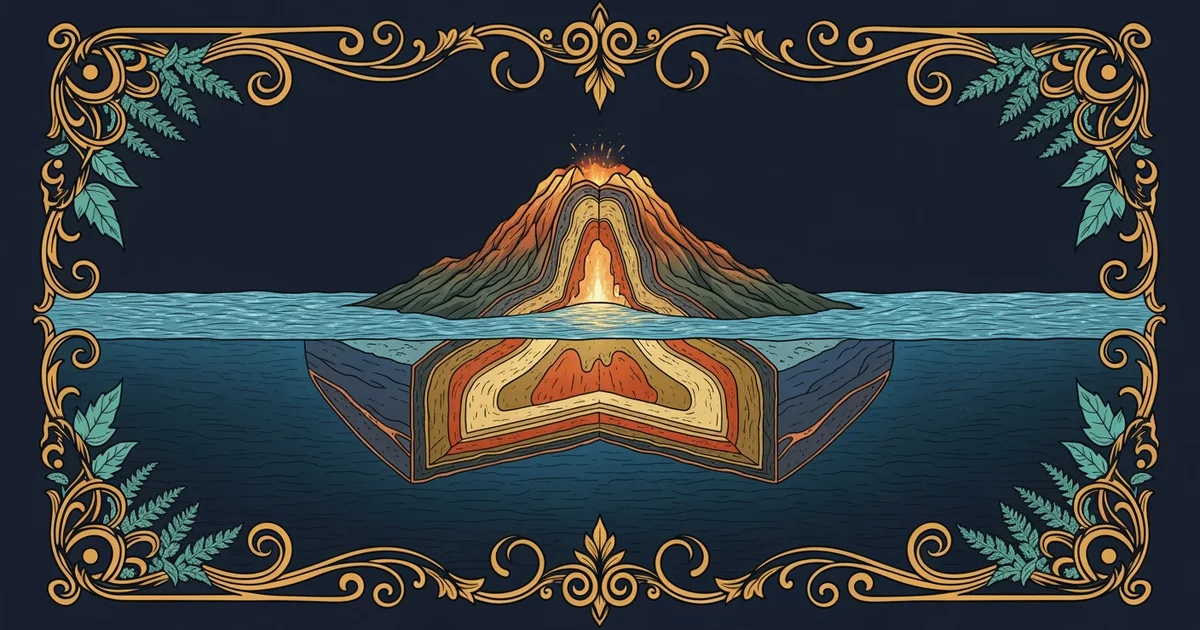
The Stages of Island Subsidence
When a volcanic island first forms, it sits high above the waves as a rugged peak. Shallow water creates a perfect home for corals to build a fringing reef right against the rocky shore. As the volcanic base begins to cool and sink, the reef does not disappear under the water. Instead, the living coral colony builds its skeleton upward toward the surface to maintain its access to life-giving sunlight. This process creates a wider gap between the island shore and the edge of the reef.
Key term: Subsidence — the gradual sinking or settling of the earth's crust, which forces coral reefs to grow upward to survive.
As the island continues to sink, it eventually turns into a barrier reef that encircles the shrinking land. Think of this process like a person wearing a belt that stays in place while their body slowly shrinks. The belt stays at the same level, but the distance between the body and the belt grows larger over time. The lagoon between the reef and the island deepens as the volcanic rock retreats further beneath the surface. This stage marks the final struggle of the island to remain above the high tide.
From Volcanic Peak to Coral Ring
Once the volcanic island disappears completely, only the ring of coral remains at the surface. This final form is known as an atoll, which acts as a circular monument to the mountain that once stood there. The central lagoon is usually shallow and calm because the outer ring of coral breaks the force of ocean waves. These structures are not permanent, however, as they rely on the health of the coral to keep the ring intact. If the coral dies or the sea level rises too fast, the atoll will eventually vanish beneath the waves.
To track the transition from a mountain to a ring, observe these three distinct stages of development:
- Fringing reef stage occurs when the coral grows directly along the edge of a new volcanic island.
- Barrier reef stage begins when the island sinks and creates a deep lagoon between the land and reef.
- Atoll stage marks the moment the central island is fully submerged, leaving behind a ring of coral reef.
| Stage | Land Status | Reef Position | Lagoon Depth |
|---|---|---|---|
| Fringing | High Peak | Attached | Very Shallow |
| Barrier | Low Peak | Separated | Increasing |
| Atoll | Submerged | Circular | Constant |
This table shows how the physical environment changes as the island moves through its long lifecycle. The depth of the lagoon reflects the speed of the sinking process compared to the growth rate of the coral. If the coral grows faster than the sinking, the reef stays healthy and vibrant. If the sinking happens too quickly, the coral cannot keep up and the entire structure dies. This delicate balance determines the shape of tropical geography across the vast Pacific and Indian oceans.
Understanding these cycles allows scientists to predict the future of various island chains. By measuring the current height of an island, they can estimate how much time remains before it becomes a ring. This knowledge helps us map the movement of tectonic plates deep beneath the surface of the sea. Every atoll we see today tells a story of a mountain that once touched the clouds before returning to the sea.
The formation of an atoll is a geological cycle where coral growth compensates for the gradual sinking of a volcanic island.
The next Station introduces Endemic Species Evolution, which determines how isolated island environments shape the unique life forms found within these lagoons.