
Defining the Island Identity
Imagine standing on a beach where the land ends and the vast blue ocean begins in every direction. You are surrounded by water, yet you remain on solid ground, isolated from the rest of the world. This unique experience defines the life of an inhabitant on a landmass that is entirely detached from larger continental shelves. Understanding these boundaries helps us see why some places develop distinct ecosystems while others remain connected to global land patterns.
Geological Criteria for Land Isolation
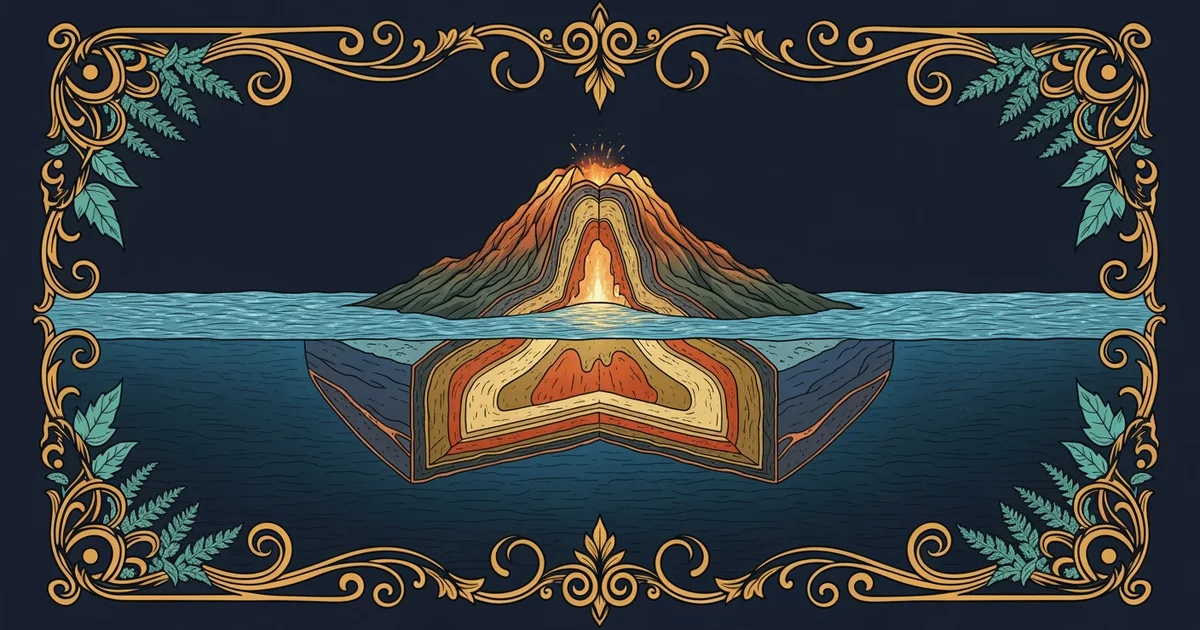
An island is defined primarily by its physical separation from a larger continental landmass by surrounding water. This separation occurs when rising sea levels flood lower regions or when tectonic activity pushes land above the ocean surface. Think of an island like a small, private business operating in a remote town without any road access to the main city. This business must source its own materials and manage its own growth because it cannot rely on the constant flow of goods from the outside. Similarly, islands act as independent units where geological events dictate the survival and evolution of everything living on them. Without a land bridge to facilitate movement, species on these islands often evolve in ways that differ significantly from their mainland ancestors.
Key term: Continental shelf — the shallow, submerged edge of a continent that extends outward before dropping off into the deep ocean floor.
Geologists use the presence of this shelf to distinguish between true islands and other land formations. A landmass sitting directly on a continental shelf is often just a detached piece of a larger continent. In contrast, oceanic islands rise directly from the deep ocean floor through volcanic activity or coral growth. These two types of islands have very different origins and histories that shape their physical identities over millions of years. Understanding these differences allows us to classify landmasses based on how they formed and how they maintain their isolation from larger continental structures.
Comparing Landmass Characteristics
When we look at the physical traits of various landmasses, we see clear distinctions in size, origin, and connectivity. These differences determine how the land interacts with the surrounding ocean and how it supports diverse life forms. The following table highlights how different types of landmasses compare across key geological attributes that define their identity.
| Feature | Continental Island | Oceanic Island | Continent |
|---|---|---|---|
| Origin | Part of shelf | Volcanic/Coral | Large plate |
| Size | Generally small | Very small | Massive |
| Biology | Mainland relatives | Unique species | Diverse life |
Distinguishing between these categories requires looking at the depth of the water surrounding the land. If the water is shallow, the island is likely a fragment of a nearby continent that became isolated as sea levels rose. If the water is incredibly deep, the island likely emerged from the seafloor as a result of intense geological pressure. This distinction is vital for researchers who study how life reaches and inhabits new environments. By mapping these physical boundaries, we gain a clearer picture of how our planet organizes its surface into distinct, manageable units of study.
Isolation acts as a filter for biological development and physical change across the globe. When land is cut off from the mainland, it stops receiving the constant influx of new materials and species. This forces the island to become a self-contained laboratory where natural processes operate at a different pace. Over time, these isolated pockets of land become unique environments that offer us a glimpse into how geography dictates the rules of survival. By studying these boundaries, we learn how the earth manages its diverse landscapes through constant geological shifts and oceanic movements. This path will guide you through the complex history of our planet, showing how these isolated landmasses shape the evolution of life and the physical patterns of our world.
Defining an island requires identifying its physical separation from a continental shelf, which dictates how the landmass evolves independently from the rest of the world.
By understanding these basic island boundaries, we are now ready to explore how the deep ocean basins formed and how they influence the global structure of our planet.