
Oceanic Basin Origins
Imagine the seafloor as a massive, shifting puzzle board that constantly rearranges its pieces across the globe. You might think the ocean floor is a flat, static plain, but it is actually a dynamic landscape forged by intense heat and pressure. Deep beneath the waves, the earth crust is constantly breaking apart, cooling down, and sinking back into the mantle below. Understanding these movements is key to grasping how islands emerge from the dark, silent depths of the vast ocean basins.
The Engine of Tectonic Movement
The process of building an oceanic basin begins with the movement of tectonic plates that cover the planet. These massive slabs of rock float on a layer of hot, semi-fluid material that slowly churns like thick soup simmering on a stove. When these plates pull apart, they create a gap that lets molten rock rise from deep within the earth. This molten material cools rapidly when it meets the freezing water of the deep ocean, effectively sealing the crack with fresh, solid rock. Think of this process like a factory assembly line that produces new floor tiles to replace the old ones. The new crust is hot and buoyant, so it rises to form high ridges that stretch across the entire ocean floor.
Key term: Tectonic plates — the massive, rigid segments of the Earth's outer shell that constantly shift and interact to shape the planet surface.
As the plates move further away from the central ridge, the new rock begins to cool down and become denser. This cooling causes the crust to sink lower into the mantle, creating the deep, flat basins that hold our oceans. The entire cycle acts like a giant conveyor belt that moves rock from the center of the ocean toward the edges of continents. Over millions of years, this steady movement dictates the depth and shape of the seafloor, influencing everything from water currents to the life forms that dwell in the deep.
Volcanic Structures in the Deep
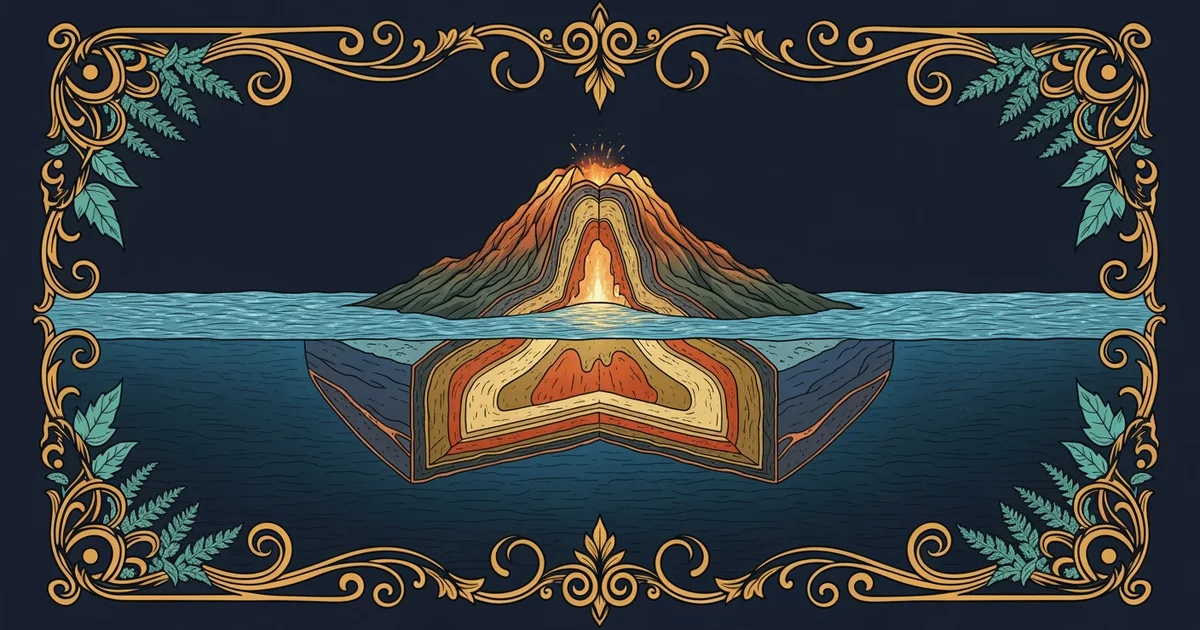
Sometimes, the magma rising from the mantle does not just fill a gap but erupts through the crust to form volcanic structures on the seafloor. These underwater mountains can eventually grow tall enough to break the surface, creating the islands we see today. The following list outlines how these structures evolve over time:
- Hot spots provide a stationary source of magma that punches through a moving plate to create a chain of islands.
- Subduction zones occur when one plate slides beneath another, forcing molten rock to rise and form massive volcanic island arcs.
- Mid-ocean ridges generate constant volcanic activity by allowing magma to seep out through the gaps between separating plates.
These processes are not random, as they follow the predictable patterns of plate movement that have shaped our world for billions of years. When a volcanic island forms, it provides a unique, isolated laboratory for life to evolve in ways that are impossible on large continents. This isolation creates a unique biological identity that remains tied to the geological birth of the island itself. By studying these deep sea origins, we can better understand the forces that keep our planet constantly changing and renewing its own surface.
Each volcanic structure serves as a testament to the immense power hidden beneath the surface of the sea. These mountains of basalt are not permanent, however, as they eventually erode or sink back into the depths as the plate moves away from the heat source. The lifecycle of an island is therefore tied directly to the movement of the crustal plates beneath it. We must look at the seafloor as a living history book that tells the story of how our planet maintains its balance through constant, slow-motion destruction and creation.
Oceanic basins are dynamic landscapes shaped by the continuous creation and cooling of crustal plates which form the foundations for all volcanic island chains.
Now that we understand the birth of the seafloor, we will examine how fragments of land break away from continents to form their own isolated island identities.