
Climate Change Impacts
Rising global temperatures act like an invisible hand that turns up the heat on the world’s natural water pumps. When the earth warms, the delicate balance of the hydrological cycle shifts in ways that disrupt how life accesses fresh water.
Shifts in Global Water Patterns
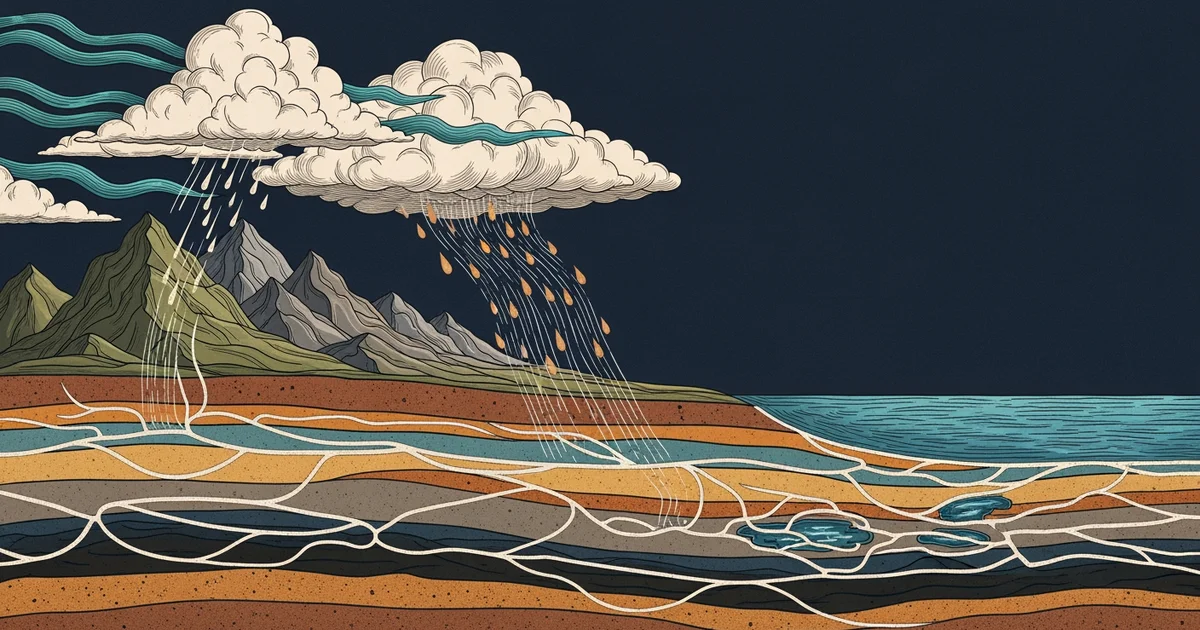
Climate change alters the way water moves across the planet through evaporation and precipitation. As air temperatures increase, the atmosphere gains the capacity to hold more water vapor before it releases rain. This change creates an environment where wet regions often become significantly wetter while dry regions face more intense drought conditions. Think of the atmosphere like a giant sponge that expands as it warms up. A larger sponge absorbs more liquid from the surface, which leaves less moisture in the soil for plants and local water supplies. This process effectively steals water from arid areas and delivers it elsewhere through heavy, damaging storms.
Key term: Evapotranspiration — the combined process of water evaporating from land surfaces and transpiring from plants into the atmosphere.
Because of this shift, the predictability of seasonal rain cycles begins to vanish for many communities. Farmers who once relied on historical patterns to plant their crops now face unpredictable weather that threatens global food security. The intensity of these changes depends on how quickly we can stabilize global temperatures and reduce greenhouse gas emissions. When we look at the interaction between urban water systems and natural cycles, it becomes clear that human infrastructure struggles to handle these extreme weather events. Cities designed for moderate rainfall now face frequent flooding because their drainage systems cannot cope with the sudden, massive volume of water delivered during climate-driven storms.
Forecasting Future Water Scarcity
Predicting future water scarcity requires looking at how glaciers and snowpacks function as natural storage units for our planet. These frozen reservoirs release water slowly during warmer months, which provides a steady supply for rivers and irrigation systems. As these glaciers melt away due to rising heat, that steady supply disappears and leaves behind only seasonal, unpredictable surges. Future water availability will likely follow these trends:
- Increased evaporation rates reduce the total volume of water stored in lakes and reservoirs during summer months.
- Accelerated melting of mountain snowpacks leads to early spring floods followed by severe water shortages in late summer.
- Rising sea levels push saltwater into coastal freshwater aquifers, which contaminates the drinking water supply for millions of people.
These factors combine to create a landscape where water scarcity becomes a permanent feature rather than a temporary crisis. The following table highlights how different regions face unique risks as the climate continues to change throughout the coming decades.
| Region Type | Primary Water Risk | Impact on Local Population |
|---|---|---|
| Arid Zones | Chronic water drought | Loss of agricultural output |
| Coastal Areas | Saltwater intrusion | Contamination of aquifers |
| Mountainous | Loss of glacial melt | Unstable seasonal supply |
We must consider the foundation question regarding how water shapes our physical geography while noting that climate change is now the primary force altering this shape. The continuous movement of water sustains life, but our current path threatens the reliability of this essential resource. By integrating knowledge of urban water systems with current climate models, we can better understand the tension between human demand and natural supply. Is it possible to engineer our way out of this scarcity, or must we fundamentally change how we use water in every sector of society? This remains one of the most pressing questions for the next generation of scientists and environmental planners.
Human-driven climate change disrupts the predictable movement of water by accelerating evaporation and destabilizing the natural storage systems that communities rely on for survival.
The next stage of our journey examines how we can design sustainable water futures to protect these vital resources for future generations.