
Atmospheric Water Vapor
A single glass of ice water sitting on a table soon develops tiny beads of moisture on its exterior. This common sight reveals that the air around us holds invisible water in a gaseous state.
The Nature of Atmospheric Moisture
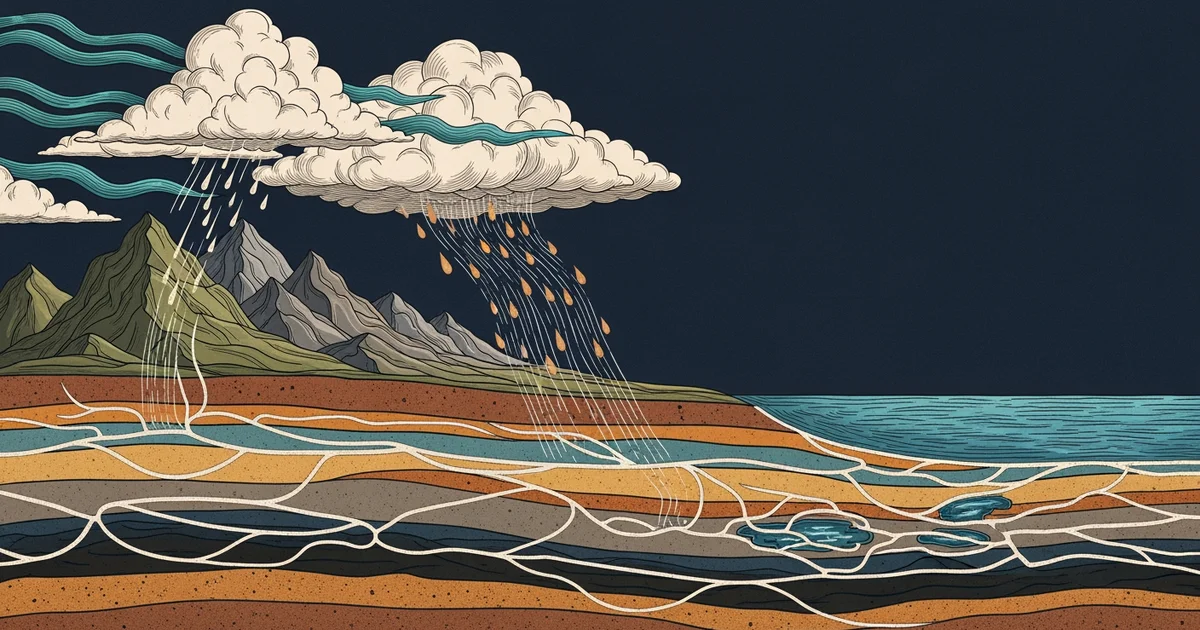
Water constantly moves between the surface of the planet and the thin layer of gas above our heads. This invisible gas, known as atmospheric water vapor, functions as the primary fuel for our global weather systems. It exists everywhere in the air, though we often fail to notice it until the conditions change. Think of the atmosphere like a giant sponge that absorbs liquid water and turns it into an invisible mist. The capacity of this sponge changes depending on how much heat is currently available in the surrounding environment. When the sun warms the surface, more water turns into gas and enters the air. This process maintains a balance that keeps our planet habitable and supports the growth of plants and animals.
Key term: Atmospheric water vapor — the gaseous phase of water that exists within the air and acts as the primary energy source for weather patterns.
The relationship between heat and moisture determines how much water the air can hold at any given time. Warmer air molecules move faster and create more space for water vapor to exist between them. Cold air lacks this energy, which forces the water vapor to transition back into a liquid state or ice. You can visualize this by comparing air to a bank account that fluctuates based on local economic conditions. When temperatures rise, the air gains more buying power and can hold a larger balance of moisture. When temperatures drop, the air must pay back its debt, forcing the excess water to condense into clouds or rain. This constant cycle of borrowing and spending keeps the global water supply in motion across vast distances.
Factors Influencing Vapor Distribution
Several factors dictate how much moisture remains in the air at any specific location or time. These variables ensure that some regions experience extreme humidity while others remain dry and arid for long periods. The following list explains the primary drivers that influence how water vapor behaves in our local environment:
- Solar radiation levels determine the base rate of evaporation by providing the energy needed to break liquid bonds.
- Proximity to large bodies of water allows for a steady supply of moisture to enter the air through surface evaporation.
- Wind patterns transport moist air from one region to another, shifting the balance of humidity across entire continents.
- Local terrain features like mountains force air to rise and cool, which triggers the release of stored water vapor.
Understanding these mechanisms helps us predict how changes in temperature will shift the distribution of water across the globe. If the planet warms, the atmosphere will hold more moisture, which changes the frequency and intensity of weather events. This shift impacts everything from agriculture to urban planning as we adapt to new environmental realities. We must observe how these patterns evolve to better understand our role in the broader hydrological cycle. The movement of water is not just a scientific curiosity, but a fundamental process that shapes the physical geography of our world. As you track the moisture in the air, consider how these small invisible changes influence the massive storms that define our climate systems.
The temperature of the air dictates its capacity to hold water, creating a constant cycle of evaporation and condensation that regulates the global climate.
Next, we will explore how these specific vapor conditions translate into the diverse precipitation patterns found across our planet.