
Surface Runoff Dynamics
Imagine pouring a bucket of water onto a flat sidewalk versus a steep, bumpy driveway. The water behaves differently based on the surface it hits, just as rain acts differently depending on the landscape it covers. This movement of water over the Earth's surface is known as surface runoff, a vital process that shapes our rivers and feeds our lakes. When rain falls faster than the ground can soak it up, the excess water begins its journey across the land. This flow is not random, as it follows the path of least resistance determined by gravity and the shape of the terrain.
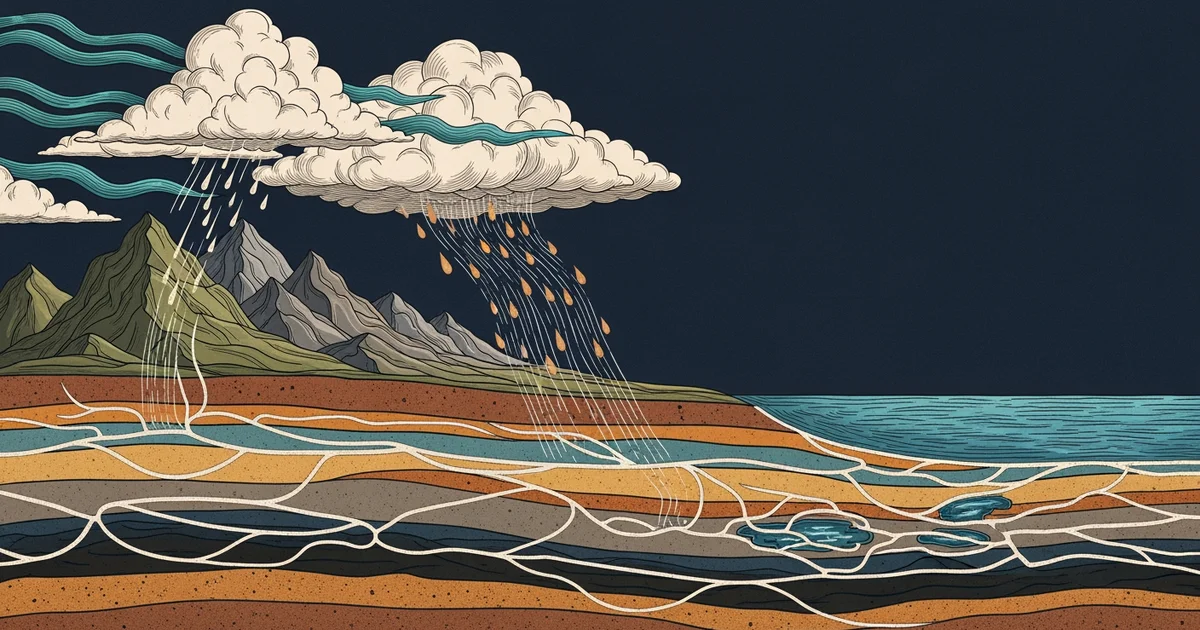
The Mechanics of Water Flow
Water moves across the landscape by following the contours of the land, much like coins rolling down a slanted table toward a slot. As the water gathers, it forms tiny channels that eventually merge into larger streams and rivers. This process is highly sensitive to the slope of the land, where steeper areas cause water to pick up speed and force. Faster water possesses more energy, which allows it to carve deeper into the soil and move larger rocks downstream. This constant movement acts as a sculptor, slowly changing the shape of valleys and riverbeds over vast periods of time.
Key term: Surface runoff — the portion of precipitation that does not soak into the ground and instead flows over the landscape into streams and rivers.
Several factors determine how much water flows across the surface versus how much is absorbed into the soil. The texture of the ground plays a major role, as solid rock or packed clay prevents water from sinking down. Vegetation also acts as a barrier, slowing the water down and giving it more time to soak into the earth. When we remove trees or pave over natural soil with concrete, we effectively remove these natural sponges. This leads to more water moving across the surface, which can cause sudden flooding and erosion in areas that are not prepared for the extra volume.
Influences on River Development
The way water travels over the land dictates how rivers grow and how they function within the larger environment. When water flows over the surface, it carries sediment and nutrients from the land into the aquatic systems. This transport is essential for maintaining the health of river ecosystems, as it provides the materials needed for aquatic life to thrive. The following factors help determine the overall speed and volume of the water flow:
- Soil saturation levels dictate if the ground can hold more water or if it will shed the excess immediately.
- Land cover types such as forests or grasslands act as natural filters that slow the water and improve its quality.
- Topographic slope intensity determines how quickly water accelerates and how much physical force it exerts on the riverbed.
- Impermeable surfaces like asphalt or concrete force water to move quickly across the land without any chance to soak in.
| Feature | Effect on Runoff | Impact on River Flow |
|---|---|---|
| Steep Slope | Increases Speed | High Erosion Potential |
| Dense Forest | Decreases Speed | Stable Water Levels |
| Urban Pavement | Increases Speed | Sudden Flood Risk |
By observing these patterns, we can better understand how our own actions impact the natural water systems around us. When we build roads or clear land, we alter the natural drainage patterns that have existed for thousands of years. This change forces the river to adapt, often by widening its banks or changing its path to accommodate the higher water volume. Understanding these dynamics is the first step toward managing our water resources in a way that protects both the land and the communities that rely on these vital water paths. We must respect the natural flow of water to maintain the balance of our physical world.
The shape of the landscape acts as a natural guide that directs water flow and determines how rivers evolve and interact with the surrounding environment.
The next Station introduces infiltration processes, which determine how water moves beneath the surface to replenish our groundwater supplies.