
Precipitation Patterns
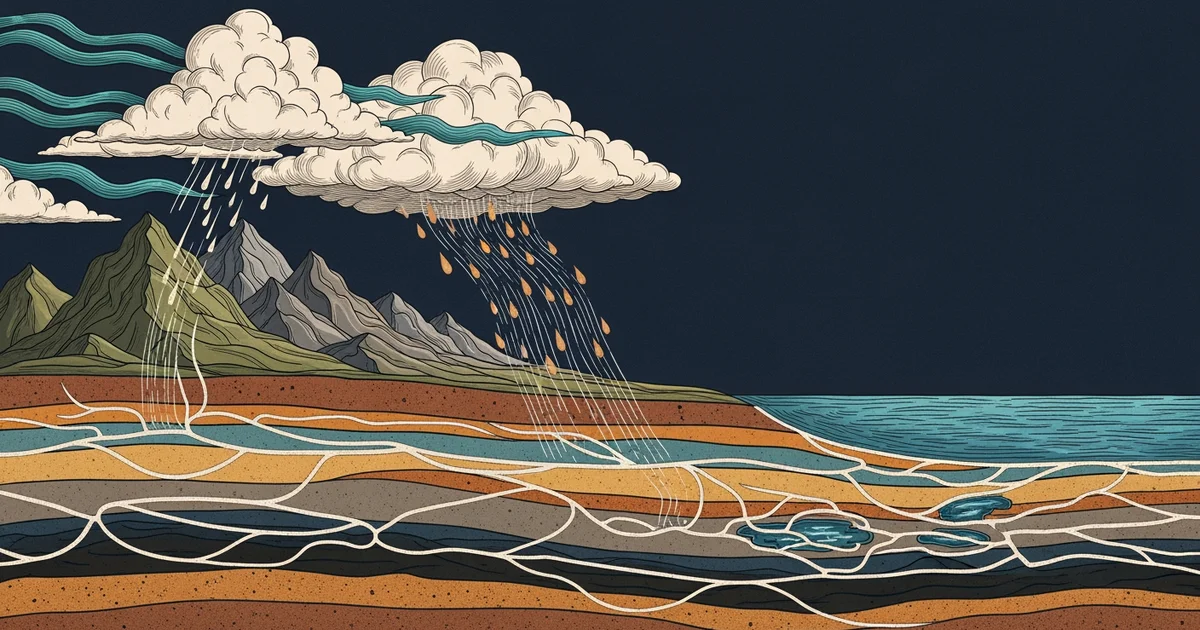
Clouds gather above the landscape, holding invisible weight until they release moisture upon the parched earth below. Have you ever wondered why some regions receive heavy rainfall while others remain trapped in endless, dusty droughts?
The Mechanics of Atmospheric Moisture
Water moves through the air as vapor until cooling temperatures force it to condense into liquid droplets. This process relies on air masses rising into the atmosphere, where lower pressure causes them to expand and cool down. As the air cools, it loses the ability to hold water vapor, leading to the formation of clouds. Think of this process like a sponge that gets squeezed by a giant hand. When the sponge is full, it cannot hold any more liquid, so the extra water spills out onto the ground. This simple physical reaction determines how much water falls in specific areas across our planet. Without these cooling mechanisms, water would simply drift around the globe without ever returning to the surface to sustain life.
Key term: Precipitation — the process where water vapor condenses in the atmosphere and falls to the earth as rain, snow, or hail.
Categorizing Weather Events
When water finally falls, its physical state depends entirely on the temperature profile of the atmosphere. Rain occurs when the air remains warm enough for ice crystals to melt completely before reaching the ground. Snow forms when temperatures stay below freezing throughout the entire descent, allowing crystals to reach the surface intact. Hail requires a much more violent environment, often occurring during intense summer storms with strong upward drafts. These drafts toss ice pellets back into the freezing upper atmosphere multiple times, allowing them to grow larger before they finally fall.
We can organize these primary weather events by their formation characteristics and thermal requirements:
- Rain happens when falling ice crystals melt into liquid water as they pass through warmer atmospheric layers near the ground level.
- Snow develops when the entire column of air stays below the freezing point, which prevents the ice crystals from melting during their descent.
- Hail forms inside powerful storm clouds where strong vertical winds push ice pellets upward, forcing them to accumulate layers of frozen water.
These patterns dictate the availability of fresh water for ecosystems and human agriculture. Understanding these differences helps us predict how changing climates might alter the distribution of water across different geographic regions.
Influences on Global Distribution
Local geography plays a massive role in how these moisture patterns unfold across the surface of the earth. Mountains often act as physical barriers that force air to rise, which triggers cooling and heavy precipitation on the windward side. Once the air crosses the peak, it sinks and warms up, creating a dry region known as a rain shadow. This explains why one side of a mountain range might be a lush forest while the other side remains a barren desert. The movement of air currents across the planet ensures that water is constantly redistributed, though not always in equal amounts.
| Event Type | Thermal Requirement | Typical Environment | Primary Driver |
|---|---|---|---|
| Rain | Above freezing | General atmosphere | Condensation |
| Snow | Below freezing | Cold air masses | Crystallization |
| Hail | Extremely cold | Violent thunderstorms | Updrafts |
This table illustrates how specific environmental conditions dictate the type of moisture reaching the surface. By comparing these factors, we can see how complex the atmosphere truly is in its daily operations. Each event serves a purpose in the larger cycle of moving water from the oceans to the land. This continuous cycle shapes our physical geography by eroding mountains and filling river systems over long periods of time.
Precipitation is the essential atmospheric mechanism that converts vapor into liquid or solid water to redistribute moisture across the earth.
The next Station introduces surface runoff dynamics, which determines how water flows across the landscape after it reaches the ground.