
Infiltration Processes
Imagine you are pouring water through a kitchen strainer filled with pebbles and sand. The water moves through the gaps until it disappears into the drain below your sink. This simple action mirrors the way rain moves from the surface into the earth. When water lands on soil, it does not just sit there or flow away. Much of it begins a slow journey downward through the tiny spaces between dirt particles. This process is the primary way our planet renews its hidden water supplies. Without this movement, the deep reservoirs beneath our feet would eventually run dry. Understanding this path helps us see how the earth acts as a massive natural filter.
The Mechanics of Soil Absorption
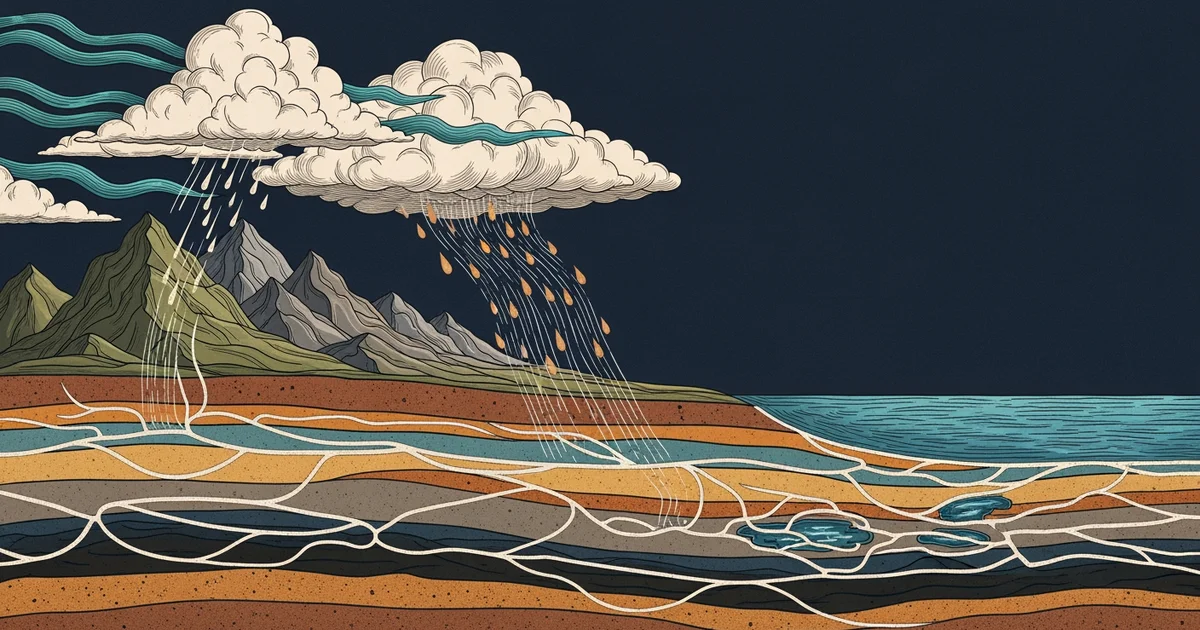
When rain hits the ground, the soil acts like a giant sponge waiting to soak up moisture. The speed at which water enters the ground is known as infiltration. Several factors determine how quickly this happens during a heavy storm or a light drizzle. If the ground is already soaked, it cannot take in any more liquid. The texture of the dirt also matters a great deal for this process. Sandy soil has large gaps that let water pass through very quickly and easily. Clay soil has tiny, tight spaces that hold onto water and slow the movement down. Think of this like a busy coffee shop during the morning rush hour period. A wide door allows many people to enter at once, while a narrow door forces everyone to wait.
Key term: Infiltration — the natural process where surface water moves downward into the soil and rock layers.
Once the water passes through the top layer, it continues to travel deeper into the ground. This movement is driven by the force of gravity pulling everything toward the center of the planet. As the water moves, it encounters layers of sediment and rock that act as a barrier. These layers trap dirt, debris, and some chemicals while letting the cleaner liquid pass through. This natural filtering system is essential for turning surface runoff into usable, clean water. The deeper the water goes, the more layers it must pass through to reach the bottom. This process ensures that the water we eventually pump up is much cleaner than the rain that first touched the soil.
Understanding Groundwater Recharge
After the water moves deep enough, it reaches an area where the ground is fully saturated. This zone is called the groundwater reservoir, which acts like a massive underground storage tank. The process of adding new water to this deep storage is called recharge. This recharge is vital because it keeps our wells and springs flowing even during long, dry periods. Without constant recharge, the levels in these underground tanks would drop until they were empty. We rely on this stored water for drinking, farming, and supporting local ecosystems every single day.
| Soil Type | Infiltration Rate | Water Retention |
|---|---|---|
| Sand | Very High | Very Low |
| Silt | Moderate | Moderate |
| Clay | Very Low | Very High |
The table above shows how different ground types change how water behaves after it rains. Sandy areas allow water to reach the deep reservoir quickly but hold very little moisture. Clay areas act like a lid, keeping water on the surface and preventing it from reaching deep layers. Most landscapes have a mix of these types, which creates a balanced system. This balance ensures that water moves through the ground at a rate that keeps everything healthy. If the ground were all clay, we would have constant floods after every single storm. If the ground were all sand, our water would drain away before plants could use it.
- Water lands on the surface and begins to seep into the topsoil layer.
- Gravity pulls the liquid through the spaces between rocks and sand particles.
- The earth filters out impurities as the water moves through the deep layers.
- The clean water collects in the saturated zone to form a vast underground reservoir.
This cycle of movement is how the earth manages its most precious resource. By studying these steps, we learn why protecting our land is so important for our future. Every bit of open space helps the earth breathe and drink in the rain. We must keep these natural paths clear so the water can continue its journey downward.
Infiltration acts as a natural filter that moves surface water into deep underground reservoirs to sustain our planet.
The next Station introduces oceanic circulation, which determines how water moves across the vast global systems.