
Saltwater Intrusion Dynamics
Imagine a coastal town where every home relies on a single straw dipped into a shared glass of water. If you pull too hard on that straw, the pressure balance shifts and allows unwanted liquid to rush into your supply. This phenomenon, known as saltwater intrusion, occurs when heavy pumping of coastal wells disrupts the natural underground balance. Fresh water usually flows toward the ocean under the force of gravity, acting as a protective barrier. When humans remove too much fresh water, that pressure drops and the ocean pushes inland through the porous rock. This process transforms once-productive wells into unusable sources of brine, permanently altering the local landscape and water availability.
The Delicate Balance of Coastal Aquifers
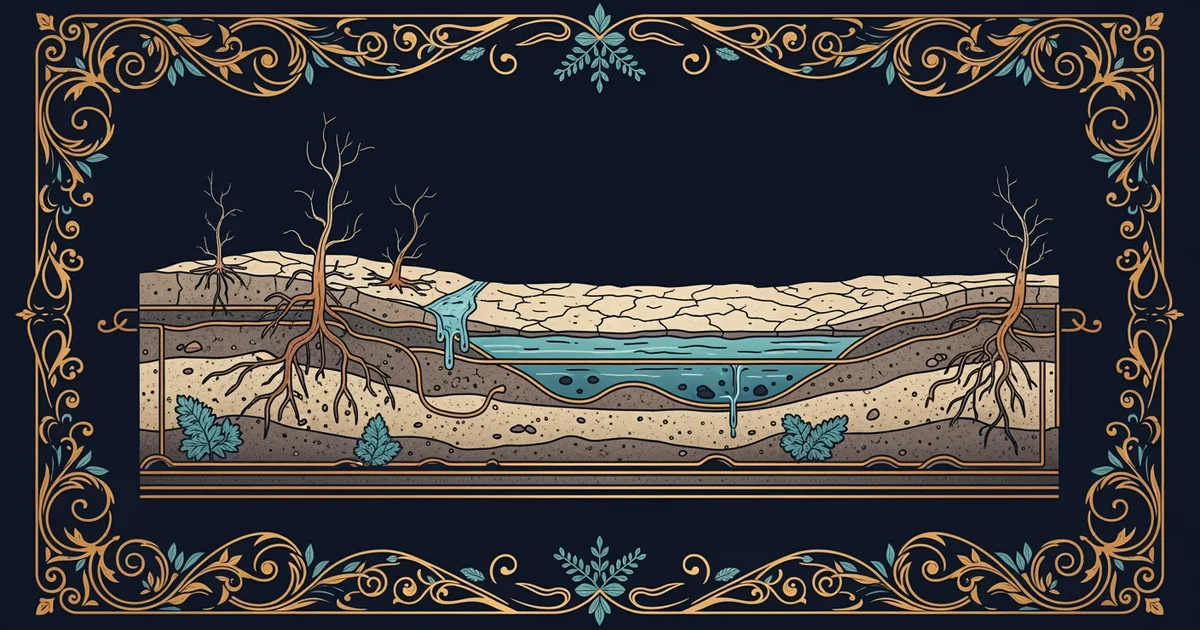
Coastal aquifers behave like a complex tug-of-war between fresh water and the dense, heavy ocean. Because salt water is denser than fresh water, it naturally pushes underneath the fresh water layer toward the land. Under normal conditions, the fresh water pressure remains high enough to keep the salt water held back at the shoreline. When people pump water from these wells, they effectively lower the water table and reduce that vital pressure. This reduction creates a vacuum that invites the salty ocean water to migrate deep into the land. The movement is rarely fast, but it is often steady and very difficult to reverse once it begins.
Key term: Saltwater intrusion — the movement of saline water into freshwater aquifers, which is typically caused by groundwater depletion or sea-level rise.
Mechanics of Underground Fluid Displacement
Once the salt water begins to move inland, it follows the path of least resistance through the soil. The underground structure of an aquifer acts like a massive, hidden sponge that holds water in tiny pores. Salt water fills these pores, displacing the fresh water that previously occupied the space. This displacement creates a permanent change in the chemistry of the aquifer, making the water salty and unsuitable for drinking or irrigation. The following factors influence how quickly this shift happens beneath the ground:
- Pumping rates determine how much fresh water pressure is lost, directly dictating how fast the salt water can advance toward the wells.
- Aquifer permeability describes how easily water moves through the rock, which dictates the speed at which salt water can travel inland.
- Coastal topography affects the slope of the land and the depth of the water table, which alters the balance of pressure against the ocean.
Consider the analogy of a bank account where you only deposit a small amount of money each month. If you withdraw funds faster than your income arrives, your balance drops and you eventually hit a negative limit. In an aquifer, the fresh water recharge represents your income, while pumping represents your withdrawals. When you withdraw too much, the ocean acts like a debt collector, taking over the space you can no longer afford to keep fresh. Just as a bank account cannot be fixed by simply wishing for more money, an aquifer cannot be restored by simply stopping the pump.
Consequences of Pumping Near the Coast
When communities choose to drill wells too close to the shoreline, they accelerate the risk of contamination. The proximity to the ocean means there is less distance for the salt water to travel before it ruins a well. Furthermore, the concentration of wells in a small coastal zone creates a massive "cone of depression" in the water table. This cone acts like a funnel that pulls the salt water toward the center of the pumping activity. The resulting contamination forces towns to abandon expensive infrastructure and seek water from far away. Protecting these zones requires careful management of how much water we take and where we choose to place our taps.
Saltwater intrusion represents a permanent loss of fresh water resources caused by the imbalance between human extraction and natural replenishment.
But what does it look like in practice when these wells eventually become contaminated by the encroaching ocean?