
The Hydrologic Cycle Overview
Imagine a giant bank account where the currency is water instead of money. Every drop of rain that falls acts like a deposit into this vast global savings account. When the sun warms the oceans, water turns into vapor and leaves the surface. This process is like a withdrawal that moves funds into the atmosphere for later use. The earth constantly cycles these resources between the ground and the sky to sustain life. We rely on this natural system to keep our farms growing and our cities running daily.
The Engine of Atmospheric Movement
The sun serves as the primary engine driving this entire watery movement around our planet. When solar energy hits the ocean, it forces liquid water to change into a gas. This stage is known as evaporation, which acts like a pump pulling moisture upward. Once this vapor reaches the cooler air, it turns back into tiny liquid droplets. These droplets cluster together to form clouds that drift across the sky over long distances. This movement ensures that water does not stay trapped in one single location forever.
Key term: Evaporation — the phase change where liquid water transforms into gas to rise into the atmosphere.
This cycle functions much like a massive global plumbing system that connects every single continent. Just as a pump moves water through a house, the sun moves vapor through the atmosphere. If the pump stops working, the water stays stagnant and cannot reach the areas that need it. The atmosphere acts as the pipes, carrying moisture from the warm oceans toward the dry land. This continuous flow prevents the earth from becoming a barren desert by replenishing our local reservoirs.
Precipitation and Surface Distribution
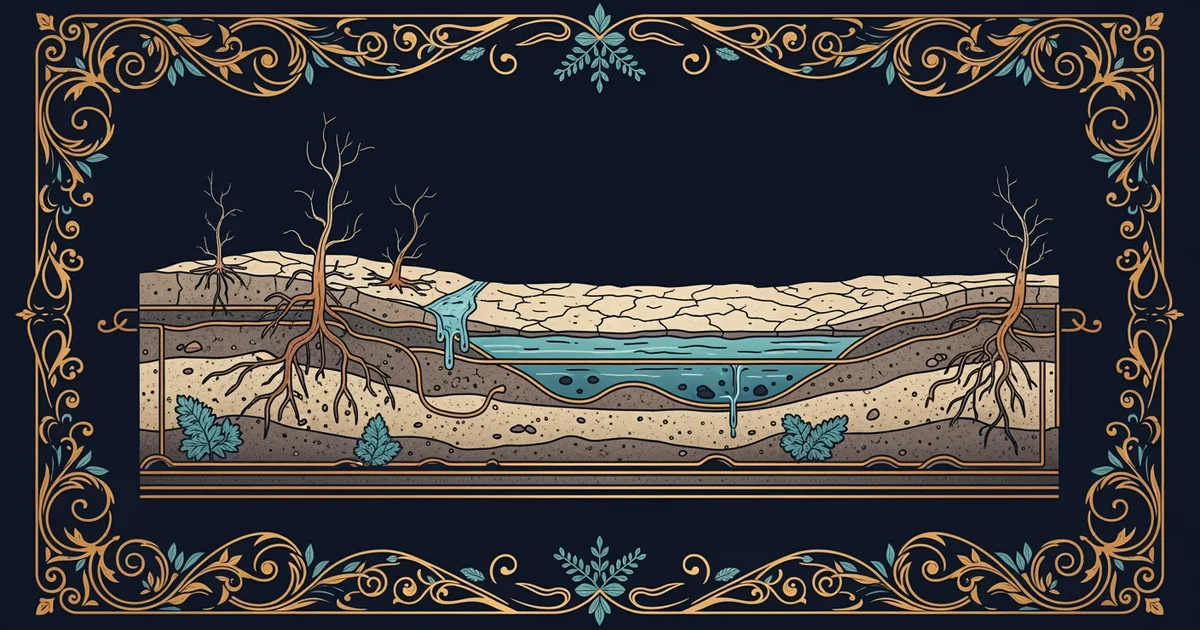
After the clouds form, the water must eventually return to the earth as liquid rain. This stage, called precipitation, serves as the deposit phase for our global water bank account. When the air can no longer hold the moisture, it falls onto the mountains and plains. Some of this water flows into rivers, while other parts soak deep into the soil. This infiltration process fills the hidden reserves we discussed in our last learning station together.
| Process | Location | Primary Driver |
|---|---|---|
| Evaporation | Oceans | Solar Energy |
| Condensation | Atmosphere | Temperature Drop |
| Precipitation | Land/Sea | Gravity Force |
Water that reaches the land follows a path that determines how we use it later. If the ground is hard, the water runs off into streams and heads toward oceans. If the soil is porous, it acts like a sponge and stores the liquid underground. We must understand these paths to know how much water remains available for food production. This balance between storage and movement defines the health of our entire global food system.
When we look at the cycle, we see that every drop has a specific role to play. The water we drink today might have been part of an ocean storm yesterday. This constant recycling means the total amount of water on earth stays mostly the same. We are not creating new water, but rather moving the existing supply around the globe. Managing this circulation is the key to ensuring that we have enough for the future.
The hydrologic cycle functions as a closed loop that redistributes the earth's finite water supply through continuous phase changes.
Understanding how this cycle replenishes our underground supplies will help us evaluate the human needs for fresh water.