
Defining Aquifer Recharge Rates
Imagine you are trying to fill a bucket with a tiny, slow-dripping kitchen faucet while your friends drink water from that same bucket at a faster speed. If you cannot turn the faucet handle to make the water flow faster, the bucket will eventually run dry despite your best efforts. This simple scenario reflects the reality of underground water supplies that people rely on for survival and food growth. We must understand how nature refills these hidden basins to ensure we do not empty them faster than they can recover.
The Mechanics of Natural Water Replenishment
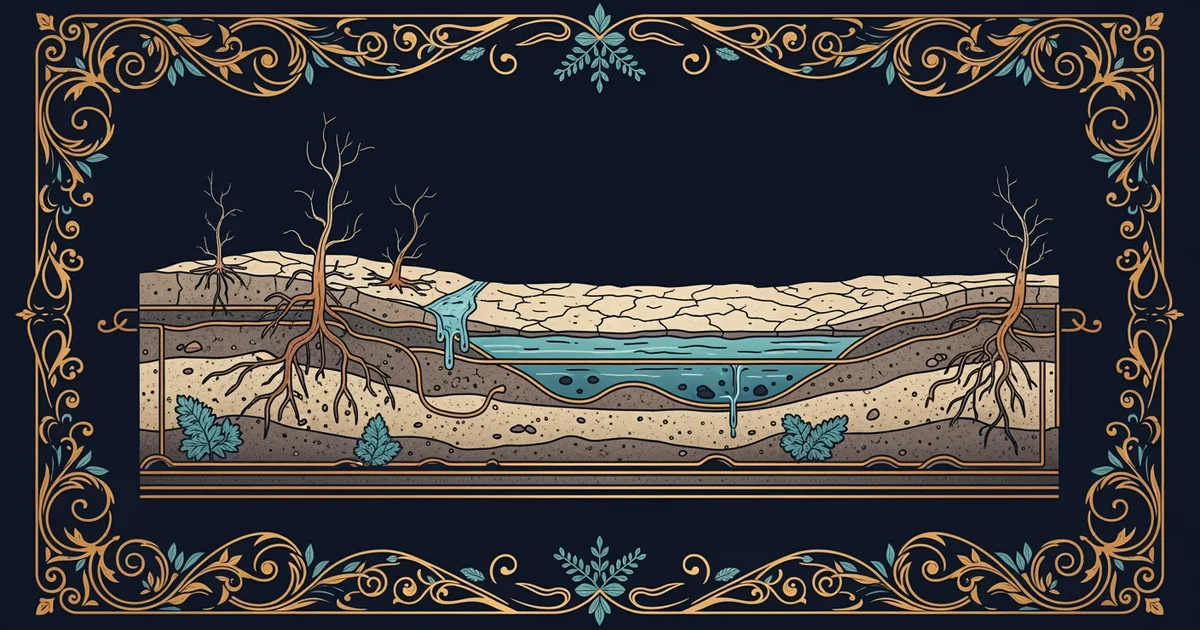
Nature refills underground reservoirs through a process known as aquifer recharge. This process occurs when rain or melted snow seeps into the soil and travels downward through layers of rock. Gravity pulls this water deep into the earth until it reaches a space where it can collect in large quantities. The speed of this movement depends entirely on the type of soil and the density of the rock layers above the water. Sandy soil allows water to pass through quickly, while clay acts like a thick barrier that slows the journey to a crawl. If the surface is covered in concrete or buildings, the water cannot reach the soil to begin its trip downward. This reduction in open ground prevents the natural cycle from functioning correctly in many modern cities.
Key term: Aquifer recharge — the natural process where surface water moves downward through soil and rock layers to replenish underground water storage zones.
Understanding these rates requires looking at the balance between how much water enters the ground and how much we remove. Think of your bank account where your monthly paycheck is the recharge and your spending is the water withdrawal. If you spend more than you earn every single month, your total savings will drop until the account reaches zero. Aquifers function in the same way because they hold a finite amount of water that relies on consistent deposits from rain. When humans pump water out for farming or drinking, we must ensure the withdrawal rate does not exceed the replenishment rate. If we ignore this balance, we face a future where the water supply cannot meet our basic needs.
Distinguishing Between Renewable and Non-Renewable Sources
Water experts categorize underground supplies based on how quickly they can be replaced by natural cycles. Some sources are considered renewable because they receive consistent rain and snowmelt that keeps them full over short timeframes. Other sources are non-renewable, meaning they contain water that has been trapped for thousands of years without any new input. We can compare these two types of water sources to understand their distinct roles in our global landscape:
| Feature | Renewable Aquifers | Non-Renewable Aquifers |
|---|---|---|
| Source | Recent rain and snow | Ancient stored water |
| Speed | Refills in months/years | Takes centuries to fill |
| Risk | Low if managed well | High risk of depletion |
When we rely on non-renewable sources, we are essentially mining the water like a precious metal that will never return once it is gone. This practice creates a false sense of security because the water seems abundant until the moment it suddenly runs out. Renewable aquifers offer a more sustainable path if we limit our usage to match the natural recharge speed of the local environment. By respecting these limits, we protect the water supply for future generations who will also need to grow food and sustain their communities.
- First, we identify the local soil type to see how fast water can move through the ground layers.
- Next, we measure the annual rainfall in the area to determine the total volume of potential incoming water.
- Finally, we compare the total recharge volume against the current human consumption rates to find our safety margin.
Following these steps helps us visualize the health of our underground water systems. When we see the data clearly, we can make better choices about how much water we can safely use each year. Protecting these resources is a collective responsibility that starts with understanding how the earth naturally manages its own hidden supplies.
Natural recharge rates dictate the long-term sustainability of our water use by setting a strict limit on how much we can safely extract without causing permanent depletion.
The next Station introduces measuring water table drops, which determines how we track the physical decline of these vital underground reserves.