
Agricultural Irrigation Impacts
Farmers often pump water from deep beneath the soil to help thirsty crops grow during dry seasons. This practice keeps our grocery shelves full, yet it slowly empties the hidden reservoirs that nature spent millions of years filling up.
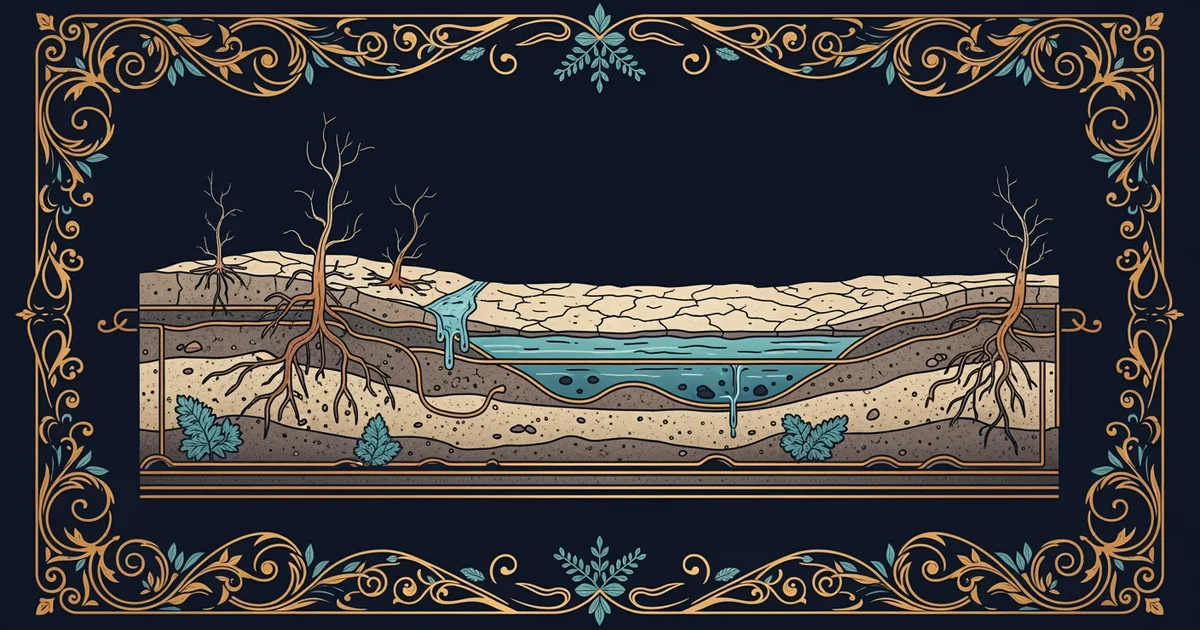
The Mechanics of Agricultural Water Use
Modern farming relies heavily on irrigation, which is the artificial application of water to land for growing crops. Without this process, many regions that provide our food would be too dry to support large-scale farming operations. Farmers tap into large underground layers of rock and sand called aquifers to secure a steady supply of water. These underground basins act like a massive savings account for water. When farmers withdraw more water than rain can replace, the account balance begins to drop rapidly. This imbalance creates a long-term problem for food security because we are consuming water much faster than the earth can replenish it.
Think of an aquifer like a giant sponge that sits inside a locked basement. You can draw water from this sponge using a straw to keep your plants alive in a desert. If you only take small sips, the sponge stays mostly damp over many years. However, if you start taking massive gulps every single day, the sponge eventually dries out completely. Once the sponge is dry, it cannot hold water again even if you pour some back in later. This analogy helps explain why relying on deep groundwater for farming is a temporary solution rather than a permanent fix for food production.
Managing the Rate of Depletion
To understand why this is a crisis, we must look at how modern farming techniques accelerate the rate of depletion. Many farmers use high-powered electric pumps to pull water from deep wells at a constant, high speed. This technology allows for farming in areas where water was previously unavailable. While this boosts current food production, it masks the reality that the water source is finite. The following factors contribute to how quickly these underground supplies disappear over time:
- Intensive crop selection requires constant hydration regardless of local rainfall or seasonal drought cycles.
- Inefficient delivery systems allow large amounts of water to evaporate before reaching the plant roots.
- Industrial demand for food products encourages farmers to expand fields beyond the natural capacity of the land.
Key term: Aquifer — a body of permeable rock that stores and transmits groundwater, serving as a primary source for agricultural irrigation.
These factors work together to create a situation where we prioritize short-term harvest goals over the long-term health of our water supplies. As the water table drops, farmers must dig deeper wells, which requires more energy and money. This cycle creates a financial burden that eventually makes farming too expensive to maintain. We are essentially spending our future water wealth to pay for today’s food needs. If we do not change how we manage these resources, future generations will struggle to find enough water to grow basic crops. The reliance on these hidden supplies creates a fragile system that could collapse when the water finally runs out.
Modern irrigation allows us to produce food in dry regions, but it treats a finite underground resource like an endless supply of water.
The next Station introduces the physics of land subsidence, which determines how the ground reacts when we remove too much water from underground spaces.