
Well Contamination Risks
Imagine a straw sitting in a glass of water that slowly drains away. As the water level drops, the straw begins to pull in air and debris from the table surface instead of just liquid. This same process happens when we pump too much water from our underground wells. When we remove water faster than nature can replace it, the pressure drops inside the aquifer. This loss of pressure creates a vacuum effect that pulls surface pollutants down into our clean water supply.
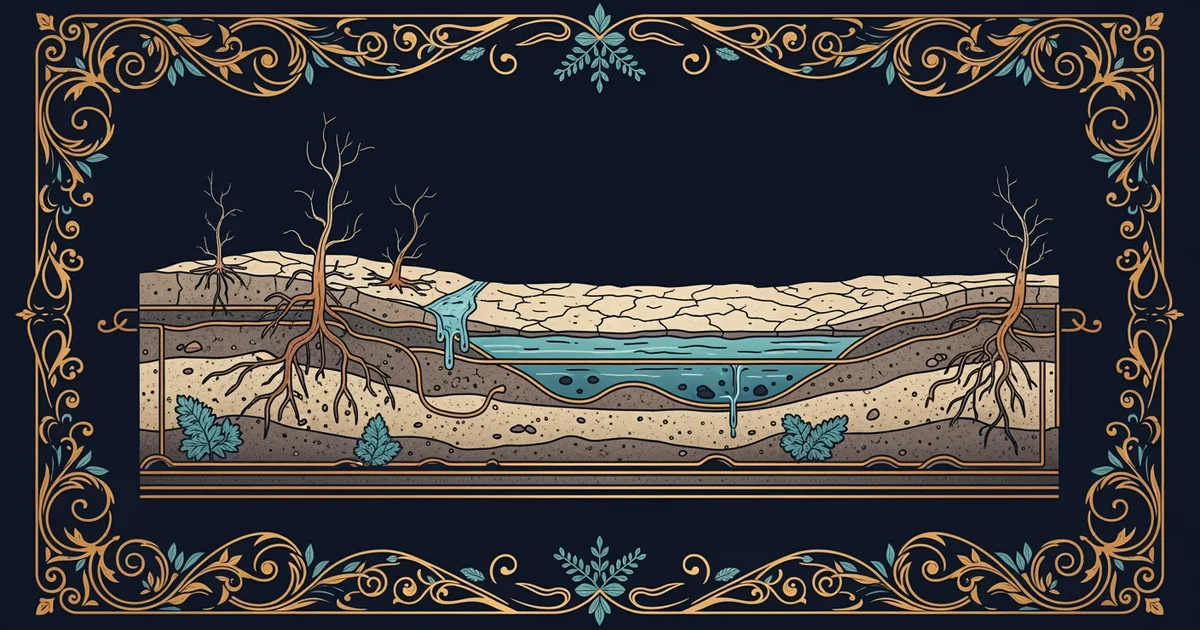
The Mechanics of Groundwater Contamination
When water levels fall, the soil surrounding the well bore loses its natural saturation. This drying process creates new gaps and cracks in the earth that were previously filled with water. These gaps act like open channels for rain to wash surface chemicals directly into the deep supply. Because the water table is lower, the natural filter of the soil becomes much thinner. The soil can no longer trap bacteria or pesticides before they reach the well intake pipe. This process turns a once protected source into a direct pathway for modern surface pollutants.
Key term: Hydrostatic pressure — the force exerted by a fluid at rest that prevents external contaminants from moving into the well bore through soil pores.
When the water level drops, the drawdown cone forms around the well pump. This cone acts like a funnel that directs surface runoff toward the bottom of the well. As the pump works harder to reach the remaining water, it pulls in more than just the liquid. It draws in fine sediments and dissolved chemicals that have accumulated near the surface. These particles can clog the well screen or damage the mechanical pump components over time. This creates a cycle where the well becomes both less efficient and more dangerous to use.
Vulnerability of Lowered Water Tables
We must consider the specific ways that lower water levels invite surface pollutants into our drinking supply. The following list outlines the primary pathways that emerge when aquifers are depleted:
- Surface runoff carries heavy metals and fertilizers into the well through cracks in the ground that appear when the soil dries out.
- Leaking septic systems release waste that travels faster through dry, unsaturated soil layers than through fully saturated underground zones.
- Industrial chemicals stored on the surface migrate downward because the lack of water pressure allows them to move freely through the porous rock.
These pathways show that our reliance on hidden water supplies carries a significant risk of pollution. When we pull too much water, we effectively remove the protective barrier between the surface and our deep resources. The system relies on constant pressure to keep the water clean and safe for everyone. Without that pressure, the well becomes a sink for anything sitting on the ground above the aquifer.
| Pollutant Type | Primary Source | Risk Factor |
|---|---|---|
| Nitrates | Farm fertilizer | High mobility |
| Bacteria | Septic systems | Pathogen spread |
| Heavy metals | Industrial use | Long-term toxicity |
This table demonstrates how different pollutants gain access to the water supply as the ground dries out. Each category represents a specific threat that increases as the water table drops further. We must manage our usage carefully to keep these pollutants from entering the deep water zones. If we ignore these risks, we will eventually lose access to the clean water we depend upon for our daily lives.
Lowering the water table reduces the protective pressure of an aquifer, which allows surface contaminants to flow directly into our drinking water sources.
But what does it look like in practice when we try to manage these risks while still meeting our water needs?